






Axolotl Regeneration: The Secret of Regrowing Limbs
By Trivia Daily, Animals Desk — Published August 21, 2026
Table of Contents
- Key Takeaways
- The Axolotl Regeneration Secret: How It Works
- Beyond Limbs: The Full Scope of Regenerative Abilities
- Neoteny and the Peter Pan Salamander
- Comparing Regenerative Champions
- Conservation Crisis in Their Natural Habitat
- Medical Research and Human Applications
- Frequently Asked Questions
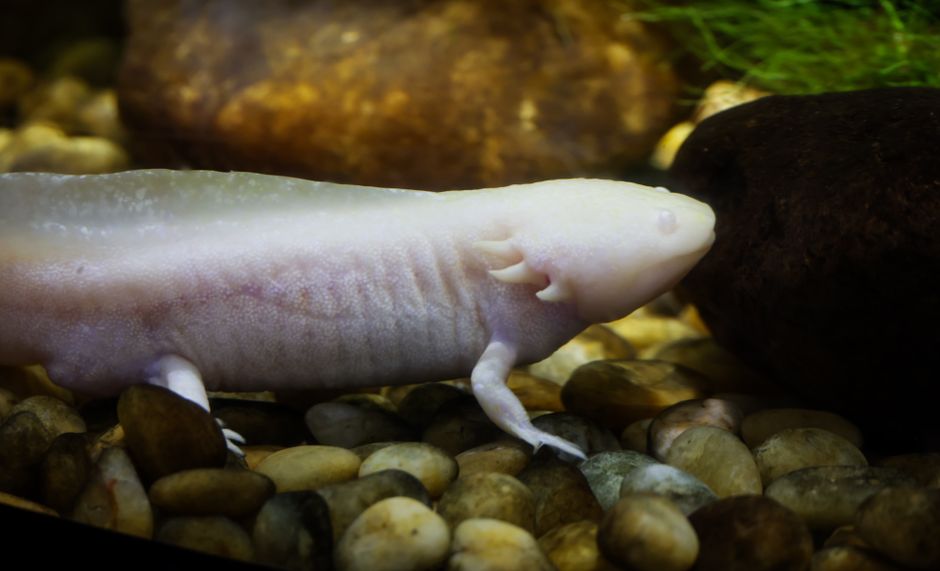
Imagine losing a leg and growing it back—complete with bones, muscles, nerves, and skin—in just a few weeks. For the axolotl, a peculiar salamander native to the lakes of Mexico, this isn't science fiction. The axolotl regeneration secret has captivated scientists for centuries, as these creatures possess an almost magical ability to rebuild entire limbs, portions of their heart, sections of their brain, and even parts of their spinal cord. No other animal on Earth can match this level of regenerative power, making the axolotl one of nature's most extraordinary species.
This small, permanently aquatic salamander doesn't just heal wounds—it reconstructs complex body parts with perfect accuracy. Understanding how these animals achieve such remarkable feats could unlock revolutionary treatments for human injuries and diseases.
Key Takeaways
- Axolotls can regenerate entire limbs, including bones, muscles, blood vessels, and nerves, multiple times throughout their lives without forming scar tissue.
- Unlike most animals, axolotls retain juvenile characteristics their entire lives, a trait called neoteny that may contribute to their regenerative abilities.
- These creatures can regrow portions of their heart, brain, spinal cord, and even parts of their eyes—far exceeding the regenerative capacity of any mammal.
- The regeneration process involves specialized cells called blastemal cells that can transform into any tissue type needed for rebuilding.
- Wild axolotl populations are critically endangered, found only in the remnants of Mexico City's ancient lake system.
- Scientists study axolotl DNA and cellular behavior to develop potential therapies for human tissue repair and organ regeneration.
The Axolotl Regeneration Secret: How It Works
When an axolotl loses a limb, its body immediately begins an intricate reconstruction process. Within hours, skin cells migrate to cover the wound. Then something remarkable happens: cells at the injury site dedifferentiate, meaning they revert from specialized cells back into a more primitive, flexible state. These cells form a structure called a blastema—a cluster of cells that essentially remembers the blueprint of what was lost.
The blastema acts like a biological construction site. Cells within it receive chemical signals telling them exactly what to become: bone cells, muscle fibers, nerve tissue, or blood vessels. Over the course of several weeks, the limb grows back in the correct shape, size, and orientation. The new limb functions perfectly, indistinguishable from the original.
What makes this even more astonishing is the absence of scar tissue. When humans heal from injuries, scar tissue forms—a quick patch job that closes wounds but doesn't restore full function. Axolotls bypass this limitation entirely, achieving true regeneration rather than mere repair. They can repeat this process throughout their lives, regrowing the same limb dozens of times if necessary.
Beyond Limbs: The Full Scope of Regenerative Abilities
Limb regeneration is just the beginning. These amphibians can repair damage to their heart, regrowing cardiac muscle tissue after injury. They can regenerate portions of their brain and restore function to damaged neural pathways. Even their spinal cord, which in mammals results in permanent paralysis when severed, can be rebuilt in axolotls.
The eyes of an axolotl also possess regenerative properties. If the lens is removed, the animal can regrow it from cells in the iris—a process that defies the normal rules of cellular differentiation. Scientists have documented axolotls recovering from injuries that would be fatal or permanently debilitating to virtually any other vertebrate.
This regenerative capacity extends to internal organs as well. Portions of the intestine, ovaries, and lungs can all be restored. The animal's immune system appears specially adapted to support regeneration rather than simply forming scar tissue, a key difference from mammalian wound healing.
Neoteny and the Peter Pan Salamander
Axolotls exhibit a rare biological phenomenon called neoteny, retaining larval features throughout their entire adult lives. While most salamanders undergo metamorphosis—losing their gills, developing lungs, and moving onto land—axolotls remain aquatic and gill-breathing even as sexually mature adults. They keep their feathery external gills, fin-like tail, and juvenile body structure.
This arrested development may be intimately connected to their regenerative powers. The cellular flexibility required for regeneration might be easier to maintain in a body that never fully commits to adult specialization. Young animals generally heal better than old ones across species, and axolotls essentially extend that youthful healing capacity indefinitely.
Interestingly, axolotls can be induced to metamorphose under certain conditions, particularly when exposed to specific hormones. However, once they undergo this transformation, they lose much of their regenerative ability—suggesting a direct link between their juvenile state and their healing powers.
Comparing Regenerative Champions
| Species | Regenerative Abilities | Limitations |
|---|---|---|
| Axolotl | Complete limbs, heart, brain, spinal cord, eyes | Cannot regenerate entire body from fragments |
| Planarian Flatworm | Entire body from tiny fragments | Simple body structure; no complex organs |
| Starfish | Arms and portions of central disk | Requires part of central disk to survive |
| Zebrafish | Fins, heart tissue, retina | Cannot regenerate limbs (has no limbs) |
| Humans | Liver tissue, skin, some bone | No complex organ or limb regeneration |
Conservation Crisis in Their Natural Habitat
Despite their remarkable biology, wild axolotls face a dire future. These creatures evolved in the ancient lake system of the Valley of Mexico, particularly Lake Xochimilco near Mexico City. Urban expansion, water pollution, and the introduction of invasive species like tilapia and carp have decimated their natural habitat.
Current surveys suggest that wild populations may number only in the hundreds, making them critically endangered. The species survives primarily in captivity, where they're bred for scientific research and the pet trade. Conservation efforts focus on protecting and restoring the remaining canals of Xochimilco, but the challenges are immense in one of the world's largest metropolitan areas.
The loss of wild axolotl populations would be both an ecological tragedy and a setback for medical research. Wild individuals possess genetic diversity that captive-bred animals lack, potentially holding undiscovered variations in regenerative abilities.
Medical Research and Human Applications
Laboratories around the world study axolotls intensively, hoping to unlock their regenerative secrets for human medicine. Researchers have mapped the axolotl genome, which is enormous—roughly ten times larger than the human genome—to identify the genes controlling regeneration.
The goal isn't to give humans the ability to regrow lost limbs tomorrow, but to understand the cellular and molecular mechanisms that make regeneration possible. This knowledge could lead to therapies for spinal cord injuries, heart disease, and neurodegenerative conditions. Even partial success—such as improving wound healing or reducing scar tissue formation—would represent major medical advances.
Scientists have identified specific genes and signaling pathways active during axolotl regeneration. Some of these pathways exist in humans but remain dormant or suppressed. The challenge lies in safely activating regenerative processes without triggering uncontrolled cell growth, which could lead to cancer.
Frequently Asked Questions
How many times can an axolotl regrow the same limb?
Axolotls can regenerate the same limb repeatedly throughout their lives, with documented cases of individuals regrowing limbs dozens of times. The quality of regeneration doesn't appear to diminish with repetition, unlike some other regenerating species.
Do axolotls feel pain when they lose a limb?
While axolotls possess nervous systems capable of detecting tissue damage, their behavioral responses suggest they experience injury differently than mammals. They typically continue normal activities soon after limb loss, though the subjective experience of pain in amphibians remains difficult to assess scientifically.
Can axolotls regenerate their head or entire body?
No, axolotls cannot regenerate their entire head or body from a fragment. However, they can repair significant portions of their brain and regrow parts of their jaw and skull. They require their vital organs to remain intact to survive and regenerate other body parts.
Why can't humans regenerate like axolotls?
Humans evolved different healing strategies that prioritize rapid wound closure with scar tissue over perfect regeneration. Our immune systems and cellular programming respond to injury differently, and the genes that would enable regeneration are either absent or suppressed. Evolution favored quick healing that prevents infection over the slower, more complex process of true regeneration.
The axolotl reminds us that biology still holds profound mysteries. These unassuming salamanders, facing extinction in the wild, may hold keys to medical breakthroughs we've only begun to imagine. Every time one of these creatures regrows a limb, it demonstrates possibilities that challenge our understanding of what animal bodies can achieve—and what ours might someday learn to do.