











1 / 10 Questions
0 Points

Which Architectural Crown Sits Atop The U.S. Capitol?

A bronze eagle

A dome

A spire

A clock tower

Points won
0
Correct score
0%

More Questions

Why Do Quarters Have Ridges Around The Edge?

Why Do Quarters Have Ridges Around The Edge? Question 1: Why Do Quarters Have Ridges Around The Edge? A. Help blind identification B. Improve grip C. Prevent coin...

The Truth About Bananas: Are They Really Going Extinct

Banana extinction threatens the world's most popular fruit due to disease and monoculture farming. Learn what scientists are doing to save them.

9 Bizarre Facts About Octopuses Having Three Hearts

Octopus hearts work in a trio to pump blue blood through their bodies. Discover how this three-heart system powers one of the ocean's strangest creatures.

More Articles

The Loudest Animal on Earth: Sperm Whale Clicks Explained

The Loudest Animal on Earth: Sperm Whale Clicks Explained

The Loudest Animal on Earth: Sperm Whale Clicks Explained

By Trivia Daily, Animals Desk — Published September 11, 2026

Table of Contents

Deep in the ocean, far from human ears, the loudest animal on earth produces sounds that can reach an astonishing 230 decibels. To put that in perspective, a jet engine at takeoff measures around 140 decibels, and a rock concert tops out near 120. The sperm whale, the largest of the toothed whales, creates these extraordinary clicks not to communicate across vast distances, but to hunt in total darkness thousands of feet below the surface. These remarkable creatures have evolved one of nature's most powerful biological sonar systems, and the physics behind their vocalizations reveal just how extreme life in the deep ocean can be.

The sperm whale's clicks serve as both a hunting tool and a window into an alien world where sound, not light, rules supreme. Understanding how and why these animals produce such intense acoustic energy helps explain their success as apex predators in one of Earth's most challenging habitats.

Key Takeaways

  • Sperm whale clicks can reach 230 decibels, making them the loudest sounds produced by any animal on the planet.
  • These clicks function as echolocation, allowing sperm whales to hunt giant squid and other prey in complete darkness at depths exceeding 3,000 feet.
  • The sound is generated in a complex organ called the spermaceti organ, located in the whale's massive head, which can comprise up to one-third of its body length.
  • A single click lasts only a fraction of a second but can travel for miles through the ocean, bouncing off objects and returning detailed information about size, distance, and texture.
  • Despite producing sounds powerful enough to potentially harm nearby divers, sperm whales use these clicks with remarkable precision and control.
  • The intensity of these clicks is measured in water, where sound travels differently than in air, meaning the comparison to air-based decibel measurements isn't direct but still illustrates their extraordinary power.

Why the Loudest Animal on Earth Needs Such Powerful Clicks

Sperm whales dive deeper than almost any other mammal, routinely descending to depths where sunlight cannot penetrate. At 3,000 feet below the surface, the ocean is pitch black, cold, and under crushing pressure. In this environment, vision becomes useless. The whales have evolved to rely almost entirely on echolocation, a biological sonar system that uses sound waves to map their surroundings and locate prey.

The power behind their clicks isn't about volume for communication's sake. It's about range and resolution. A louder click travels farther and returns more detailed information when it bounces off objects. Sperm whales primarily hunt giant squid, elusive creatures that inhabit the same deep waters. To find these prey items in the vast darkness of the ocean, the whales need to send out acoustic signals that can scan enormous volumes of water and detect relatively small targets at significant distances.

The clicks also need to be powerful enough to penetrate the bodies of prey animals and reveal internal structures, helping the whale distinguish between a tasty squid and an inedible object. This level of acoustic imaging requires intense energy concentrated into brief pulses of sound.

The Anatomy Behind the Sound

The sperm whale's head is a marvel of evolutionary engineering. The spermaceti organ, a massive structure filled with a waxy substance called spermaceti oil, occupies much of the whale's enormous cranium. This organ works in concert with other specialized structures to produce and focus the clicks.

Sound production begins when the whale forces air through passages near its blowhole. This air doesn't escape but instead moves through a complex system of sacs and chambers. The initial sound is generated when air passes across tissue structures, creating a click. That click then travels through the spermaceti organ, which acts as an acoustic lens, focusing and amplifying the sound into a directed beam that projects forward from the whale's head.

The size of the head matters. Larger sperm whales, particularly adult males that can reach 60 feet in length, produce louder clicks than smaller individuals. The spermaceti organ's dimensions affect both the frequency and intensity of the sound, with bigger organs capable of generating lower-frequency, more powerful clicks that travel farther through the water.

How Echolocation Works in Practice

When a sperm whale emits a click, it listens for echoes. Sound travels about four times faster in water than in air, covering roughly a mile per second. A click sent out into the ocean will bounce off any object it encounters and return to the whale, which detects the echo through its lower jaw. This jawbone is filled with specialized fatty tissues that conduct sound directly to the inner ear.

The whale's brain processes the returning echoes with remarkable sophistication. The time delay between click and echo reveals distance. The quality and character of the echo provide information about size, shape, and texture. A squid produces a different acoustic signature than a rock or a fish. Through thousands of clicks during a single dive, the whale builds a detailed acoustic picture of its surroundings, effectively "seeing" with sound in a way that has no equivalent in human experience.

Sperm whales can adjust the characteristics of their clicks based on what they're hunting and how far away they expect prey to be. They produce different patterns of clicks for different purposes, including slower "creak" sequences when closing in on prey and regular clicks for scanning at distance.

Comparing Earth's Loudest Animals

Animal Sound Type Approximate Decibel Level Purpose
Sperm Whale Clicks 230 dB Echolocation for hunting
Blue Whale Low-frequency pulses 188 dB Long-distance communication
Pistol Shrimp Cavitation bubble collapse 210 dB Stunning prey
Howler Monkey Vocalizations 140 dB Territory defense
African Elephant Infrasonic calls 117 dB Long-distance communication

The Physics of Underwater Sound

Measuring sound in water requires different standards than measuring sound in air. Decibel measurements depend on the medium because sound pressure and intensity behave differently in liquids versus gases. A 230-decibel sound in water doesn't translate directly to 230 decibels in air. Roughly speaking, you need to subtract about 62 decibels when converting from underwater to in-air measurements for equivalent sound pressure levels.

Even with this conversion, sperm whale clicks remain extraordinarily powerful. The energy concentrated in these brief acoustic pulses is immense. Some researchers have theorized that the clicks could potentially stun or disorient prey, though this remains a subject of scientific debate. What's certain is that the sound energy is sufficient to cause temporary hearing disruption in humans who get too close, though such encounters are extremely rare given the depths at which sperm whales typically hunt.

Conservation and the Future of These Remarkable Creatures

Sperm whales were hunted extensively during the 18th, 19th, and 20th centuries, primarily for the spermaceti oil in their heads, which was prized for use in lamps, lubricants, and other products. Populations declined dramatically before international protections were implemented. Today, sperm whales are listed as vulnerable by conservation organizations, and they face modern threats including ship strikes, entanglement in fishing gear, ocean noise pollution, and climate change impacts on their prey.

The increasing noise in the world's oceans from shipping, sonar, and industrial activity poses a particular concern for animals that rely on sound for survival. While sperm whale populations have partially recovered since the end of commercial whaling, these animals remain sensitive to human activities in their habitat. Understanding their remarkable acoustic abilities isn't just fascinating from a scientific perspective—it's essential for developing effective conservation strategies for these incredible animals.

Frequently Asked Questions

Can sperm whale clicks hurt humans?

Yes, at close range, sperm whale clicks are powerful enough to cause discomfort, vibration sensations, and potentially temporary hearing issues in human divers. However, encounters at such close range are extremely rare, and sperm whales generally avoid humans.

How far can a sperm whale's click travel underwater?

Under ideal conditions, sperm whale clicks can travel several miles through the ocean. The exact distance depends on factors like water temperature, salinity, and background noise, but these sounds are detectable at considerable ranges by underwater listening equipment.

Do sperm whales use their clicks to communicate with each other?

Yes, sperm whales use patterns of clicks called "codas" for social communication within their groups. These codas are distinct from the echolocation clicks used for hunting and appear to function like dialects, varying between different whale populations.

Why are sperm whales louder than blue whales if blue whales are bigger?

Blue whales produce lower-frequency sounds that travel extremely far for communication, while sperm whales produce higher-frequency, more intense clicks for echolocation at depth. The purposes are different, so the sound characteristics evolved differently despite the blue whale's larger size.

The next time you think about record-holding animals, remember that the title of loudest belongs to a creature navigating an environment humans can barely imagine, using a sense we can only approximate with technology. In the perpetual night of the deep ocean, sound isn't just communication—it's vision, survival, and a testament to evolution's creativity.
Dragon Myths: 9 Cultures That Worshipped Serpent Gods

Dragon Myths: 9 Cultures That Worshipped Serpent Gods

Dragon Myths: 9 Cultures That Worshipped Serpent Gods

By TriviaOwl, Staff Writer — Published August 15, 2026

Table of Contents

Long before modern fantasy novels made dragons household names, ancient civilizations around the world revered massive serpent deities as forces of creation, destruction, and cosmic balance. What's truly surprising is how these dragon myths from cultures separated by oceans and millennia share strikingly similar characteristics—despite having no contact with one another. From the feathered serpents of Mesoamerica to the water dragons of East Asia, these mythological creatures reveal fascinating insights into how different societies understood power, nature, and the divine.

Discover the amazing connections between dragon myths cultures developed independently, and explore the curious truths behind these legendary beasts that continue to captivate our imagination today.

Key Takeaways

  • Nearly every major ancient civilization developed dragon or serpent deity myths independently, suggesting universal human fascination with these creatures.
  • Eastern and Western dragon myths differ fundamentally: Asian dragons typically symbolize wisdom and prosperity, while European dragons often represent chaos and evil.
  • Many dragon myths likely originated from discoveries of large fossil bones, which ancient peoples interpreted as evidence of giant reptilian creatures.
  • Serpent gods frequently controlled water, rain, and agricultural fertility across diverse cultures, reflecting the importance of these elements to survival.
  • The Quetzalcoatl deity of Mesoamerica was worshipped continuously for over 2,000 years across multiple civilizations.
  • Dragon symbolism remains deeply embedded in modern culture, from national flags to corporate logos and popular entertainment.

Dragon Myths Cultures Developed Across Continents

The independent emergence of dragon myths across geographically isolated cultures presents one of mythology's most intriguing puzzles. Anthropologists have long debated whether these parallel myths arose from common prehistoric roots or developed separately as humans encountered similar natural phenomena—massive bones, dangerous reptiles, and powerful natural forces—that sparked similar imaginative responses.

What makes these myths particularly interesting is their persistence. Unlike many ancient beliefs that faded with time, dragon symbolism has proven remarkably durable, evolving but never disappearing from human culture. The serpent's ability to shed its skin likely contributed to its association with rebirth and immortality across multiple traditions.

1. Chinese Long: The Celestial Water Bringers

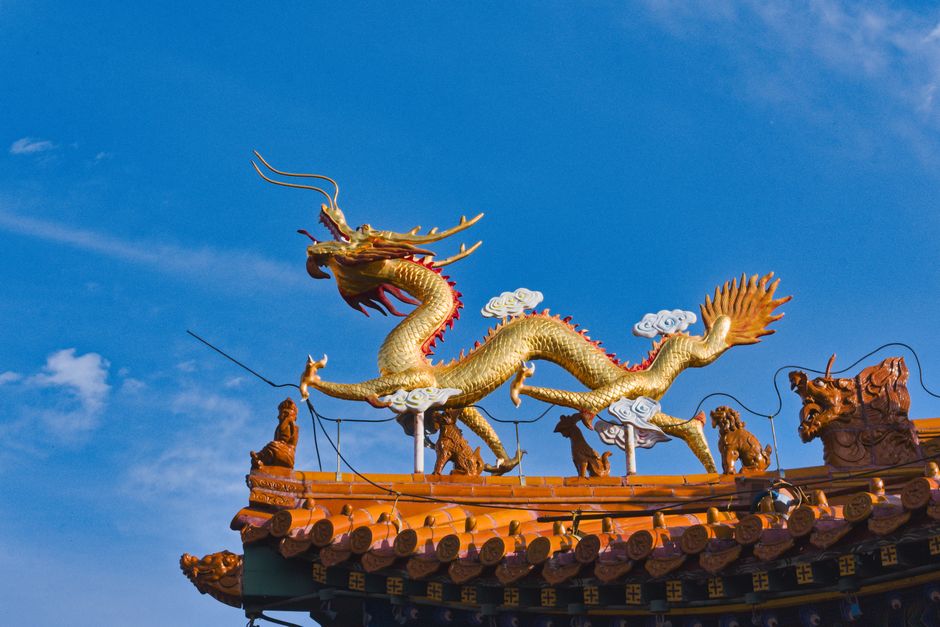
Chinese dragon mythology represents perhaps the most enduring and complex serpent deity tradition in human history. The Long (or lung) dragon symbolized imperial power, wisdom, and control over water and weather for thousands of years. Unlike their Western counterparts, Chinese dragons were generally benevolent beings associated with prosperity and good fortune. These serpentine creatures—depicted with deer antlers, fish scales, eagle claws, and flowing whiskers—were believed to live in rivers, lakes, and seas, rising to the heavens to bring rain during droughts. The emperor himself was considered the "dragon's face," and only he could wear robes adorned with five-clawed dragons. This reverence was so profound that during certain dynasties, commoners could be executed for using dragon imagery reserved for royalty.

2. Quetzalcoatl: The Feathered Serpent of Mesoamerica

The Aztec and Maya civilizations worshipped Quetzalcoatl, whose name literally means "feathered serpent" in Nahuatl. This deity represented the fusion of earthly power (the serpent) and heavenly divinity (the bird's feathers), embodying the connection between ground and sky. Quetzalcoatl was credited with creating humanity, inventing the calendar, and teaching agriculture and crafts. Archaeological evidence shows this god was venerated as early as the first century BCE by the Teotihuacan culture and continued to be central to religious practice until the Spanish conquest. The massive Pyramid of the Feathered Serpent at Teotihuacan, adorned with hundreds of serpent head sculptures, demonstrates the architectural and artistic sophistication dedicated to this deity's worship.

3. Tiamat: Mesopotamia's Primordial Chaos Dragon

In ancient Babylonian mythology, Tiamat embodied the salt sea and primordial chaos from which all creation emerged. The Enuma Elish, Babylon's creation epic dating to approximately the 18th century BCE, describes Tiamat as a massive dragon whose body was split by the god Marduk to create heaven and earth. This myth established a pattern seen in many cultures: the dragon as a force of primal chaos that must be defeated for ordered civilization to exist. Tiamat's serpentine form represented the untamed power of nature—both life-giving and destructive—that early agricultural societies sought to understand and control. Her worship reflects humanity's earliest attempts to explain cosmic origins through narrative.

4. Jörmungandr: The Norse World Serpent

Norse mythology features Jörmungandr, a serpent so immense it encircles the entire world, grasping its own tail in the depths of the ocean. According to the Prose Edda, this creature was one of three monstrous children of the trickster god Loki. The god Thor repeatedly encounters Jörmungandr, and their final battle during Ragnarök—the Norse apocalypse—results in mutual destruction. This myth embodies the Viking understanding of fate, cyclical time, and the inevitable destruction and renewal of the cosmos. The world serpent's circular form symbolized completeness and the boundaries of the known world, while its position in the sea reflected Scandinavian culture's intimate relationship with maritime life and its dangers.

5. Nāga: Buddhism and Hinduism's Serpent Protectors

Throughout South and Southeast Asia, Nāga serpent deities occupy a unique position in both Hindu and Buddhist traditions. These semi-divine beings, depicted as giant cobras or as humans with serpent hoods, are associated with water, fertility, and protection of treasure. In Buddhist tradition, a Nāga king named Mucalinda is said to have shielded the Buddha from a storm during his meditation by coiling around him and spreading its hood overhead. Hindu mythology describes Nāgas as inhabitants of an underground realm filled with gems and precious metals. The widespread veneration of Nāgas—from Indian temples to Cambodian architecture at Angkor Wat—demonstrates how serpent worship integrated into major philosophical and religious systems rather than remaining purely mythological.

6. The Rainbow Serpent: Australian Aboriginal Creation Being

Indigenous Australian cultures across the continent share myths of the Rainbow Serpent, one of the oldest continuous religious beliefs in human history, potentially dating back over 6,000 years based on rock art evidence. This creator being is associated with water sources, rainbows, and the fertility of the land. According to various Aboriginal traditions, the Rainbow Serpent shaped the landscape during the Dreamtime, creating rivers, gorges, and water holes as it moved across the earth. The serpent's dual nature—as both life-giver through water and destroyer through floods—reflects the harsh realities of survival in the Australian environment. Different language groups have distinct names for this being, but the core symbolism remains remarkably consistent across vast distances.

7. Apep: Ancient Egypt's Serpent of Chaos

The ancient Egyptians feared Apep (also called Apophis), a gigantic serpent that embodied chaos, darkness, and the antithesis of order. Unlike gods who received temples and worship, Apep was ritually cursed and symbolically destroyed in daily religious ceremonies. Egyptian cosmology held that Apep dwelled in the underworld, attempting each night to devour the sun god Ra as he journeyed through the darkness. The serpent's defeat each dawn ensured the sun would rise again, making this myth central to Egyptian understanding of cosmic order. Priests performed elaborate rituals to weaken Apep, including creating wax effigies of the serpent to burn, demonstrating how dragon myths could drive actual religious practice and daily ritual life.

8. European Dragons: From Guardians to Monsters

European dragon mythology evolved significantly from ancient to medieval times. Early Greek and Roman sources describe dragons primarily as giant serpents guarding sacred places or treasures—such as the dragon guarding the Golden Fleece or Ladon protecting the golden apples of the Hesperides. These creatures weren't necessarily evil, but rather represented obstacles to be overcome. With the spread of Christianity, European dragons transformed into symbols of evil and Satan, leading to the familiar medieval narrative of dragon-slaying saints and knights. This shift reflects how conquering cultures often demonized the sacred symbols of earlier traditions. The dragon's association with hoarding treasure likely stems from ancient observations of snakes guarding their dens, combined with the practice of hiding valuables in remote, dangerous locations.

9. Ryūjin: Japan's Dragon King of the Sea

Japanese Shinto tradition venerates Ryūjin, the dragon deity who rules the oceans and controls the tides through magical jewels. Living in an underwater palace made of coral and precious stones, Ryūjin commanded an army of sea creatures and could transform into human form. Japanese dragons, like their Chinese counterparts, are generally benevolent and associated with water, wisdom, and imperial power. Fishermen and sailors made offerings to Ryūjin for safe passage and bountiful catches. The legend states that Ryūjin's daughter married a human prince, establishing the divine ancestry of Japan's imperial line. This myth demonstrates how dragon deities were woven into political legitimacy and national identity, a pattern seen across multiple cultures.

Why Serpents Became Gods

The universal appeal of serpent deities stems from several factors rooted in human psychology and survival needs. Snakes provoke instinctive reactions in humans—our primate brains are wired to notice them quickly, a survival adaptation that made them psychologically prominent. Their alien anatomy, mysterious disappearance into holes and water, and ability to shed skin and seemingly renew themselves made them natural symbols for transformation, rebirth, and hidden knowledge.

Agricultural societies particularly gravitated toward serpent worship because snakes controlled rodent populations that threatened grain stores, while their seasonal appearance often coincided with rains and planting cycles. The connection between serpents and water appears across cultures because both snakes and water share qualities of fluidity, life-giving power, and potential danger.

Comparing Dragon Characteristics Across Cultures

Culture Dragon Name Primary Symbolism Physical Form
Chinese Long Wisdom, prosperity, water control Serpentine body, four legs, antlers, no wings
European Medieval Dragon Evil, chaos, greed Reptilian, four legs, bat-like wings, fire-breathing
Mesoamerican Quetzalcoatl Creation, knowledge, wind Serpent body covered in feathers
Japanese Ryū Ocean, weather, imperial power Similar to Chinese, often wingless
Norse Jörmungandr Fate, cosmic boundaries, apocalypse Enormous serpent encircling the world

Frequently Asked Questions

Why do Eastern and Western dragons look so different?

Eastern dragons evolved from water and weather symbolism, resulting in serpentine, wingless forms associated with rivers and rain. Western dragons likely incorporated influences from Middle Eastern myths and later Christian symbolism of evil, developing the fire-breathing, winged, treasure-hoarding form familiar in European folklore.

Did ancient people really believe dragons existed?

Yes, ancient cultures genuinely believed in dragons as real creatures or spiritual beings. Discoveries of large dinosaur and prehistoric mammal fossils, without modern paleontological knowledge to explain them, likely reinforced these beliefs and provided "evidence" of giant reptilian creatures.

Which culture had dragon myths first?

Mesopotamian civilizations have some of the earliest written dragon myths, with Tiamat appearing in texts from approximately 4,000 years ago. However, oral traditions and rock art suggest serpent deity concepts may be much older, potentially predating written records by millennia.

Are any dragon myths still actively practiced today?

Yes, dragon symbolism remains active in several traditions. Chinese culture continues to celebrate dragons during festivals, Nāga worship persists in Buddhist and Hindu practices throughout Asia, and some Indigenous Australian communities maintain Rainbow Serpent traditions as part of living spiritual practice.

The next time you encounter a dragon in a story, flag, or decoration, consider that you're seeing an echo of humanity's oldest and most widespread mythological tradition—one that speaks to universal human experiences of awe, fear, and wonder at the natural world's power.