











1 / 10 Questions
0 Points

Which Band Has A Gym Teacher's Name?

Jefferson Airplane

Lynyrd Skynyrd

Van Halen

REO Speedwagon

Points won
0
Correct score
0%

More Questions

What sport uses terms like birdie, eagle, and par?

What sport uses terms like birdie, eagle, and par? Question 1: What sport uses terms like birdie, eagle, and par? A. Tennis B. Badminton C. Cricket D. Golf Explanation: Golf...

What planet has the most visible and extensive ring system?

What planet has the most visible and extensive ring system? Question 1: What planet has the most visible and extensive ring system? A. Neptune B. Jupiter C. Saturn D....

Which Band Has A Gym Teacher’s Name?

Which Band Has A Gym Teacher's Name? Question 1: Which Band Has A Gym Teacher's Name? A. Jefferson Airplane B. Lynyrd Skynyrd C. Van Halen D. REO Speedwagon Explanation: The...

More Articles

Top 10 Coincidences That Actually Happened

Top 10 Coincidences That Actually Happened

⏱️ 6 min read

Top 10 Coincidences That Actually Happened

Throughout history, remarkable coincidences have occurred that defy the odds and leave us questioning the nature of chance itself. These extraordinary events, while scientifically explainable as random occurrences, continue to fascinate and perplex us with their uncanny timing and interconnected nature. From literary predictions to impossible reunions, the following ten coincidences represent some of the most astounding true stories ever documented.

1. The Unsinkable Violet Jessop

Violet Jessop, a ship stewardess and nurse, holds the remarkable distinction of surviving not one, but three major maritime disasters. She was aboard the RMS Olympic when it collided with the HMS Hawke in 1911, survived the legendary sinking of the RMS Titanic in 1912, and was serving on the HMHS Britannic when it sank in 1916 after hitting a mine. Despite these three catastrophic events involving sister ships, Jessop lived until 1971, earning her the nickname "Miss Unsinkable." The odds of surviving one such disaster were slim; surviving all three defies statistical probability.

2. Mark Twain and Halley's Comet

The famous American author Mark Twain was born on November 30, 1835, just two weeks after Halley's Comet made its closest approach to Earth. In 1909, Twain himself predicted, "I came in with Halley's Comet in 1835. It is coming again next year, and I expect to go out with it." True to his prediction, Twain died on April 21, 1910, one day after the comet's closest approach to Earth. This celestial coincidence spanning 75 years remains one of the most poetic and eerie predictions in literary history.

3. The Taxi Cab Brothers

In 1975, a man riding a moped in Bermuda was tragically struck and killed by a taxi cab. Exactly one year later, his brother was killed while riding the same moped, on the same street, by the same taxi driver carrying the same passenger. This extraordinary coincidence was documented by police authorities and demonstrates how improbable circumstances can align in the most tragic ways. The odds of such an event occurring are astronomical, yet it remains a verified historical fact.

4. The Falling Baby and Joseph Figlock

In the 1930s in Detroit, Michigan, a man named Joseph Figlock became an unlikely hero twice in the span of one year. On two separate occasions, he was walking down the same street when a baby fell from a high window above and landed on him. In both instances, both Figlock and the babies survived with minor injuries. Even more remarkably, both incidents involved different babies from different families. This incredible coincidence saved two young lives and left Figlock with an extraordinary story.

5. The Golden Scarab Beetle

Swiss psychiatrist Carl Jung documented one of the most famous psychological coincidences in his work. During a therapy session with a patient who was describing a dream about a golden scarab beetle, Jung heard a tapping at his window. He opened it to find a scarabaeid beetle, the closest thing to a golden scarab found in that region, trying to enter the room. This event, which Jung termed "synchronicity," occurred at the exact moment his patient was recounting her dream, leading to a breakthrough in her treatment.

6. The Novel That Predicted Its Own Reality

In 1838, Edgar Allan Poe wrote "The Narrative of Arthur Gordon Pym of Nantucket," a novel about four sailors who survived a shipwreck. In the story, the starving men drew lots and cannibalized a cabin boy named Richard Parker. Forty-six years later, in 1884, the yacht Mignonette sank in real life. Four survivors were left adrift, and after drawing lots, they killed and ate the cabin boy. His name was Richard Parker. This chilling coincidence between fiction and reality remains one of literature's most unsettling predictions.

7. The Assassination Connections of Lincoln and Kennedy

The parallels between Presidents Abraham Lincoln and John F. Kennedy have fascinated historians for decades. Both were elected to Congress in '46 (1846 and 1946), elected president in '60 (1860 and 1960), and assassinated on a Friday while seated next to their wives. Their successors were both named Johnson (Andrew Johnson and Lyndon B. Johnson), both born in '08 (1808 and 1908). Lincoln's secretary, named Kennedy, warned him not to go to the theater, while Kennedy's secretary, named Lincoln, warned him not to go to Dallas. While some coincidences are disputed, the documented similarities remain striking.

8. The Identical Twin Lives

Jim Lewis and Jim Springer were identical twins separated at birth in 1939 and reunited 39 years later. Researchers discovered they had lived remarkably parallel lives. Both had been named James by their adoptive families, married women named Linda, divorced, then married women named Betty. Both had sons named James Alan (though one spelled it Allan). They drove the same model car, smoked the same brand of cigarettes, and vacationed at the same beach in Florida. This case became a cornerstone study in behavioral genetics research.

9. The Hoover Dam Bookends

The first person to die during the construction of the Hoover Dam was J.G. Tierney, a surveyor who drowned on December 20, 1922, while looking for an ideal spot for the dam. The last person to die during construction was Patrick Tierney, his son, who fell from one of the intake towers exactly 13 years later, to the day, on December 20, 1935. This tragic coincidence marked both the beginning and end of the dam's construction period with a father and son's deaths on the same calendar date.

10. The Strangest Casino Luck

In July 1948, a roulette wheel at a Monte Carlo casino hit black 26 times in a row. The odds of this occurring are approximately 1 in 136,823,184. Millions of francs were lost by gamblers who kept betting on red, assuming the streak couldn't continue. This event remains one of the most statistically improbable casino occurrences ever recorded, reminding us that even the longest odds can occasionally come true.

Conclusion

These ten remarkable coincidences demonstrate that reality can sometimes be stranger than fiction. While probability theory assures us that unlikely events will occasionally occur given enough opportunities, these specific instances continue to captivate us with their precision and timing. From literary predictions coming true decades later to identical twins living identical lives apart, from celestial prophecies to repeated maritime survival, these coincidences remind us that the world is full of mysteries that challenge our understanding of chance and fate. Whether viewed through the lens of statistics, psychology, or simple wonder, these true stories continue to fascinate and inspire discussion about the nature of coincidence itself.
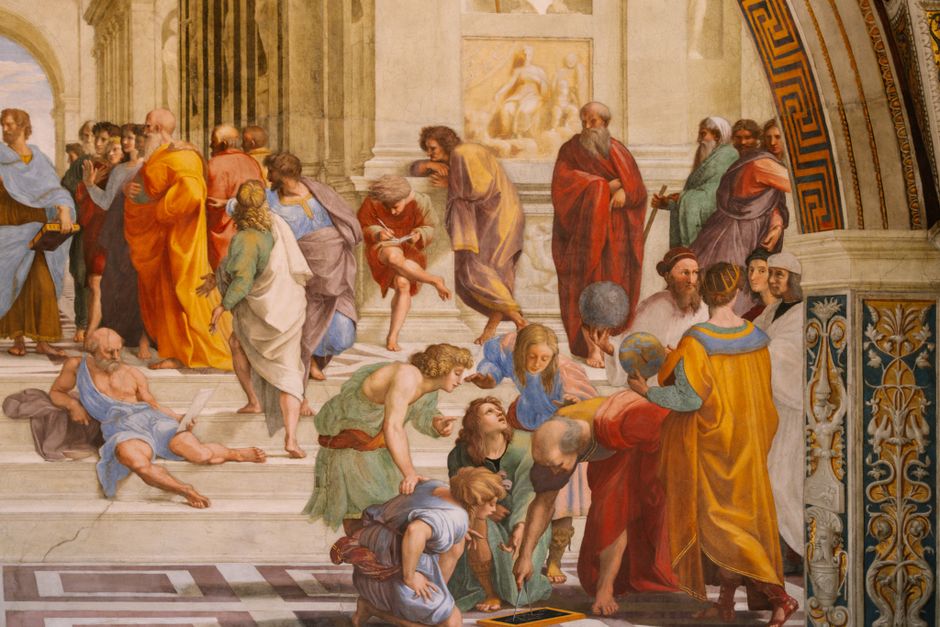
Atlantis Myths: What Plato Really Wrote About the Island

Atlantis Myths: What Plato Really Wrote About the Island

Atlantis Myths: What Plato Really Wrote About the Island

By Trivia Daily, Staff Writer — Published September 25, 2026

Table of Contents

For over two thousand years, the lost civilization of Atlantis has captured imaginations worldwide. Treasure hunters have scoured ocean floors, conspiracy theorists have proposed dozens of locations, and countless films have dramatized its supposed destruction. Yet most people who discuss atlantis myths plato introduced to the world have never read his original account. What did the ancient Greek philosopher actually write? The truth is both more specific and more surprising than the popular legend suggests.

Plato mentioned Atlantis in exactly two of his dialogues—Timaeus and Critias—written around 360 BCE. He described it not as a mysterious utopia lost in the mists of time, but as a cautionary tale about hubris and divine punishment. The details he provided were remarkably concrete, yet scholars debate whether he intended the story as historical fact, philosophical allegory, or political commentary on his own society.

Key Takeaways

  • Plato described Atlantis in only two dialogues, Timaeus and Critias, both written around 360 BCE as philosophical works, not historical records.
  • According to Plato's account, Atlantis existed approximately 9,000 years before his time and was located beyond the "Pillars of Hercules" (the Strait of Gibraltar).
  • The island civilization was supposedly larger than Libya and Asia Minor combined, ruling over parts of Europe and Africa before attacking Athens.
  • Plato claimed Atlantis was destroyed in a single day and night by earthquakes and floods as punishment from the gods for moral corruption.
  • No archaeological evidence has ever been found to support Atlantis as a real place, and most scholars view it as Plato's fictional device for philosophical teaching.
  • The modern obsession with finding Atlantis began in the late 19th century, not in ancient times—Greeks and Romans rarely discussed it as historical fact.

What Plato Actually Said About Atlantis Myths and Their Origin

Plato framed his Atlantis account as a story passed down through generations. In Timaeus, the character Critias claims his great-grandfather heard the tale from Solon, a famous Athenian statesman who supposedly learned it from Egyptian priests during his travels. According to this chain of storytelling, the priests had ancient records describing a powerful island nation that existed 9,000 years before Solon's visit to Egypt.

This elaborate framing device is interesting trivia in itself. Scholars point out that Plato often used fictional narratives to explore philosophical concepts. The multi-layered storytelling—a tale within a tale within a tale—may have been his way of signaling that readers should focus on the moral lessons rather than treat the account as historical documentation. Egyptian priests keeping 9,000-year-old records would have been remarkable, considering Egypt's own recorded history.

The name "Atlantis" derives from Atlas, the titan who in Greek mythology held up the sky. Plato wrote that Atlantis was named after Atlas, the first king of the island and son of Poseidon. This mythological connection provides another clue that Plato was weaving together legend and philosophy rather than reporting verified events.

The Geography and Description Plato Provided

Plato's description of Atlantis was surprisingly detailed. He placed it beyond the Pillars of Hercules—the ancient name for the Strait of Gibraltar—in the Atlantic Ocean. The island was supposedly larger than Libya and Asia Minor (roughly modern Turkey) combined, making it a massive landmass. From this base, the Atlantean empire controlled other islands and parts of the continent beyond.

The capital city featured a sophisticated design with alternating rings of land and water. Three rings of water surrounded the central island where the royal palace stood. Bridges and tunnels connected these rings, and a great canal linked the outer ring to the sea, allowing ships to sail into the heart of the city. The architecture included temples covered in gold, silver, and orichalcum—a mysterious metal Plato described as second only to gold in value.

The island's natural resources were equally impressive in Plato's account. Atlantis had abundant minerals, timber, and diverse wildlife including elephants. Two harvests per year fed the population, watered by rain in winter and irrigation from springs in summer. This agricultural abundance supported a large population and powerful military.

The War with Athens and Atlantis's Destruction

The core of Plato's narrative focused on conflict. Atlantis had grown powerful and aggressive, conquering territories across the Mediterranean. The Atlantean forces attacked the eastern Mediterranean, enslaving peoples in Libya and Europe up to the borders of Egypt and Tyrrhenia (roughly modern Tuscany). Only Athens stood against them.

In Plato's account, ancient Athens—presented as a model city with ideal governance—defeated the Atlantean invasion despite being outnumbered. This victory demonstrated the superiority of Athenian virtue and political organization over Atlantean materialism and imperial ambition. The moral lesson was clear: righteous governance triumphs over corrupt power.

Then came divine punishment. Plato wrote that earthquakes and floods destroyed both the Athenian army and Atlantis itself in a single catastrophic day and night. The entire island sank beneath the waves, leaving the sea in that area unnavigable due to shallow mud. This sudden destruction served as the ultimate cautionary tale about divine retribution for hubris and moral decay.

Why Scholars Consider Atlantis a Philosophical Fiction

Several factors lead most historians and archaeologists to conclude Atlantis was Plato's invention. First, no other ancient Greek or Egyptian sources mention Atlantis before Plato. If such a massive civilization had existed and waged war across the Mediterranean, surely other cultures would have recorded it. The silence is deafening.

Second, Plato was explicitly writing philosophical dialogues, not history books. His works explored questions about ideal government, justice, and the nature of reality. Atlantis appears in dialogues focused on political philosophy, serving as a contrast to Plato's vision of the ideal state. The story functions perfectly as an allegory—perhaps too perfectly to be coincidental.

Third, the timeline Plato provided creates problems. Placing Atlantis 9,000 years before Solon (who lived around 600 BCE) would date the civilization to approximately 9600 BCE. This falls in the Stone Age, long before any known civilization achieved the technological sophistication Plato described. No archaeological evidence supports advanced metallurgy, monumental architecture, or organized warfare at that date.

Even Plato's student Aristotle apparently considered Atlantis fictional. While Aristotle wrote extensively about his teacher's ideas, he never treated Atlantis as historical fact, suggesting he understood it as a literary device for philosophical instruction.

How Atlantis Myths Evolved Over Centuries

Surprisingly, ancient Greeks and Romans showed little interest in finding Atlantis. Occasional writers mentioned it, but usually in passing or as an example of Plato's storytelling. The story didn't generate the obsessive searches and theories we see today. Ancient readers apparently understood the philosophical context better than modern audiences.

The modern Atlantis craze began in the late 19th century. Ignatius Donnelly's 1882 book Atlantis: The Antediluvian World argued for Atlantis as historical fact and spawned countless imitators. Donnelly connected Atlantis to everything from Egyptian pyramids to Central American civilizations, establishing patterns of speculation that continue today. His work sold widely despite lacking archaeological evidence.

Throughout the 20th century, proposed Atlantis locations multiplied. Researchers have suggested the Mediterranean, the Caribbean, Antarctica, and even Bolivia. The discovery of the Minoan civilization on Crete and the volcanic destruction of Santorini led some to propose these as inspiration for Plato's tale—though the timeline and geography don't match his description. Each new underwater formation or ancient ruin sparks fresh Atlantis claims, demonstrating how the myth has evolved far beyond Plato's original text.

Frequently Asked Questions

Did Plato believe Atlantis was real?

Scholars debate this question, but most conclude Plato likely used Atlantis as a fictional device for philosophical teaching. He presented it as historical in his dialogues, but this was common literary technique for ancient philosophical works. His student Aristotle apparently didn't treat it as factual history.

Where did Plato say Atlantis was located?

Plato placed Atlantis beyond the Pillars of Hercules (Strait of Gibraltar) in the Atlantic Ocean. He described it as an island larger than Libya and Asia Minor combined, ruling over other islands and parts of a continent beyond. The specific location remains vague in his account.

How did Atlantis sink according to Plato?

Plato wrote that earthquakes and floods destroyed Atlantis in a single day and night as divine punishment for the civilization's moral corruption and aggressive imperialism. The island sank beneath the ocean, leaving only impassable shallow mud according to his narrative.

Has anyone ever found evidence of Atlantis?

No credible archaeological evidence has ever been found to support Atlantis as a real place. Despite numerous expeditions and claims, no discovered ruins match Plato's description in terms of location, timeline, or characteristics. Most archaeologists and historians consider it Plato's philosophical fiction rather than historical fact.

Reading what Plato actually wrote reveals how far modern Atlantis myths have drifted from their source. His story wasn't about mysterious ancient wisdom or lost technology—it was a philosophical lesson about power, virtue, and the dangers of imperial ambition. Perhaps the most amazing thing about Atlantis isn't where it might have been, but how a philosopher's cautionary tale became humanity's most enduring lost civilization legend.