









1 / 10 Questions
0 Points

What everyday item was once worth more than gold?

Salt

Pepper

Sugar

Cinnamon

Points won
0
Correct score
0%

More Questions

The Hidden Story of Why Penguins Have Knees Inside Bodies

Penguin anatomy reveals a surprising secret: their knees are tucked inside their bodies. Discover how this unique skeletal structure helps them waddle

Medieval jesters wore bells mainly to do what?

Medieval jesters wore bells mainly to do what? Question 1: Medieval jesters wore bells mainly to do what? A. Announce their presence B. Ward off evil spirits C....

The Hidden Story of Why Nutmeg Was Worth More Than Gold

Discover the fascinating nutmeg history that made it more valuable than gold, sparked wars, and changed global trade forever in the spice islands.

More Articles

Why Elephants Never Forget: The Science Behind Memory

Why Elephants Never Forget: The Science Behind Memory

Why Elephants Never Forget: The Science Behind Memory

By TriviaOwl, Animals Desk — Published August 3, 2026

Table of Contents

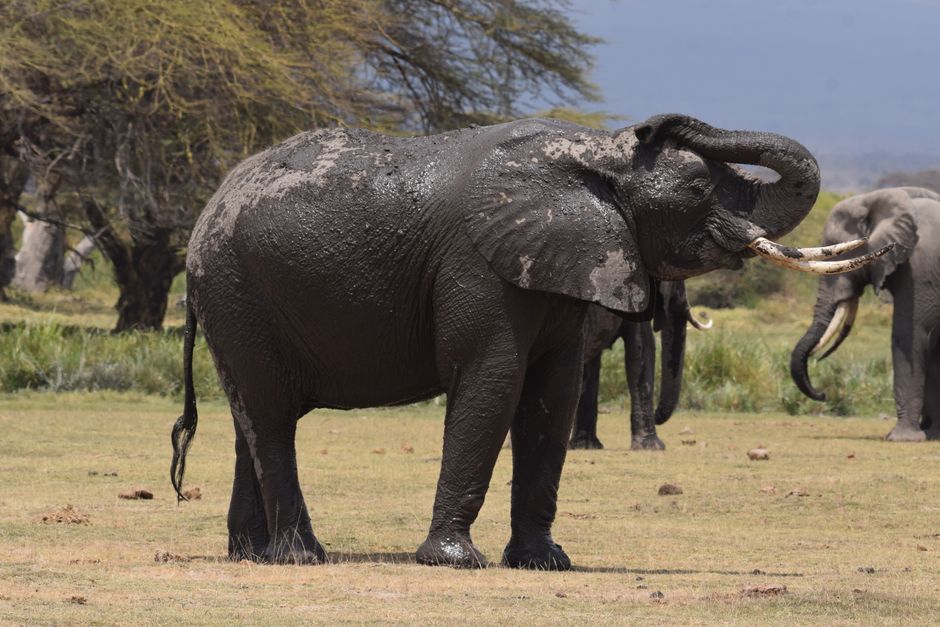
The saying "elephants never forget" is more than just a colorful phrase—it's rooted in observable animal behavior. These massive creatures possess remarkable cognitive abilities that allow them to remember locations, recognize individuals, and recall events across decades. Their brains, among the largest in the animal kingdom, contain specialized structures that process and store information with extraordinary efficiency. In nature, this memory serves critical survival functions, from finding water sources during droughts to maintaining complex social bonds within their herds.

Understanding why elephants never forget reveals fascinating insights into wildlife intelligence and how different species have evolved cognitive adaptations suited to their habitats and social structures.

Key Takeaways

  • Elephant brains weigh approximately 11 pounds, making them the largest brain of any land animal, with a highly developed hippocampus responsible for memory processing.
  • Elephants can recognize and remember up to 30 companion elephants by sight and scent, even after years of separation.
  • Female elephants serve as repositories of ecological knowledge, remembering water sources and migration routes used decades earlier during previous droughts.
  • These animals demonstrate episodic memory, recalling specific events and experiences from their past, not just learned behaviors.
  • Elephant memory extends to recognizing human individuals, distinguishing between those who have helped or threatened them in the past.
  • The temporal lobes in elephant brains are proportionally larger than in humans, providing enhanced capacity for memory storage and retrieval.

The Anatomy of Elephant Memory

An elephant's brain contains roughly 257 billion neurons—three times more than the human brain. While many of these neurons are concentrated in the cerebellum for motor control, the cerebral cortex and hippocampus show remarkable development. The hippocampus, essential for forming and retrieving memories, is particularly enlarged in elephants compared to other animals.

The temporal lobes, which process sensory input and encode it into memories, occupy a greater proportion of the elephant brain than in humans. This anatomical advantage allows elephants to process vast amounts of information from their environment. They integrate data from multiple senses—smell, sight, sound, and even seismic vibrations detected through their feet—creating rich, multisensory memories.

Brain structure alone doesn't tell the whole story. Elephants also possess a high degree of neuronal connectivity, with complex networks linking different brain regions. This connectivity enables them to associate current experiences with past events, a crucial ability for navigating their challenging habitats.

Memory in Action: How Elephants Use Their Recall

In the wild, elephant memory serves essential survival functions. Matriarchs—the oldest females who lead family groups—act as living libraries of ecological knowledge. During severe droughts, these experienced leaders remember distant water sources they visited decades earlier, sometimes as young calves. Research in African elephant populations has shown that families led by older matriarchs have higher survival rates during drought conditions, precisely because of this accumulated memory.

Social memory is equally impressive. Elephants live in complex societies where recognizing family members, allies, and potential threats matters tremendously. They remember the calls of other elephants and can distinguish between dozens of different individuals by voice alone. When elephants encounter the bones of deceased family members, they often pause to touch and examine them, suggesting they recall specific individuals even after death.

Navigation represents another critical application. Elephants migrate across vast territories, sometimes covering thousands of square miles annually. They remember seasonal patterns, knowing when and where food sources will be available. This mental map includes not just locations but temporal information—understanding that certain fruits ripen at specific times in particular places.

Comparing Memory Across Species

Animal Memory Strength Notable Ability
Elephants Decades-long recall Remember migration routes and individuals after years
Dolphins 20+ years Recognize signature whistles of companions after decades
Chimpanzees Years to decades Exceptional spatial memory, remember tool locations
Crows Years Remember human faces and hold grudges
Dogs Short to medium-term Strong episodic-like memory for recent events

The Emotional Dimension of Elephant Memory

Memory in elephants isn't purely mechanical—it's deeply intertwined with emotion. The elephant brain contains well-developed limbic structures, including an enlarged amygdala that processes emotional responses. This means elephants don't just remember facts; they remember how events made them feel.

This emotional memory manifests in observable behaviors. Elephants who witnessed family members killed by poachers show signs of trauma when encountering humans years later. Conversely, elephants remember kindness. Sanctuary elephants recognize and show affection toward caretakers they haven't seen in years. Some even remember and avoid specific locations where traumatic events occurred, suggesting they experience something akin to post-traumatic stress.

The combination of factual and emotional memory creates what researchers call episodic memory—the ability to mentally travel back in time and re-experience past events. This sophisticated cognitive ability was once thought unique to humans but is now recognized in several species, with elephants demonstrating particularly strong episodic recall.

Debunking the Myth: What Elephants Actually Forget

While elephant memory is extraordinary, the phrase "never forget" is hyperbolic. Like all creatures, elephants can and do forget, particularly information that isn't regularly reinforced or emotionally significant. Young elephants must learn from their elders, indicating they aren't born with perfect recall of everything they'll need.

Elephant memory is also selective, prioritizing information crucial for survival and social cohesion. They're more likely to remember the location of a reliable water source than trivial environmental details. Their memory serves evolutionary purposes rather than functioning as an infallible recording device.

The real marvel isn't that elephants never forget—it's that they remember what matters most with remarkable accuracy across impressive timespans. This selective, long-term memory represents an elegant adaptation to their ecological niche and social structure.

Frequently Asked Questions

How long can elephants actually remember things?

Elephants can retain memories for their entire lifespan, which can exceed 60 years in the wild. Documented cases show elephants recognizing individuals and locations after 20-30 years of separation, and matriarchs pass down knowledge of drought survival strategies they learned as young calves.

Do elephants really remember every elephant they meet?

Not every elephant, but they can remember up to several dozen individuals within their extended family groups and social networks. They recognize these elephants through multiple senses including sight, smell, and the unique rumbling calls each elephant produces.

Why did elephants evolve such powerful memories?

Strong memory provides survival advantages in elephants' challenging habitats, where resources are scattered and seasonal. Remembering water sources during droughts, recognizing allies and threats, and maintaining complex social bonds all increase an elephant's chances of survival and reproductive success.

Can elephants recognize humans they haven't seen in years?

Yes, elephants can remember individual humans after long periods. They distinguish between people who treated them well or poorly, and can recognize specific individuals by sight, smell, and voice even after years apart, particularly if the interaction was emotionally significant.

The next time you hear someone praised for having a memory like an elephant, remember they're invoking one of nature's most impressive cognitive achievements. These gentle giants carry within their massive skulls a lifetime of experiences, relationships, and knowledge—a testament to how evolution shapes intelligence in ways perfectly suited to each species' unique challenges.

Why We Say OK: The Hidden Story Behind the Word

Why We Say OK: The Hidden Story Behind the Word

Why We Say OK: The Hidden Story Behind the Word

By Trivia Owl, Staff Writer — Published October 24, 2026

Table of Contents

Two letters. Infinite uses. The word "OK" is arguably the most widely recognized expression on the planet, transcending languages and cultures with remarkable ease. You might be surprised to discover that this ubiquitous term has a hidden story behind it—one rooted in a peculiar trend of 19th-century American humor. What began as an inside joke among Boston newspaper editors evolved into a global phenomenon that now appears in text messages, business emails, and casual conversations millions of times each day.

The journey from obscure abbreviation to universal affirmation reveals fascinating facts about how language spreads, adapts, and conquers the world.

Key Takeaways

  • "OK" originated in Boston in 1839 as part of a humorous trend of intentionally misspelling phrases and abbreviating them.
  • The term stood for "oll korrect," a deliberate misspelling of "all correct," reflecting playful language experimentation of the era.
  • A presidential campaign in 1840 helped popularize OK, giving it the momentum to spread beyond Boston's newspapers.
  • OK is now used in hundreds of languages worldwide, making it one of the most successful linguistic exports in history.
  • The word functions as an adjective, adverb, noun, verb, and interjection—a grammatical versatility few words can match.
  • Despite competing theories, linguistic research has definitively traced OK's origins to that 1839 Boston newspaper article.

The Hidden Story Behind OK's Birth in Boston

In the late 1830s, young educated Americans enjoyed a curious fad: creating abbreviations from intentionally misspelled phrases. Newspaper editors and writers in Boston led this trend, crafting terms like "KY" for "know yuse" (no use) and "OW" for "oll wright" (all right). These weren't typos—they were deliberate comedic devices that demonstrated wit and insider knowledge.

The first documented appearance of "OK" occurred on March 23, 1839, in the Boston Morning Post. An editor used it as an abbreviation for "oll korrect" in a satirical article. The joke worked on multiple levels: it required readers to recognize both the misspelling and the abbreviation trend. Within Boston's literary circles, this kind of wordplay signaled sophistication and humor.

Most of these playful abbreviations vanished within months. OK survived because of a surprising political coincidence that gave it staying power beyond the joke.

How a Presidential Campaign Made OK Famous

In 1840, President Martin Van Buren ran for re-election. Van Buren hailed from Kinderhook, New York, earning him the nickname "Old Kinderhook." His supporters formed Democratic OK Clubs, cleverly connecting his nickname's initials with the recent Boston abbreviation. Campaign materials, rallies, and newspapers repeated "OK" thousands of times.

The opposition couldn't resist. Anti-Van Buren newspapers mocked the term, creating their own meanings: "Out of Kash," "Orful Kalamity," and "Often Kontradicts." This political battle—supporters and critics both using OK relentlessly—embedded the term in American consciousness. Even though Van Buren lost the election, OK won a permanent place in the language.

By the 1840s, OK had spread beyond political circles into everyday speech. Telegraph operators adopted it as a quick confirmation signal. Railroad workers used it to indicate that tracks were clear. The word's brevity made it perfect for the industrial age, where speed and clarity mattered.

Why OK Conquered the World

OK possesses remarkable linguistic advantages that explain its global dominance. The letters exist in the Latin alphabet used by numerous languages. The sounds are simple to pronounce—no difficult consonant clusters or unfamiliar phonemes. Two syllables make it quick to say and easy to remember.

American cultural influence during the 20th century accelerated OK's spread. Hollywood films, popular music, military presence during World War II, and later the internet all carried OK to every corner of the globe. Unlike many English exports that get translated, OK often appears in its original form, even in languages with different writing systems.

The word's flexibility contributed to its success. OK can express agreement, acknowledge receipt of information, indicate mediocrity, ask for confirmation, or serve as a neutral response. This semantic range means speakers can deploy it in countless situations without learning multiple terms.

Interesting Myths and Competing Theories

OK's success spawned numerous alternative origin stories, most of which linguistic research has debunked. One popular myth claims OK comes from the Choctaw word "okeh" meaning "it is so." Another suggests it derives from the French "aux Cayes," a Haitian port known for quality rum. Some believed it originated from German immigrants saying "oll korrekt."

The Greek letters omicron and kappa, the Scottish "och aye," West African languages, and even a Finnish word have all been proposed as sources. These theories share a common flaw: lack of documentary evidence. The 1839 Boston Morning Post article provides the earliest verifiable written record, and subsequent usage patterns support the Boston origin story.

Linguist Allen Walker Read conducted extensive research in the 1960s, examining thousands of historical documents to trace OK's evolution. His work definitively established the "oll korrect" origin and documented how the term spread through American culture. Despite this scholarly consensus, alternative theories persist in popular culture, demonstrating how origin myths can be more appealing than historical facts.

OK's Amazing Versatility in Modern Language

Few words match OK's grammatical flexibility. Consider these uses:

  • Adjective: "The movie was OK" (describing quality)
  • Adverb: "She performed OK" (describing manner)
  • Noun: "I need your OK to proceed" (representing approval)
  • Verb: "The manager OK'd the request" (granting permission)
  • Interjection: "OK, let's begin" (signaling transition)

This versatility explains why OK appears so frequently in casual conversation and written communication. It fills multiple linguistic needs with minimal effort. The digital age has only increased its utility—OK works perfectly in text messages, emails, and social media where brevity matters.

Variations like "okay," "okey-dokey," and "k" demonstrate the word's continued evolution. Each generation adapts OK to its communication style while preserving its core function.

Frequently Asked Questions

Is OK considered proper English?

Yes, OK is recognized by major dictionaries including the Oxford English Dictionary and Merriam-Webster as standard English. While it's informal, it's appropriate for casual writing and conversation. Many style guides recommend avoiding it in formal academic or business writing, where "acceptable" or "satisfactory" might be more suitable.

Which spelling is correct: OK or okay?

Both spellings are correct and widely accepted. "OK" reflects the original abbreviation, while "okay" emerged later as a phonetic spelling. The Associated Press Stylebook prefers "OK," but both versions appear in professional writing. Choose whichever fits your style, but stay consistent within a single document.

Do other languages have their own versions of OK?

Many languages have borrowed OK directly rather than creating equivalents. You'll find "OK" used in French, German, Japanese, Arabic, and dozens of other languages. Some languages have native alternatives—Spanish has "vale," French has "d'accord"—but OK often appears alongside these traditional expressions, especially among younger speakers.

When did OK first appear in the dictionary?

Major English dictionaries began including OK in the early 20th century as its widespread use became undeniable. The term had already been in common use for decades before lexicographers officially recognized it, reflecting the typical delay between popular adoption and formal acknowledgment of new words.

From a Boston newspaper's playful wordplay to global linguistic dominance, OK's journey reveals how language evolves through unexpected paths. A joke that should have died in 1839 instead became the world's most recognized expression—proof that sometimes the simplest innovations have the most surprising staying power.