
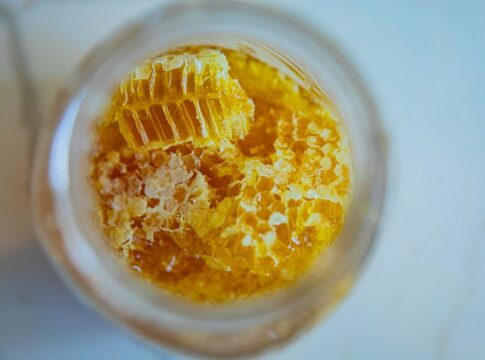
Why Honey Never Spoils: The Ancient Food That Lasts Forever
By Trivia Daily, Staff Writer — Published September 17, 2026
Table of Contents
- Key Takeaways
- Why Honey Never Spoils: The Science of Eternal Preservation
- The Hydrogen Peroxide Factor: Nature’s Antiseptic
- Ancient Honey: Archaeological Evidence of Eternal Food
- What About Crystallization? Understanding Honey’s Texture Changes
- Comparing Honey to Other Long-Lasting Foods
- Frequently Asked Questions
Archaeologists excavating ancient Egyptian tombs have made a remarkable discovery more than once: pots of honey, thousands of years old, still perfectly edible. This isn’t the result of careful preservation or modern technology. It’s simply what honey does. Among all the foods humans have discovered, honey stands alone as the one that never spoils. Not in a year, not in a decade, not even across millennia. The reasons behind this astonishing longevity reveal a fascinating intersection of chemistry, biology, and the remarkable engineering of honeybees.
Understanding why honey never spoils requires exploring the unique properties that make this golden substance virtually immortal. From its extreme acidity to its microscopic water content, every aspect of honey’s composition works together to create an environment where bacteria and microorganisms simply cannot survive.
Key Takeaways
- Honey’s extremely low moisture content (typically around 17-18%) prevents microbial growth by depriving bacteria and fungi of the water they need to survive.
- The pH of honey ranges from 3.2 to 4.5, making it acidic enough to kill most bacteria that attempt to grow in it.
- Honeybees add an enzyme called glucose oxidase that produces hydrogen peroxide, giving honey natural antibacterial properties.
- The high sugar concentration in honey creates an osmotic effect that draws water out of bacterial cells, effectively dehydrating them.
- Archaeologists have found edible honey in ancient Egyptian tombs dating back over 3,000 years, demonstrating its remarkable shelf life.
- Honey can crystallize or change texture over time, but these changes don’t indicate spoilage and are easily reversible with gentle heating.
Why Honey Never Spoils: The Science of Eternal Preservation
The secret to honey’s immortality lies in its chemical composition. When bees produce honey, they’re creating one of nature’s most inhospitable environments for microorganisms. The process begins when forager bees collect nectar, which contains about 70-80% water. Through repeated regurgitation and evaporation inside the hive, bees reduce that moisture content to roughly 17-18%. This dehydration is critical.
Bacteria, mold, and other spoilage organisms need water to grow and reproduce. Most foods contain enough moisture to support microbial life, which is why they eventually rot. Honey’s water content falls far below the threshold needed for bacterial survival. Any microorganism that lands in honey faces immediate dehydration. The concentrated sugars create such a powerful osmotic pressure that water is literally pulled out of bacterial cells, causing them to die before they can multiply.
But low moisture is only part of the story. Honey’s acidity serves as another line of defense. With a pH typically between 3.2 and 4.5, honey creates an acidic environment hostile to most bacteria. This acidity comes from gluconic acid, which forms when glucose oxidase—an enzyme that bees add to honey from their salivary glands—breaks down glucose in the presence of oxygen and water.
The Hydrogen Peroxide Factor: Nature’s Antiseptic
That same glucose oxidase enzyme produces another surprising compound: hydrogen peroxide. Yes, the same antiseptic found in medicine cabinets worldwide occurs naturally in honey. When honey is diluted (such as when it’s applied to wounds), the glucose oxidase becomes more active, generating small amounts of hydrogen peroxide that provide additional antibacterial action.
This discovery helps explain why honey has been used medicinally for thousands of years. Ancient civilizations from Egypt to Greece applied honey to wounds and burns, long before understanding the chemistry behind its healing properties. Modern medical research has validated these traditional uses, with some hospitals now using medical-grade honey for wound care.
The hydrogen peroxide in honey exists in relatively low concentrations—enough to inhibit bacteria but gentle enough not to damage tissue. This makes honey particularly effective as a natural preservative and antimicrobial agent, both for itself and when applied externally.
Ancient Honey: Archaeological Evidence of Eternal Food
The most compelling evidence that honey never spoils comes from archaeology. Multiple excavations of ancient Egyptian tombs have uncovered sealed jars of honey that remained unspoiled after more than three millennia. These discoveries aren’t isolated incidents. Honey has been found in ancient sites across the Mediterranean and Middle East, consistently demonstrating its resistance to decay.
The ancient Egyptians recognized honey’s special properties and used it extensively. They employed it as a sweetener, a medicine, and even in embalming practices. The fact that their honey survived thousands of years in sealed containers—often buried in humid underground chambers—speaks to its extraordinary stability. No special preservation techniques were needed beyond basic storage in sealed vessels.
This archaeological honey would theoretically still be safe to eat, though museums understandably don’t encourage sampling. The honey might have crystallized or darkened with age, but its fundamental properties remain intact. Time simply doesn’t affect honey the way it affects other foods.
What About Crystallization? Understanding Honey’s Texture Changes
Many people mistake crystallization for spoilage. When honey turns cloudy and grainy, forming solid crystals, it hasn’t gone bad. Crystallization is a natural process that occurs because honey is a supersaturated sugar solution. The glucose in honey naturally wants to separate from the water and form crystals.
Several factors influence how quickly honey crystallizes:
- Temperature: Honey crystallizes fastest at temperatures between 50-60°F (10-15°C)
- Glucose-to-fructose ratio: Honey with more glucose crystallizes more quickly
- Pollen and other particles: These provide nucleation sites where crystals can begin forming
- Storage conditions: Frequent temperature changes can accelerate crystallization
Crystallized honey is completely safe and retains all its beneficial properties. To return it to liquid form, simply place the container in warm (not boiling) water. Gentle heating dissolves the crystals without damaging the honey’s enzymes or flavor compounds. Some people actually prefer crystallized honey for spreading on toast or mixing into recipes.
Comparing Honey to Other Long-Lasting Foods
| Food Item | Maximum Shelf Life | Storage Requirements |
|---|---|---|
| Honey | Indefinite (thousands of years) | Sealed container, room temperature |
| White rice | 30+ years | Airtight, cool, dry location |
| Salt | Indefinite | Dry storage (not organic matter) |
| Dried beans | 10-30 years | Airtight, cool, dry, dark |
| Maple syrup | Indefinite (unopened) | Sealed; refrigeration after opening |
While several foods boast impressive longevity, honey’s combination of ready-to-eat convenience and genuine indefinite shelf life makes it unique. Unlike dried beans or rice, honey requires no preparation. Unlike salt, it’s a complete food with nutritional value. And unlike maple syrup, honey never requires refrigeration even after opening.
Frequently Asked Questions
Can honey ever go bad or become unsafe to eat?
Pure honey cannot spoil due to its low moisture content and natural antibacterial properties. However, honey can be contaminated if stored improperly or if water is introduced, which could allow fermentation or mold growth. Properly stored honey in a sealed container remains safe indefinitely.
Why does my honey look different colors or have different flavors?
Honey’s color and flavor depend entirely on the flowers bees visit for nectar. Clover honey is light and mild, while buckwheat honey is dark and robust. Over 300 unique types of honey exist in the United States alone, each reflecting the local flora where bees forage.
Is it true that honey shouldn’t be given to babies?
Babies under one year old should not consume honey because it can contain dormant spores of Clostridium botulinum bacteria. While these spores don’t affect older children and adults with mature digestive systems, they can cause infant botulism in babies whose intestinal systems haven’t fully developed.
Does heating honey destroy its beneficial properties?
Excessive heat can break down some of honey’s enzymes and reduce its antimicrobial properties, but gentle warming to decrystallize honey (around 95-104°F or 35-40°C) doesn’t significantly damage it. Commercial pasteurization uses higher temperatures primarily to prevent crystallization and extend shelf life for retail purposes, not for safety.
The next time you drizzle honey into your tea or spread it on toast, consider that you’re enjoying a food essentially unchanged since ancient times. That same jar could theoretically sit in your pantry for centuries, outlasting you, your grandchildren, and countless generations beyond. Honey’s refusal to spoil isn’t just a curiosity—it’s a testament to the extraordinary chemistry that honeybees have perfected over millions of years of evolution.