
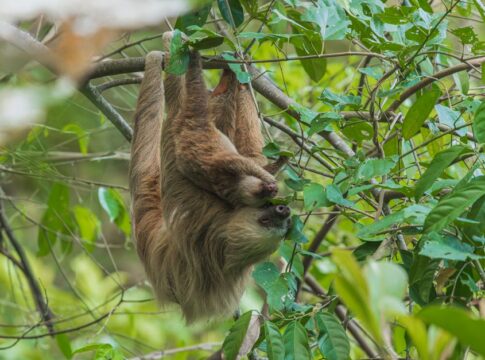
9 Bizarre Facts About Sloths Digesting Food for Weeks
By Trivia Owl, Staff Writer — Published November 13, 2026
Table of Contents
- Key Takeaways
- The Bizarre Truth About Sloths Digesting Food Over Weeks
- How Sloth Digestion Compares to Other Animals
- The Weekly Bathroom Ritual That Defies Logic
- Nine Bizarre Digestive Facts That Make Sloths Unique
- Frequently Asked Questions
Sloths are famous for moving in slow motion through rainforest canopies, but their internal processes are even more leisurely. These fascinating creatures possess one of the most unusual digestive systems in the animal kingdom, taking up to a month to process a single meal. The bizarre facts about sloths digesting their food reveal a world of surprising adaptations that challenge everything we think we know about mammalian metabolism. What seems like simple laziness is actually an intricate survival strategy millions of years in the making.
From multi-chambered stomachs to bacteria-powered digestion, sloths have evolved extraordinary mechanisms to extract every possible nutrient from their leafy diet. These amazing trivia tidbits will change how you view these enigmatic tree-dwellers forever.
Key Takeaways
- Sloths can take up to 30 days to fully digest a single meal, the slowest digestion rate among mammals.
- Their stomach contents can account for up to 30% of their total body weight at any given time.
- Sloths possess multi-chambered stomachs similar to cows, relying on bacterial fermentation to break down tough leaves.
- They only defecate once per week, descending from trees in a risky ritual that accounts for half of all sloth deaths.
- The low-energy diet of leaves forces sloths to maintain body temperatures lower than most mammals.
- Sloth metabolism operates at just 40-45% of the rate expected for their body size.
The Bizarre Truth About Sloths Digesting Food Over Weeks
The sloth digestive system stands apart from nearly every other mammal on Earth. While humans process food in 24 to 72 hours, sloths can take anywhere from two weeks to an entire month to complete digestion. This glacial pace isn’t a flaw—it’s a carefully tuned adaptation to one of the least nutritious diets imaginable. Leaves provide minimal calories and are packed with tough cellulose that most animals cannot digest at all.
To cope, sloths have evolved a specialized multi-chambered stomach that works like a fermentation vat. Beneficial bacteria colonize these chambers and slowly break down the cellulose over weeks. The process is so slow that food sits fermenting in their gut, gradually releasing tiny amounts of energy. This bacterial partnership is essential; without these microscopic helpers, sloths would starve even while eating constantly.
The sheer volume of partially digested food in a sloth’s system is staggering. At any moment, roughly one-third of a sloth’s body weight consists of stomach contents in various stages of decomposition. Imagine carrying around a backpack that weighs a third of what you do—every single day. This permanent food ballast makes climbing even more energy-intensive, yet sloths manage it with remarkable efficiency.
How Sloth Digestion Compares to Other Animals
| Animal | Digestion Time | Stomach Type | Primary Diet |
|---|---|---|---|
| Sloth | 14-30 days | Multi-chambered | Leaves |
| Cow | 70-100 hours | Four-chambered | Grass, hay |
| Human | 24-72 hours | Single-chambered | Omnivorous |
| Dog | 8-10 hours | Single-chambered | Meat-based |
The Weekly Bathroom Ritual That Defies Logic
Given their incredibly slow digestion, sloths have developed an equally unusual bathroom schedule. They defecate only once per week, and when nature calls, they embark on one of the most dangerous journeys of their lives. Rather than simply relieving themselves from the safety of the canopy, sloths laboriously climb down to the forest floor—a trip that can take 30 minutes and exposes them to predators like jaguars and ocelots.
Why risk it? Scientists have puzzled over this behavior for decades. One leading theory suggests that defecating at the base of their favorite trees fertilizes them, ensuring a continued food supply. Another hypothesis involves the symbiotic moths that live in sloth fur; these insects lay eggs in sloth dung, and the emerging moths later contribute nutrients that support algae growth in the sloth’s coat. This algae provides camouflage and possibly supplemental nutrition when sloths groom themselves.
When a sloth finally does defecate, it can release up to 30% of its body weight in a single session. The relief must be considerable, yet this weekly ritual accounts for approximately half of all sloth deaths in the wild. Evolution has somehow favored this perilous practice over the simpler option of defecating from the trees.
Nine Bizarre Digestive Facts That Make Sloths Unique
1. Their Stomach Chambers Host a Microbial City
A sloth’s multi-chambered stomach functions as a living fermentation factory, housing billions of specialized bacteria that exist nowhere else on Earth. These microorganisms have co-evolved with sloths over millions of years, developing the unique ability to break down the specific leaf species each sloth population consumes. Different sloth species and even different geographic populations harbor distinct bacterial communities, making each sloth’s gut microbiome a one-of-a-kind ecosystem. The bacteria work around the clock, but the chemical reactions proceed so slowly that a leaf fragment might sit fermenting for three weeks before yielding its meager calories.
2. Food Fermentation Generates Internal Heat
The bacterial fermentation happening inside a sloth’s gut produces heat as a byproduct—and sloths rely on this warmth to maintain their body temperature. Unlike most mammals that generate heat through muscle activity and high metabolic rates, sloths have outsourced much of their thermoregulation to their digestive system. This internal furnace is so important that sloths carefully position themselves in sunny spots to help keep their gut bacteria at optimal temperatures. If their stomach gets too cold, fermentation slows even further, trapping them in a dangerous cycle of reduced energy production.
3. They Can Starve With a Full Stomach
One of the most tragic quirks of sloth digestion is that they can literally starve to death while their stomach remains full of food. If environmental temperatures drop too low, the bacterial fermentation in their gut slows to a crawl or stops entirely. Without the bacteria actively breaking down cellulose, the leaves just sit there, indigestible and useless. The sloth continues to feel full and may stop eating, but no nutrients are being extracted. This temperature sensitivity makes sloths particularly vulnerable to climate fluctuations and is one reason they’re restricted to tropical and subtropical regions.
4. Their Metabolism Runs at Half Speed
Sloths maintain the lowest metabolic rate of any mammal relative to their size, operating at roughly 40 to 45 percent of what would be expected. This extreme energy conservation allows them to survive on leaves that would starve most other animals. A sloth might consume only 15 to 20 grams of leaves per day—an amount that seems impossibly small. By comparison, a howler monkey of similar size needs to eat several times that amount. The sloth’s super-slow metabolism means it needs less food, but it also means every biological process happens in slow motion, from wound healing to reproduction.
5. Body Temperature Fluctuates Like a Reptile
Most mammals maintain a constant internal temperature, but sloths behave more like reptiles in this regard. Their body temperature can vary by as much as 5 degrees Celsius depending on environmental conditions—a range that would be dangerous or fatal for most mammals. This flexibility helps conserve energy since maintaining a constant temperature is metabolically expensive. Sloths actively thermoregulate by moving between sun and shade, effectively using their environment as an external temperature control system. Early morning often finds them sunbathing to warm their digestive bacteria before the day’s slow activities begin.
6. Leaves Provide Almost No Nutritional Value
The leaves sloths consume are among the least nutritious foods any mammal regularly eats. Young, tender leaves contain defensive compounds that make them toxic or indigestible to most animals. Mature leaves are slightly less toxic but are mostly cellulose—essentially wood fiber—with minimal protein, fat, or simple sugars. Sloths have developed some tolerance to leaf toxins, but they’re still selective, often feeding from just a few preferred tree species. Even with bacterial help, they extract only a fraction of the potential energy from each leaf, making their entire lifestyle a masterclass in extreme efficiency and energy conservation.
7. Digestion Rate Varies by Species
Not all sloths digest at the same glacial pace. Three-toed sloths generally have even slower digestion than their two-toed cousins, sometimes taking the full 30 days to process a meal. Two-toed sloths, slightly more omnivorous in their diet, occasionally manage digestion in as “little” as two weeks. These differences reflect subtle variations in stomach structure, gut bacteria composition, and dietary preferences. Three-toed sloths are also more specialized leaf-eaters, while two-toed sloths supplement their diet with occasional fruits, flowers, and even small insects—foods that digest more quickly than tough leaves.
8. The Descending Colon Acts as a Storage Tank
Between weekly bathroom trips, sloths must store an enormous volume of waste material. Their descending colon has evolved into a massive storage organ that can expand dramatically to accommodate a week’s worth of feces. This biological holding tank can become so distended that it visibly bulges, making the sloth appear noticeably heavier and rounder by the end of the week. The muscular walls of this expanded colon must be strong enough to contain the waste without rupturing, yet flexible enough to contract during the weekly elimination event. It’s an engineering challenge that evolution has solved through anatomical modifications found in no other mammal.
9. Digestive Adaptations Limit Sloth Diversity
The extreme specialization of the sloth digestive system has created an evolutionary trap of sorts. Because sloths depend so heavily on specific gut bacteria to digest specific leaf types, they cannot easily adapt to new food sources or environments. This specialization has limited sloth diversity; only six species exist today, compared to dozens of species millions of years ago. Climate change and habitat loss pose existential threats because sloths cannot simply switch to eating different plants if their preferred trees disappear. Their digestive system has become so finely tuned to their current niche that flexibility—evolution’s usual safety net—has been sacrificed for efficiency.
Frequently Asked Questions
How long does it take a sloth to digest food?
Sloths take between 14 and 30 days to fully digest a meal, making them the slowest-digesting mammals on Earth. The exact time varies by species and environmental temperature, as cooler conditions slow the bacterial fermentation process even further.
Why do sloths digest food so slowly?
Sloths have extremely low metabolic rates and eat leaves with very little nutritional value, requiring extended fermentation by gut bacteria to extract any usable energy. Their slow digestion is an adaptation to survive on one of the least calorie-rich diets in the mammal kingdom.
How often do sloths go to the bathroom?
Sloths defecate approximately once per week, descending from trees to do so in a risky ritual that makes them vulnerable to predators. During this weekly event, they can release up to 30% of their body weight in waste.
Can sloths digest anything other than leaves?
While leaves form the vast majority of their diet, two-toed sloths occasionally consume fruits, flowers, and small insects. However, their digestive system is so specialized for leaves that they cannot survive on alternative diets for extended periods.
The next time you see a sloth hanging motionless in a tree, remember that beneath that serene exterior, an entire microbial civilization is working around the clock to extract nutrients from the toughest food source imaginable. Their digestion may take weeks, but it represents one of evolution’s most remarkable experiments in energy efficiency—a living reminder that nature’s solutions are often stranger than we could ever invent.