
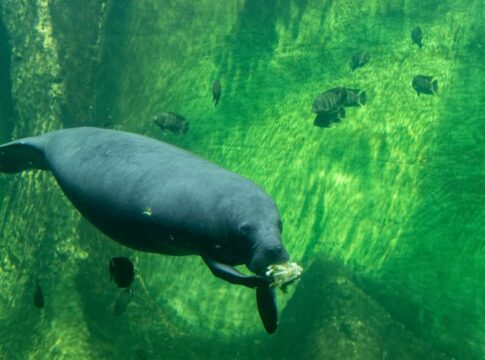
The Truth About Mermaids Inspired by Manatee Sightings
By Trivia Daily, Staff Writer — Published November 22, 2026
Table of Contents
- Key Takeaways
- The Truth Mermaids Inspired: How Sailors Made the Mistake
- What Columbus and Other Explorers Actually Saw
- The Real Lives of Manatees
- Why Mermaid Myths Persisted Despite the Truth
- Modern Manatee Conservation
- Frequently Asked Questions
For centuries, sailors returned from ocean voyages with tales of enchanting creatures—half woman, half fish—singing from distant rocks. But the truth mermaids inspired is far more surprising than fantasy: these legendary beings likely owe their existence to exhausted seafarers mistaking gentle, gray manatees for mystical sirens. It’s a curious case of mistaken identity that reveals as much about human perception as it does about marine biology.
The connection between manatees and mermaid mythology isn’t just folklore. Historical records document sailors and explorers, including Christopher Columbus himself, reporting mermaid sightings that modern researchers believe were actually encounters with these slow-moving marine mammals. The facts behind this fascinating mix-up offer amazing insights into how myths take root in reality.
Key Takeaways
- Christopher Columbus reported seeing three “mermaids” off the coast of Hispaniola in 1493, which historians believe were manatees.
- Manatees nurse their young while holding them with flippers, creating a silhouette that could resemble a mother cradling a baby—a distinctly human-like behavior.
- Sailors on long voyages suffered from scurvy, dehydration, and exhaustion, conditions that can cause hallucinations and impaired judgment.
- The word “siren” originally referred to dangerous creatures in Greek mythology, but manatees are actually docile herbivores with no teeth designed for hunting.
- Manatees can hold their breath for up to 20 minutes and must surface to breathe, creating brief glimpses that might fuel imagination.
- Modern manatee populations remain threatened, with boat strikes being a leading cause of injury and death.
The Truth Mermaids Inspired: How Sailors Made the Mistake
Understanding how anyone could confuse a manatee for a beautiful mermaid requires stepping into the world of 15th- and 16th-century seafaring. Months at sea meant vitamin deficiencies, sleep deprivation, and intense loneliness. Scurvy alone causes confusion and psychological symptoms. Add the human brain’s tendency toward pareidolia—seeing familiar patterns in unfamiliar shapes—and suddenly a gray, whiskered face breaking the water’s surface becomes something more exotic.
Manatees exhibit behaviors that, from a distance or in poor lighting, might seem remarkably human. They use their flippers with surprising dexterity. Mothers nurse their calves at the surface, sometimes appearing to cradle their young against their chest. Their eyes are small but expressive. Their tails, while horizontal like a whale’s rather than vertical like a fish’s, could be obscured beneath the waves, leaving only the upper body visible.
The animals also inhabit coastal shallows, estuaries, and river mouths—exactly where ships would anchor for fresh water and supplies. These chance encounters in murky tropical waters, viewed by exhausted sailors whose expectations were shaped by centuries of mermaid legends, created the perfect conditions for mythological “confirmation.”
What Columbus and Other Explorers Actually Saw
Columbus famously noted in his journal that the mermaids he observed off the coast of what is now the Dominican Republic were “not as pretty as they are depicted, for somehow in the face they look like men.” This less-than-flattering description actually supports the manatee theory perfectly. A male manatee can weigh up to 1,200 pounds, with a round, barrel-shaped body, a broad flat tail, and a face only a marine biologist could love.
Other explorers and naturalists made similar reports throughout the Age of Exploration. The pattern remained consistent: sightings occurred in warm, shallow waters where manatees naturally congregate. The creatures appeared from a distance, often in conditions of poor visibility. And the descriptions, when stripped of embellishment, matched manatee anatomy and behavior far better than they matched the classical depiction of mermaids.
The Real Lives of Manatees
Manatees belong to the order Sirenia—a taxonomic name that directly references the mythological sirens. Three species of manatees exist today: the West Indian manatee (found in the Caribbean, Gulf of Mexico, and along the southeastern United States coast), the Amazonian manatee, and the West African manatee. A fourth sirenian, the dugong, inhabits the Indo-Pacific region and shares similar characteristics.
These marine mammals are entirely herbivorous, consuming up to 10-15% of their body weight in aquatic vegetation daily. They have no natural predators as adults. Their closest living relatives, surprisingly, are elephants—a connection visible in their thick, wrinkled skin and prehensile upper lips. Manatees possess a unique skeletal adaptation: unlike almost all other mammals, which have seven cervical vertebrae, manatees have only six, limiting their neck flexibility.
| Characteristic | Manatee Reality | Mermaid Myth |
|---|---|---|
| Size | 800-1,200 pounds, 9-10 feet long | Human-sized upper body |
| Skin | Gray, wrinkled, covered in algae | Smooth, beautiful |
| Tail | Horizontal paddle shape | Vertical fish-like fin |
| Behavior | Slow-moving, docile herbivore | Enchanting, sometimes dangerous |
| Habitat | Shallow coastal waters, rivers | Rocky shores, deep ocean |
Why Mermaid Myths Persisted Despite the Truth
Even after naturalists correctly identified manatees and other marine mammals, mermaid stories endured. Humans have always been drawn to liminal creatures—beings that exist between categories. Mermaids represent the boundary between land and sea, human and animal, known and unknown. They appear in cultures worldwide, from European folklore to African water spirits to Asian tales, suggesting something universal in our fascination with these hybrid beings.
The myths also served practical purposes. Sailors used mermaid sightings as navigational markers and omens. Stories of dangerous sirens luring ships to their doom might have encoded warnings about treacherous coastlines or unpredictable currents. The legends became part of maritime culture, passed down through generations even as scientific knowledge advanced.
Modern Manatee Conservation
Today, all manatee species face significant threats. The West Indian manatee was listed as endangered for decades before being reclassified as threatened in 2017—a designation that reflects both conservation progress and ongoing vulnerability. Boat collisions remain the leading cause of manatee deaths in Florida, where the animals congregate in warm-water refuges during winter months. Many manatees bear distinctive propeller scars that researchers use for individual identification.
Habitat loss, water pollution, and climate change pose additional challenges. Manatees require access to warm water (below 68°F, they can develop cold stress syndrome) and abundant aquatic vegetation. Coastal development disrupts both requirements. Conservation efforts include establishing protected zones, enforcing boat speed limits in manatee habitats, and rescuing injured animals for rehabilitation.
Frequently Asked Questions
Did sailors really think manatees were mermaids?
Historical records, including Christopher Columbus’s journals, document sailors reporting mermaid sightings in areas where manatees are common. While we can’t know exactly what every sailor believed, the evidence strongly suggests many mermaid reports were manatee misidentifications, especially given the conditions of long sea voyages and limited understanding of marine life.
Why are manatees called sea cows?
Manatees earned the nickname “sea cows” because they graze on underwater grasses and vegetation much like cattle graze on land. They spend most of their waking hours eating, consuming massive quantities of aquatic plants, and move slowly through shallow waters in a peaceful, cow-like manner.
Can you swim with manatees?
In certain designated areas of Florida, particularly Crystal River, passive observation of wild manatees is permitted under strict guidelines. You must not chase, touch, feed, or otherwise disturb the animals, though manatees may approach humans out of curiosity. Federal and state laws protect manatees, with significant penalties for harassment.
Do manatees have any natural predators?
Adult manatees have no natural predators due to their large size, though young calves may occasionally fall victim to crocodiles, alligators, or sharks. The greatest threats to manatees come from human activities, particularly boat strikes, habitat destruction, and water pollution.
The next time you see a classical painting of a mermaid or read an old sailor’s tale, remember the gentle giants that likely inspired these myths. Those legendary creatures singing from the rocks were probably just manatees surfacing to breathe—proof that reality, when examined closely, often proves stranger and more wonderful than fiction.