
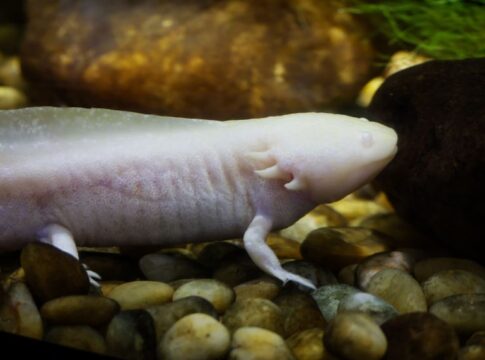
Why Axolotls Can Regrow Their Brains and Hearts
By Trivia Daily, Animals Desk — Published October 28, 2026
Table of Contents
- Key Takeaways
- How Axolotls Regrow Brains and Other Vital Organs
- The Evolutionary Secret Behind Perpetual Youth
- Comparing Regeneration Across the Animal Kingdom
- Why Humans Can’t Do What Axolotls Do
- The Conservation Crisis of a Medical Marvel
- Frequently Asked Questions
Most animals live with the bodies they’re born with, scars and all. Lose a limb, and it’s gone forever. Damage your heart, and you hope it heals just enough to keep beating. But the axolotl, a peculiar salamander native to Mexico, plays by entirely different rules. These pink, frilly-gilled creatures can regrow entire organs—including portions of their brains and hearts—with a precision that makes them one of nature’s most astonishing repair machines. Understanding how axolotls regrow brains and other vital structures could unlock secrets that transform medicine and our grasp of what animal bodies can achieve.
The axolotl’s regenerative powers aren’t just impressive—they’re almost science fiction made real. Cut off a leg, and within weeks a perfect replacement emerges, complete with bones, muscles, nerves, and skin. Slice away part of the heart, and the tissue rebuilds itself without scarring. Even sections of the brain and spinal cord can be restored, a feat no mammal can match.
Key Takeaways
- Axolotls can regenerate entire limbs, portions of their hearts, spinal cords, eyes, and even parts of their brains throughout their lives.
- These creatures remain in a juvenile, aquatic form their entire lives due to a condition called neoteny, retaining regenerative abilities other salamanders lose at maturity.
- Specialized cells called blastemal cells form at injury sites and can transform into any tissue type needed for repair—bone, muscle, nerve, or organ tissue.
- Unlike human healing, which produces scar tissue, axolotl regeneration creates perfect replicas of the original structure without scarring.
- Wild axolotls are critically endangered, found only in the canals of Xochimilco near Mexico City, though millions exist in research laboratories worldwide.
- Scientists study axolotl regeneration to develop treatments for human heart disease, spinal injuries, and neurodegenerative conditions.
How Axolotls Regrow Brains and Other Vital Organs
When an axolotl suffers an injury, its body responds with a biological program most species abandoned millions of years ago. At the wound site, cells form a structure called a blastema—a mass of unspecialized cells that functions like a construction crew with a complete blueprint. These blastemal cells can differentiate into any tissue the body needs: neurons for the brain, cardiac muscle for the heart, cartilage for limbs.
The process works through cellular reprogramming. Mature cells near the injury site actually revert to a more primitive, flexible state. A muscle cell might lose its specialized identity and become capable of forming bone. A skin cell might transform into nerve tissue. This plasticity allows the axolotl to rebuild complex structures with all their intricate parts in the right places.
The brain regeneration is particularly remarkable. When researchers remove sections of axolotl brain tissue, the animals not only survive but regrow the missing portions. New neurons form, connect to existing neural networks, and restore function. The spinal cord, which in mammals forms permanent scar tissue after injury, regenerates completely in axolotls, allowing paralyzed animals to swim again.
Heart regeneration follows a similar pattern. Axolotls can regrow up to half their heart tissue after injury. New cardiac muscle cells proliferate, blood vessels reform, and the organ resumes its full pumping capacity. No scar tissue interferes with the heart’s electrical signals or flexibility.
The Evolutionary Secret Behind Perpetual Youth
Axolotls possess their regenerative superpowers partly because they never truly grow up. Most salamanders start life as aquatic larvae with external gills, then metamorphose into terrestrial adults with lungs. Axolotls skip that transformation entirely, a phenomenon called neoteny. They retain their juvenile body plan—feathery gills, fin-like tail, aquatic lifestyle—throughout their entire lifespan, which can exceed ten years.
This arrested development matters because juvenile salamanders retain regenerative abilities that adults typically lose. By staying in larval form, axolotls keep their cellular repair mechanisms active for life. Their cells maintain a flexibility that most animals lose as they mature, when developmental programs shut down and cells become locked into specialized roles.
The genetic machinery controlling this process involves thousands of genes. Axolotls have one of the largest genomes ever sequenced—roughly ten times larger than the human genome. Within that vast genetic library are instructions for regeneration that most vertebrates either lack or have switched off during evolution.
Comparing Regeneration Across the Animal Kingdom
| Animal | Regenerative Ability | Time to Regrow |
|---|---|---|
| Axolotl | Complete limbs, heart tissue, brain sections, spinal cord, eyes | Weeks to months |
| Planarian flatworm | Entire body from tiny fragments | Days to weeks |
| Starfish | Arms and central disk from single arm | Months to a year |
| Zebrafish | Fins, heart tissue, retina | Weeks |
| Deer | Antlers only (seasonal) | Months |
| Humans | Liver tissue, skin (with scarring), fingertips (children only) | Weeks |
Why Humans Can’t Do What Axolotls Do
Mammals, including humans, traded regenerative ability for other evolutionary advantages. Our complex immune systems, warm-blooded metabolism, and sophisticated nervous systems apparently came at a cost—the loss of extensive regeneration capacity. When we suffer injuries, our bodies prioritize speed over perfection, forming scar tissue that closes wounds quickly but doesn’t restore original function.
Human cells also have built-in limits on division to prevent cancer. The same cellular controls that stop tumors from forming also prevent the kind of rapid, extensive cell proliferation that axolotl regeneration requires. Our cells are programmed to be cautious; axolotl cells are programmed to rebuild.
That said, humans retain traces of regenerative ability. The liver can regrow from a fraction of its original size. Young children can sometimes regrow fingertips if the wound isn’t closed surgically. And certain stem cells in our bodies maintain the potential to become different tissue types, though they rarely activate that potential outside controlled laboratory conditions.
The Conservation Crisis of a Medical Marvel
Wild axolotls face extinction in their native habitat. Once common throughout the lake system of the Valley of Mexico, they now survive only in the canals of Xochimilco, a small area south of Mexico City. Pollution, invasive species, and urban development have devastated their population. Recent surveys found shockingly few wild individuals—possibly fewer than a thousand.
The species survives primarily in captivity. Research laboratories around the world maintain axolotl colonies for scientific study, and the pet trade has created large breeding populations. These captive animals are helping scientists understand regeneration, but they represent a narrow genetic slice of the wild population’s original diversity.
Conservation efforts in Mexico focus on restoring canal habitats and removing invasive fish that compete with axolotls. The species has become a cultural symbol in Mexico City, where its unique appearance and endangered status have made it an icon of conservation efforts.
Frequently Asked Questions
Can axolotls regrow their heads?
No, axolotls cannot regrow their entire heads or brains, but they can regenerate portions of brain tissue, including parts of the telencephalon and other brain regions. Complete head regeneration would require regrowing too many vital, complex structures simultaneously.
How many times can an axolotl regrow the same body part?
Axolotls can regenerate the same limb or organ multiple times throughout their lives without apparent limit. Researchers have documented individuals regrowing the same leg dozens of times with no loss of regenerative quality.
Do axolotls feel pain when they lose a limb?
Axolotls possess nervous systems capable of detecting injury, but their pain response appears different from mammals. They show minimal stress behaviors during regeneration, though ethical research practices still minimize any potential suffering.
Could humans ever regenerate organs like axolotls?
Scientists are studying axolotl genes and cellular mechanisms to potentially trigger similar regeneration in mammals. While full organ regeneration in humans remains distant, research has already improved treatments for heart damage and spinal injuries using insights from these creatures.
Every time an axolotl regrows a lost limb or repairs its heart, it demonstrates possibilities that evolution didn’t grant us but perhaps didn’t completely deny us either. Somewhere in our shared vertebrate ancestry, the genetic instructions for such repair still exist, waiting for science to learn how to read them again.