
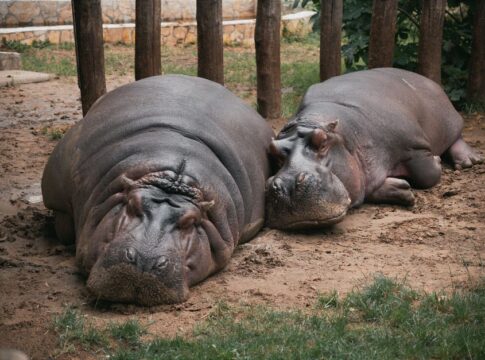
Why Hippos Are Actually the Deadliest Animals in Africa
By Trivia Daily, Animals Desk — Published October 28, 2026
Table of Contents
- Key Takeaways
- Why Hippos Actually Deadliest Animals Behave So Aggressively
- Comparing Africa’s Deadliest Wildlife
- The Anatomy of a Dangerous Creature
- Human-Hippo Conflict and Habitat Pressures
- Debunking the Gentle Giant Myth
- Frequently Asked Questions
When you think of Africa’s most dangerous wildlife, lions, crocodiles, or venomous snakes probably come to mind first. But here’s a fact that surprises most people: hippos actually deadliest animals on the continent, responsible for more human fatalities each year than any other large animal. These massive, seemingly placid herbivores kill an estimated 500 people annually across sub-Saharan Africa—far more than lions, leopards, or any other creature most travelers fear.
The disconnect between their cuddly reputation and their lethal reality makes hippos one of nature’s most misunderstood species. Despite appearing slow and docile while lounging in rivers, these animals are fiercely territorial, incredibly fast, and equipped with tusks that can grow up to 20 inches long. Understanding why hippos are so dangerous requires looking beyond their cartoon image to examine their actual behavior, habitat needs, and interactions with humans.
Key Takeaways
- Hippos kill approximately 500 people per year in Africa, more than lions, crocodiles, and other large predators combined.
- Despite weighing up to 4,000 pounds, hippos can run at speeds of 19-25 miles per hour on land—faster than most humans.
- Male hippos possess canine teeth that function as tusks, reaching up to 20 inches in length and capable of crushing bones.
- Hippos are highly territorial and will aggressively defend their river habitats and pathways to feeding grounds.
- Most hippo attacks occur when humans inadvertently block their access routes between water and land during evening or early morning hours.
- The hippopotamus is classified as vulnerable by conservation organizations, with populations declining due to habitat loss and human conflict.
Why Hippos Actually Deadliest Animals Behave So Aggressively
The hippopotamus didn’t evolve to be a human predator. These animals are herbivores that spend their nights grazing on grass and their days submerged in water to keep cool. Their aggression stems from deeply ingrained survival instincts rather than hunting behavior. Hippos are extremely territorial, particularly males who defend specific stretches of river against rivals during mating season. Any perceived threat to their territory—including boats, fishermen, or people washing clothes—can trigger an explosive defensive response.
What makes encounters particularly dangerous is the hippo’s deceptive speed. On land, they appear cumbersome and slow. In reality, a charging hippo can reach speeds exceeding 20 miles per hour in short bursts, easily outpacing even athletic humans. Their bulk becomes a weapon: at 3,000 to 4,000 pounds for males and 2,800 to 3,500 pounds for females, a hippo can simply trample a person. Those massive jaws can open to nearly 180 degrees, revealing tusk-like canine teeth designed for combat with other hippos but equally effective against any threat.
Hippo attacks typically happen in two scenarios. The first occurs in water, where hippos spend roughly 16 hours per day. Boats that venture too close or fishermen working in hippo territory may find themselves capsized by an animal defending its space. The second, more common scenario unfolds on land at dusk or dawn. Hippos follow the same paths repeatedly between their daytime water refuges and nighttime feeding areas. Humans who unknowingly camp, walk, or build structures along these established routes may find themselves between a hippo and its destination—a situation the animal resolves with immediate aggression.
Comparing Africa’s Deadliest Wildlife
| Animal | Estimated Annual Human Deaths | Primary Threat Mechanism |
|---|---|---|
| Hippopotamus | ~500 | Territorial aggression, trampling, biting |
| Nile Crocodile | ~300 | Predatory attacks near water |
| Lion | ~250 | Predation, livestock defense encounters |
| African Elephant | ~100 | Trampling during musth or crop defense |
| Cape Buffalo | ~200 | Charging when wounded or threatened |
The Anatomy of a Dangerous Creature
A closer look at hippo anatomy reveals why these animals are so formidable. Their jaws exert tremendous bite force—estimated at around 1,800 pounds per square inch, comparable to some crocodile species. Those prominent lower canines aren’t for eating; they’re weapons that continuously grow throughout the animal’s life. Bulls use them to fight rival males, inflicting deep wounds that can prove fatal even to other hippos.
The skin itself offers remarkable protection. At nearly two inches thick in places, hippo hide acts like natural armor. Beneath that thick skin lies a layer of fat and then dense muscle capable of propelling the animal’s enormous mass with surprising agility. In water, hippos are even more graceful, walking along river bottoms and able to hold their breath for up to five minutes. This aquatic lifestyle puts them in direct contact with human communities that depend on the same rivers for fishing, transportation, and water.
Human-Hippo Conflict and Habitat Pressures
The frequency of deadly hippo encounters relates directly to habitat overlap. As human populations expand across Africa, settlements increasingly encroach on traditional hippo territories. Rivers that once provided ample space for hippo pods now host fishing villages, irrigation projects, and transportation routes. The animals haven’t changed their behavior patterns developed over millions of years of evolution. Humans have simply moved into their space.
Climate change and water scarcity intensify these conflicts. During droughts, hippos concentrate in shrinking water bodies, bringing them into closer contact with human communities also struggling with water access. Agricultural expansion eliminates natural vegetation, forcing hippos to raid crops for food—a behavior that brings them into direct conflict with farmers protecting their livelihoods. Unlike elephants or lions, hippos receive less conservation attention and funding, despite being classified as vulnerable with declining populations.
Conservation organizations face a challenging balance: protecting both human communities and hippo populations. Solutions include creating buffer zones between settlements and hippo habitats, establishing wildlife corridors, and educating communities about hippo behavior patterns. Some regions have implemented warning systems to alert people when hippos are moving through areas at night. These efforts acknowledge that coexistence requires understanding the species rather than simply fearing it.
Debunking the Gentle Giant Myth
Popular culture has done hippos no favors. Cartoons and children’s books typically portray them as friendly, rotund characters—think the ballerina hippos in Disney’s Fantasia or the lovable Hungry Hungry Hippos game. This cultural image creates dangerous misconceptions among tourists and even some local populations unfamiliar with actual hippo behavior. Wildlife experts consistently emphasize that hippos should be treated with the same caution and respect as any large, wild animal.
Even in controlled environments like wildlife parks, hippos remain unpredictable and potentially lethal. Zookeepers rank them among the most dangerous animals to work with, requiring extensive safety protocols. The species’ temperament doesn’t soften with familiarity or captivity. This consistent aggression across contexts underscores that we’re dealing with fundamental animal behavior, not individual personality variations.
Frequently Asked Questions
Are hippos more dangerous than crocodiles in Africa?
Yes, hippos kill approximately 500 people annually compared to roughly 300 deaths from Nile crocodiles. Hippos cause more fatalities primarily due to territorial aggression and the frequency of human encounters in shared habitats rather than predatory behavior.
Can a human outrun a charging hippo?
No, most humans cannot outrun a hippo. While hippos can only sustain top speeds of 19-25 miles per hour for short distances, this exceeds the sprint capability of average humans, and their acceleration in the initial charge is particularly dangerous.
Do hippos attack boats on purpose?
Hippos perceive boats as territorial threats rather than targeting them deliberately. When a boat enters a hippo’s territory, especially near calves or during mating season, the animal may capsize it as a defensive response to what it perceives as an intruder.
Why don’t hippos live in saltwater if they spend so much time in water?
Hippos are adapted to freshwater environments and cannot survive in saltwater. Their skin requires frequent immersion to prevent dehydration and cracking, and they depend on freshwater rivers and lakes that provide both cooling and access to nearby grasslands for nighttime grazing.
The next time you see a hippo yawning in a nature documentary, remember that display isn’t sleepiness—it’s a threat display showcasing those formidable teeth. These creatures command our respect not through predatory prowess but through sheer defensive capability honed by millions of years of evolution. In the complex tapestry of African wildlife, the hippo reminds us that danger doesn’t always roar—sometimes it simply defends its home with overwhelming force.