
9 Strange Facts About Axolotl Regeneration Abilities
By Trivia Daily, Animals Desk — Published September 13, 2026
Table of Contents
- Key Takeaways
- The Science Behind Strange Axolotl Regeneration
- Beyond Limbs: Organs and Neural Tissue
- 1. They Can Regenerate the Same Limb Multiple Times
- 2. The Process Creates Zero Scar Tissue
- 3. Their Cells Can Reverse Development
- 4. They Retain Juvenile Features Their Entire Lives
- 5. Transplanted Organs Are Rarely Rejected
- 6. They Can Regrow Perfect Replacements for Amputated Jaws
- 7. Their Spinal Cord Regeneration Includes Functional Neural Connections
- 8. Temperature Affects Regeneration Speed
- 9. They Can Regenerate Eye Structures Including the Lens
- Comparing Regeneration Across Species
- Frequently Asked Questions
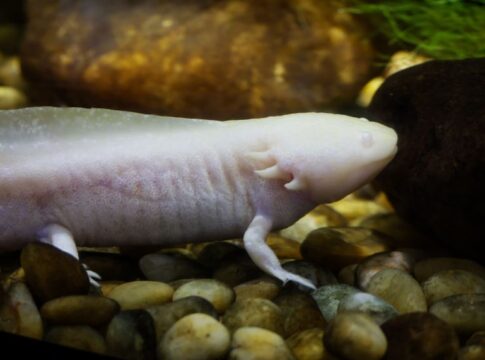
The axolotl, a peculiar salamander native to the lakes of Mexico, possesses one of nature’s most extraordinary superpowers: the ability to regrow entire limbs, organs, and even portions of its brain. While many creatures in the animal kingdom exhibit some regenerative abilities, few can match the strange axolotl regeneration capabilities that have captivated scientists for centuries. These amphibious animals don’t just heal wounds—they rebuild complex structures with near-perfect accuracy, making them living laboratories for understanding tissue repair and cellular behavior.
What makes this species particularly fascinating is that axolotls achieve these feats while retaining their juvenile form throughout their entire lives, a phenomenon that adds yet another layer of mystery to their already remarkable biology. From regrowing spinal cords to regenerating heart tissue, these creatures challenge our understanding of what’s possible in the natural world.
Key Takeaways
- Axolotls can regenerate entire limbs, including bones, muscles, nerves, and blood vessels, up to five times without scarring.
- Unlike most animals, axolotls can regrow portions of their brain, heart, and spinal cord with full functionality.
- The regeneration process involves creating a blastema—a mass of undifferentiated cells that “remember” what to rebuild.
- Axolotls remain in their larval form their entire lives, a trait called neoteny that may be linked to their regenerative powers.
- These salamanders can even accept transplanted organs from other axolotls without rejection, making them ideal for regeneration research.
- The entire regeneration process for a limb takes approximately 40 to 50 days from injury to full restoration.
The Science Behind Strange Axolotl Regeneration
When an axolotl loses a limb, something remarkable happens at the cellular level. Within hours, skin cells migrate to cover the wound site, creating a protective layer. Unlike mammals, which form scar tissue that prevents regeneration, axolotls trigger a completely different biological response. The cells at the injury site dedifferentiate—essentially reverting to a more primitive, stem-cell-like state—and form a structure called a blastema. This cellular mass contains the blueprint for rebuilding whatever was lost.
The blastema is the key to understanding why axolotl regeneration differs from healing in other animals. These cells somehow “know” their position in three-dimensional space and what structures need to be rebuilt. Researchers have discovered that specific genes activate during this process, orchestrating the precise reconstruction of bones, muscles, nerves, and blood vessels in the correct arrangement. The wildlife biology community considers this one of the most sophisticated examples of tissue regeneration in vertebrate species.
Beyond Limbs: Organs and Neural Tissue
While limb regeneration is impressive, the axolotl’s abilities extend far beyond appendages. These creatures can regenerate portions of their heart, lungs, ovaries, and even their spinal cord. Heart regeneration in axolotls involves rebuilding functional cardiac muscle tissue, complete with proper electrical signaling—something mammals cannot achieve. When heart tissue is damaged, the axolotl’s body responds by proliferating existing cardiac cells rather than replacing them with non-functional scar tissue.
Perhaps most astonishing is their capacity to regrow parts of their brain. While the extent of this ability has limits, axolotls can regenerate sections of their telencephalon (the front part of the brain) and restore neural pathways. The regenerated brain tissue integrates with existing structures and resumes normal function. This neural regeneration represents a frontier in understanding how complex nervous systems might be repaired, offering potential insights for treating spinal injuries and neurodegenerative diseases in humans.
1. They Can Regenerate the Same Limb Multiple Times
An axolotl doesn’t get just one chance at regeneration. These animals can regrow the same limb repeatedly—researchers have documented successful regeneration up to five times for individual limbs, and the process remains consistent each time. The quality of regeneration doesn’t noticeably decline with repetition, though some studies suggest minor variations in bone density after multiple cycles. This repeatable regeneration sets axolotls apart from species like lizards, which can only regrow their tails once or twice and often with reduced structural integrity.
2. The Process Creates Zero Scar Tissue
Mammals heal injuries through inflammation and scar formation—a quick fix that closes wounds but permanently alters tissue structure. Axolotls take a completely different approach. Their regeneration produces functional tissue identical to the original, without any scarring. The absence of fibrosis (scar tissue formation) is crucial to their success. Scientists believe that axolotls either suppress or lack certain inflammatory responses that trigger scarring in mammals, allowing their cells to focus entirely on reconstruction rather than rapid wound closure.
3. Their Cells Can Reverse Development
One of the strangest aspects of axolotl regeneration involves cellular dedifferentiation—the process where specialized cells revert to a more primitive, flexible state. A muscle cell, for example, can essentially “forget” its specialized function and become more like a stem cell. These dedifferentiated cells then receive new instructions based on their position in the blastema, allowing them to become whatever cell type is needed: bone, cartilage, muscle, or nerve. This cellular flexibility is extremely rare in adult vertebrates and represents a fundamental difference in how axolotl tissues respond to injury.
4. They Retain Juvenile Features Their Entire Lives
Axolotls exhibit neoteny, meaning they reach sexual maturity while retaining larval characteristics. They keep their external gills, aquatic habitat preference, and other juvenile traits throughout adulthood. This permanent “childhood” may be directly connected to their regenerative abilities. Many salamanders lose their regenerative capacity when they undergo metamorphosis into terrestrial adults, but axolotls, by never fully transforming, maintain this remarkable power. The relationship between neoteny and regeneration remains an active area of research, with scientists exploring whether the same genetic factors control both phenomena.
5. Transplanted Organs Are Rarely Rejected
Axolotls have an unusually tolerant immune system that allows them to accept transplanted organs and tissues from other axolotls with minimal rejection. Researchers have successfully transplanted limbs, eyes, and even portions of the brain between individuals. This immune tolerance makes axolotls exceptional research subjects for studying regeneration, as scientists can perform experiments that would be impossible in animals with more aggressive immune responses. The mechanisms behind this tolerance are still being investigated, but they may involve specialized immune cells that recognize transplanted tissue as “self.”
6. They Can Regrow Perfect Replacements for Amputated Jaws
Jaw regeneration in axolotls demonstrates the precision of their reconstructive abilities. When researchers remove portions of an axolotl’s jaw, the animal regrows not just bone, but the complete functional structure including teeth in the correct positions, properly attached muscles, and integrated nerve pathways. The regenerated jaw moves normally and allows the axolotl to feed without impairment. This level of anatomical accuracy in regeneration highlights how the blastema cells coordinate to rebuild complex, multi-tissue structures with proper spatial organization.
7. Their Spinal Cord Regeneration Includes Functional Neural Connections
Spinal cord injuries in mammals result in permanent paralysis because severed nerve connections cannot regenerate. Axolotls defy this limitation. When their spinal cord is severed, they regenerate the neural tissue and restore functional connections between the brain and body. Within weeks, the axolotl regains coordinated movement. The regenerated spinal cord includes proper glial cell organization, correctly oriented nerve fibers, and functional synapses. Understanding how axolotls achieve this has become a priority for researchers seeking treatments for human spinal injuries.
8. Temperature Affects Regeneration Speed
As cold-blooded creatures, axolotls experience changes in metabolic rate based on water temperature, which directly impacts regeneration speed. Warmer water (within their tolerable range) accelerates the regenerative process, while cooler temperatures slow it down. However, there’s an optimal temperature range—water that’s too warm can stress the animal and actually impair regeneration quality. Researchers use this temperature sensitivity as a tool to study regeneration timing, slowing or speeding the process to observe specific cellular stages in detail.
9. They Can Regenerate Eye Structures Including the Lens
Perhaps one of the most remarkable demonstrations of axolotl regeneration involves the eye. If an axolotl’s lens is removed, the animal can regenerate it—not from stem cells in the eye, but from cells in the iris. Iris cells dedifferentiate and transform into lens cells, rebuilding this complex optical structure. This process, called Wolffian regeneration, shows that axolotl cells can not only revert to primitive states but can also switch their developmental pathway entirely, becoming a completely different cell type based on the body’s needs.
Comparing Regeneration Across Species
| Species | Limb Regeneration | Organ Regeneration | Neural Regeneration |
|---|---|---|---|
| Axolotl | Complete, multiple times | Heart, lungs, ovaries | Brain, spinal cord |
| Lizards | Tail only, 1-2 times | None | None |
| Starfish | Arms and central disk | Most internal organs | Simple nerve net |
| Humans | None | Liver (partial) | Peripheral nerves (limited) |
Frequently Asked Questions
How long does it take for an axolotl to regrow a limb?
Complete limb regeneration in axolotls typically takes 40 to 50 days, depending on the animal’s age, size, and environmental conditions like water temperature. Younger axolotls generally regenerate faster than older individuals.
Can axolotls feel pain during regeneration?
Axolotls possess nociceptors (pain receptors) and likely experience some sensation during injury, but their stress response appears different from mammals. The regenerative process itself doesn’t seem to cause prolonged discomfort once the initial injury heals.
Why can’t humans regenerate like axolotls?
Humans evolved different healing strategies that prioritize rapid wound closure through scarring over perfect regeneration. Our immune system and cellular responses create an environment that prevents dedifferentiation, and we lack the genetic “switches” that activate blastema formation in axolotls.
Are axolotls endangered due to their unique abilities?
Wild axolotls are critically endangered, primarily due to habitat loss in their native Mexican lakes, not because of collection for research. Laboratory populations are abundant, but the species faces severe threats in nature from urbanization and water pollution.
The axolotl’s regenerative powers remind us how much we still don’t understand about the possibilities encoded in vertebrate DNA. These unassuming salamanders carry genetic instructions that, if decoded, might one day help humans repair injuries we currently consider permanent—a prospect that transforms them from curious oddities into potential medical revolutionaries swimming quietly in their tanks.