
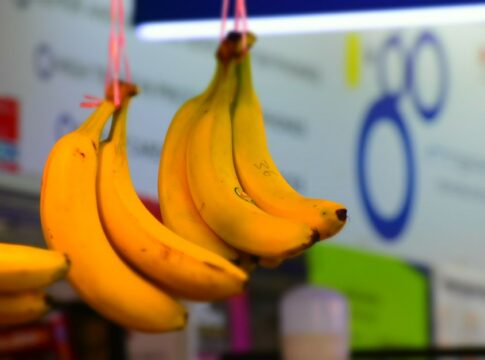
Why Banana Flavor Tastes Fake: The Extinct Fruit Story
By TriviaOwl, Staff Writer — Published August 14, 2026
Table of Contents
- Key Takeaways
- The Gros Michel: When Banana Flavor Tastes Made Sense
- Panama Disease and the Great Banana Collapse
- The Cavendish Takeover and Flavor Shift
- Why the Mismatch Persists
- Comparing the Two Banana Varieties
- The Gros Michel’s Limited Survival
- Frequently Asked Questions
Anyone who’s tasted artificial banana flavoring—in candy, medicine, or ice cream—knows something feels off. That bright, almost chemical sweetness doesn’t quite match the creamy, subtle flavor of the bananas sitting in your fruit bowl. The mystery behind why banana flavor tastes so different has sparked curiosity for decades, and the answer involves an extinct variety of banana that once dominated the world market. This surprising piece of trivia reveals how a devastating plant disease changed not just agriculture, but also the flavor profile locked into candy factories forever.
The story connects botanical history, food science, and a dash of nostalgia. What seems like a simple flavor mismatch actually tells us something amazing about how our taste memories work and why certain flavors get frozen in time.
Key Takeaways
- Artificial banana flavoring was developed to mimic the Gros Michel banana, the dominant commercial variety until the 1950s.
- The Gros Michel banana was nearly wiped out by Panama disease, a fungal infection that devastated plantations worldwide.
- The Cavendish banana replaced the Gros Michel and became the standard variety found in grocery stores today.
- Gros Michel bananas had a more intense, sweeter flavor that closely matched the chemical compound isoamyl acetate used in artificial flavoring.
- Modern Cavendish bananas taste milder and creamier, creating the disconnect between “real” and “fake” banana flavor.
- The flavor industry never updated its banana formulations, preserving a taste of an essentially extinct commercial fruit.
The Gros Michel: When Banana Flavor Tastes Made Sense
Before the 1950s, the world’s banana trade revolved almost entirely around one variety: the Gros Michel, also known as “Big Mike.” This cultivar dominated commercial production for good reason. It was larger, had thicker skin that resisted bruising during transport, and boasted a notably intense flavor. Travelers and traders could ship Gros Michel bananas across oceans without the sophisticated refrigeration systems we take for granted today.
The flavor chemists who developed artificial banana flavoring in the early to mid-20th century used the Gros Michel as their reference point. The primary compound they isolated and replicated was isoamyl acetate, an ester that produces that unmistakable “banana” aroma and taste. When you smell banana candy or swallow banana-flavored medicine, you’re experiencing a chemical approximation of what most people considered a normal banana before 1960.
For anyone who ate Gros Michel bananas, the artificial version wasn’t particularly fake-tasting at all. It was a reasonable, if simplified, approximation of the real thing.
Panama Disease and the Great Banana Collapse
The Gros Michel’s reign ended not because consumers preferred something else, but because a soil-borne fungus called Fusarium oxysporum f. sp. cubense—commonly known as Panama disease or Tropical Race 1—spread through plantations like wildfire. The pathogen attacks the banana plant’s vascular system, blocking water and nutrient transport until the plant withers and dies. Worse still, the fungus persists in soil for decades, making infected land unusable for banana cultivation.
Bananas present a unique vulnerability. Commercial varieties are grown from cuttings, not seeds, making every Gros Michel plant a genetic clone of every other. No genetic diversity means no natural resistance. When one plant proved susceptible to Panama disease, they all were. By the 1950s, the disease had spread so widely that commercial Gros Michel production became economically impossible in most regions.
The banana industry faced potential collapse. Growers needed a replacement variety that could resist the disease, ship well, and satisfy consumers. They found their answer in the Cavendish banana.
The Cavendish Takeover and Flavor Shift
The Cavendish banana, which now accounts for roughly half of all bananas grown worldwide and nearly all bananas sold in Western supermarkets, became the industry standard by default rather than preference. It showed resistance to the Tropical Race 1 strain of Panama disease that had destroyed the Gros Michel. Growers could plant it in regions where the fungus lurked in the soil.
But the Cavendish came with trade-offs. Its skin bruises more easily. Its flavor profile is milder, creamier, and less intensely sweet than its predecessor. The robust, almost candy-like taste of the Gros Michel gave way to something more subtle. For anyone who remembered the old bananas, Cavendish varieties tasted bland by comparison.
The artificial flavoring industry, however, didn’t reformulate. Factories had invested in isoamyl acetate-based recipes that worked, tasted consistent, and met consumer expectations for “banana flavor.” Why change a formula that wasn’t broken, even if the reference fruit had largely vanished from commerce?
Why the Mismatch Persists
The disconnect between artificial banana flavor and actual banana taste isn’t about poor chemistry or careless flavoring. It’s a time capsule. When you taste banana Laffy Taffy or banana-flavored antibiotics, you’re experiencing an interesting piece of agricultural history—a flavor memory of a fruit variety that most people under 70 have never tasted fresh.
Isoamyl acetate remains the backbone of banana flavoring because it’s chemically stable, inexpensive to produce, and instantly recognizable. Food scientists could develop more complex formulations that better match the Cavendish’s nuanced flavor profile, but there’s little commercial incentive. Consumers have come to expect “banana flavor” to taste a certain way, even if that way no longer matches the fruit in their lunch bag.
The phenomenon reveals something fascinating about flavor perception and cultural memory. Once a flavor becomes standardized in processed foods, it takes on a life of its own, independent of the natural product it originally represented.
Comparing the Two Banana Varieties
| Characteristic | Gros Michel | Cavendish |
|---|---|---|
| Commercial dominance | 1900s–1950s | 1960s–present |
| Flavor intensity | Strong, sweet, intense | Mild, creamy, subtle |
| Skin durability | Thick, resistant to bruising | Thin, bruises easily |
| Panama disease (TR1) resistance | Highly susceptible | Resistant |
| Match to artificial flavoring | Close match | Poor match |
The Gros Michel’s Limited Survival
While commercial production of Gros Michel bananas essentially ended, the variety didn’t go completely extinct. Small-scale growers in regions where Panama disease hasn’t taken hold still cultivate Gros Michel plants. You can find them in parts of Southeast Asia, some Pacific islands, and home gardens in Central America. Specialty importers occasionally bring them to markets in North America and Europe, where they command premium prices and attract curious food historians.
People who taste Gros Michel bananas for the first time in the 21st century often report the same reaction: it tastes exactly like banana candy. That moment of recognition drives home the point that artificial flavoring isn’t “wrong”—our reference point simply changed when agriculture was forced to adapt.
Frequently Asked Questions
Can you still buy Gros Michel bananas today?
Gros Michel bananas are still grown in limited quantities in areas not affected by Panama disease, particularly in Southeast Asia and some Pacific islands. They’re rare in commercial markets but occasionally available through specialty importers or at premium prices in select locations.
Will the Cavendish banana go extinct like the Gros Michel?
The Cavendish faces a serious threat from Tropical Race 4, a new strain of Panama disease that can infect Cavendish plants. Scientists and agricultural organizations are working on disease-resistant varieties and management strategies, but the banana industry could face another major transition in coming decades.
What chemical gives banana flavoring its distinctive taste?
The primary compound in artificial banana flavoring is isoamyl acetate, an ester that produces the characteristic banana aroma and sweet taste. This chemical occurs naturally in bananas but is synthesized for use in candies, medicines, and other products.
Do other fruits have this same artificial-versus-real flavor problem?
Yes, several fruits show similar disconnects. Grape flavoring often tastes like Concord grapes rather than table grapes, and strawberry flavoring tends to be more intense than most fresh strawberries. The artificial versions often capture one dominant chemical compound rather than the complex blend found in fresh fruit.
The next time you unwrap a piece of banana candy and notice that “fake” taste, remember you’re experiencing a flavor fossil—a chemical echo of a fruit that once filled markets worldwide but now exists mainly in memories and chemistry labs. It’s a peculiar form of time travel, one bite at a time.