
9 Record-Breaking Facts About Bombardier Beetles
By Trivia Daily, Staff Writer — Published October 4, 2026
Table of Contents
- Key Takeaways
- Record-Breaking Bombardier Beetle Chemistry and Defense
- Comparison of Chemical Defense Systems in Beetles
- Frequently Asked Questions
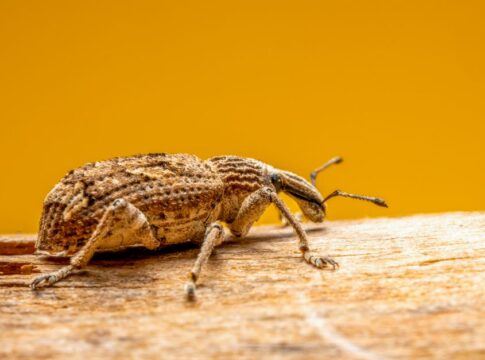
Deep in the leaf litter and under rocks around the world, a tiny chemical engineer is perfecting an explosive defense that has fascinated scientists for centuries. The bombardier beetle doesn’t just spray irritants like many insects—it detonates a boiling chemical cocktail at its attackers with audible pops. These record-breaking bombardier beetles have evolved one of nature’s most sophisticated defense mechanisms, combining chemistry, physics, and precision timing in a package smaller than your fingernail.
What makes these beetles truly remarkable isn’t just their explosive capability, but the engineering precision required to pull it off without blowing themselves up. Let’s explore the surprising trivia and amazing facts that make these insects genuine record-holders in the natural world.
Key Takeaways
- Bombardier beetles spray boiling liquid at temperatures near 100°C (212°F), hot enough to cause pain and tissue damage to predators.
- The chemical spray is expelled in rapid-fire pulses—up to 500 pulses per second—rather than a continuous stream.
- These beetles can aim their spray with remarkable accuracy using a rotatable nozzle at the tip of their abdomen.
- The explosive reaction happens in a specialized chamber where two previously separated chemicals mix instantly.
- Over 500 species of bombardier beetles exist worldwide, found on every continent except Antarctica.
- The spray contains benzoquinones, chemicals so irritating they can temporarily blind attackers and cause severe pain.
Record-Breaking Bombardier Beetle Chemistry and Defense
1. The Hottest Chemical Defense in the Insect World
Bombardier beetles hold the temperature record for defensive sprays among insects. When threatened, they eject a chemical mixture that reaches approximately 100°C (212°F)—the boiling point of water. This scorching liquid doesn’t just irritate; it burns. The beetle stores two relatively harmless chemicals separately in its abdomen: hydroquinone and hydrogen peroxide. When danger strikes, these chemicals flow into a special reaction chamber where enzymes catalyze an explosive oxidation reaction. The heat generated is intense enough to vaporize about one-fifth of the spray mixture, creating both a scalding liquid and a noxious gas cloud simultaneously.
2. Rapid-Fire Pulses Beat Continuous Spray
Here’s where bombardier beetles get truly interesting: they don’t spray continuously. High-speed photography reveals that the spray is actually expelled in rapid pulses—sometimes exceeding 500 bursts per second. Each pulse lasts only a fraction of a millisecond. This pulsing mechanism serves a clever purpose. If the beetle released the chemicals in one continuous blast, the chamber walls would overheat and damage the beetle’s own tissues. Instead, the pulsing allows micro-cooling periods between each explosion. The valve system controlling these pulses operates faster than most mechanical devices humans have engineered at comparable scales.
3. Precision Aiming With a Rotatable Turret
Most insects with chemical defenses spray randomly or simply ooze toxins. Bombardier beetles possess something far more sophisticated: a steerable nozzle. The tip of the abdomen can rotate nearly 270 degrees, allowing the beetle to target threats approaching from almost any direction. This precision matters because the beetle’s spray has limited capacity—typically enough for about 20 to 30 full discharges. Wasting shots means vulnerability. Researchers have observed bombardier beetles accurately hitting targets while simultaneously running away, demonstrating remarkable coordination between their sensory and defensive systems.
4. The Smallest Explosion Chamber in Nature
The reaction chamber where the beetle’s chemical explosion occurs measures roughly one millimeter in diameter—about the size of a pinhead. Yet this tiny space must withstand pressures and temperatures that would challenge human engineering. The chamber walls are reinforced with resilin, an extremely elastic protein that can handle repeated stress without failing. The chamber’s design allows it to expand slightly during each explosion, then contract during the cooling phase. This expansion-contraction cycle happens hundreds of times per second during a defensive spray, making it one of the fastest-operating biological pressure vessels known to science.
5. Chemical Cocktail With Multiple Purposes
The spray doesn’t rely solely on heat for defense. The benzoquinones produced during the reaction are powerfully irritating chemicals that cause intense pain and can temporarily disable an attacker’s sensory organs. In vertebrate predators like frogs or birds, the spray causes immediate mouth and throat irritation, prompting them to release the beetle. The chemicals also have antimicrobial properties, potentially protecting the beetle from infections if injured during an attack. Some researchers believe the spray’s bitter taste and smell serve as teaching tools—predators learn to recognize and avoid bombardier beetles after just one painful encounter.
6. Energy Efficiency That Defies Expectations
Producing the chemicals for this defense system requires energy, yet bombardier beetles don’t seem to suffer major metabolic costs compared to similar-sized beetles without chemical defenses. The beetles synthesize their defensive chemicals gradually, storing them over time rather than producing them on demand. This means they can maintain a full chemical arsenal while devoting most of their metabolic resources to normal activities like feeding and reproduction. The efficiency of this system has inspired biomimicry research, with engineers studying whether similar principles could improve fuel injection systems and other spray technologies.
7. Surviving Predator Digestive Systems
Some bombardier beetles have been observed discharging their spray even after being swallowed by frogs or toads. The heat and chemicals cause such severe distress that the predator regurgitates the beetle—often still alive. Studies have documented bombardier beetles emerging from toads’ stomachs up to two hours after being swallowed, then walking away apparently unharmed. This represents one of the few documented cases of insects actively escaping from inside a predator’s digestive system. The beetle’s hard exoskeleton provides additional protection during this ordeal, preventing digestive enzymes from breaking down its body while it deploys its chemical weapon.
8. Evolutionary Arms Race Spanning Millions of Years
Fossil evidence suggests bombardier beetles have possessed their explosive defense for at least 100 million years, placing their origin in the Cretaceous period when dinosaurs still roamed. This means the basic chemical system has remained effective across vast spans of evolutionary time, even as predators evolved new hunting strategies. The stability of this defense mechanism across millions of years testifies to its effectiveness. Meanwhile, certain predators have developed partial resistance or clever hunting strategies—some grasshopper mice, for instance, have learned to jam the beetle’s abdomen into the ground before eating it, preventing the spray from reaching the mouse’s face.
9. Inspiration for Human Technology
The bombardier beetle’s spray mechanism has attracted attention from aerospace engineers and propulsion researchers. The pulsed explosion system bears similarities to pulse jet engines, and some researchers have explored whether biological principles from the beetle could improve fuel efficiency in small-scale propulsion systems. The beetle’s ability to store reactive chemicals safely, then combine them explosively on demand, also interests researchers working on emergency medical devices and industrial safety systems. While no commercial products have directly replicated the beetle’s system yet, the fundamental principles continue to inform engineering designs where controlled, rapid chemical reactions are needed in compact spaces.
Comparison of Chemical Defense Systems in Beetles
| Beetle Type | Defense Method | Temperature | Precision |
|---|---|---|---|
| Bombardier Beetle | Explosive spray (pulsed) | ~100°C | Aimable 270° |
| Blister Beetle | Toxic blood secretion | Ambient | Non-directional |
| Stink Beetle | Foul-smelling spray | Ambient | Limited aim |
| Ladybug | Hemolymph release | Ambient | Non-directional |
Frequently Asked Questions
Can bombardier beetles harm humans?
The spray can cause temporary pain, skin irritation, and staining, but bombardier beetles are not dangerous to humans. The discomfort typically subsides within hours, and the beetles only spray when directly threatened or handled.
How many times can a bombardier beetle spray before running out?
A bombardier beetle can typically discharge its spray 20 to 30 times before depleting its chemical reserves. The beetle then requires time to synthesize new defensive chemicals, which can take several days.
Do bombardier beetles ever accidentally explode?
No—the chemicals remain safely separated in distinct storage chambers until deliberately mixed in the reaction chamber. The system includes multiple fail-safes that prevent accidental discharge or premature mixing that could harm the beetle.
Where are bombardier beetles commonly found?
Bombardier beetles inhabit diverse environments worldwide, including forests, grasslands, and wetlands on every continent except Antarctica. They typically hide under rocks, logs, or leaf litter and are most active at night when they hunt for small insects and larvae.
The bombardier beetle reminds us that record-breaking achievements in nature often come in surprisingly small packages. This tiny insect has mastered chemistry, thermodynamics, and precision engineering in ways that continue to puzzle and inspire scientists. Next time you lift a rock or log, you might just discover one of these remarkable chemical engineers—though you might want to admire it from a respectful distance.