
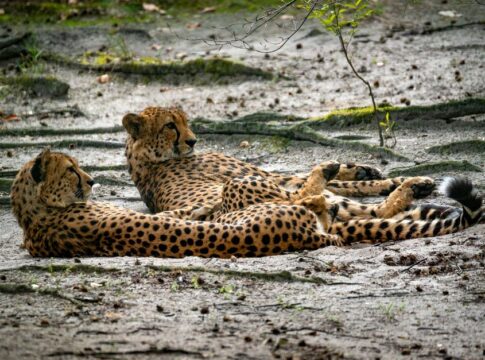
How Cheetahs Are the Fastest Land Animals at 70 MPH
By Trivia Daily, Animals Desk — Published November 1, 2026
Table of Contents
- Key Takeaways
- Why Cheetahs Fastest Land Animals Evolved Such Incredible Speed
- The Physical Adaptations That Enable Extreme Velocity
- The Limits of Speed: Why Cheetahs Can’t Run Forever
- How Cheetah Speed Compares to Other Fast Animals
- Conservation Challenges for the World’s Fastest Predator
- Frequently Asked Questions
Among all the creatures roaming the planet’s grasslands and savannas, none can match the sheer velocity of the cheetah. This remarkable big cat holds the undisputed title as the fastest land animal, capable of reaching speeds around 70 miles per hour in short bursts. When a cheetah locks onto prey and launches into a sprint, it becomes a blur of spotted fur and focused predatory power, covering ground faster than any other terrestrial species on Earth.
What makes this speed even more astonishing is how quickly cheetahs achieve it. These animals can accelerate from zero to 60 miles per hour in just three seconds—performance that would impress any sports car enthusiast. But speed alone doesn’t tell the whole story of why cheetahs fastest land animals have evolved into such specialized hunters.
Key Takeaways
- Cheetahs can reach maximum speeds of approximately 70 miles per hour during hunts, making them the fastest land animals in the world.
- Their acceleration rivals high-performance vehicles, going from standstill to 60 mph in roughly three seconds.
- Cheetahs can only maintain top speed for 20 to 30 seconds before overheating, covering distances of about 1,600 feet per sprint.
- Specialized anatomy including enlarged nasal passages, a lightweight frame, and semi-retractable claws enable their extraordinary speed.
- Despite their speed advantage, cheetahs successfully capture prey in only about 50 percent of their hunts.
- These big cats are classified as vulnerable by conservation organizations, with habitat loss and human conflict threatening wild populations.
Why Cheetahs Fastest Land Animals Evolved Such Incredible Speed
Evolution shaped the cheetah into a precision hunting instrument over millions of years. In the open grasslands and savannas of Africa—and a small population in Iran—speed became the ultimate survival advantage. Prey animals like gazelles and impalas are themselves remarkably fast, often reaching speeds of 50 miles per hour or more. For cheetahs to survive, they needed to be faster still.
The evolutionary pressure didn’t just favor speed, but explosive acceleration and maneuverability. A cheetah’s spine is extraordinarily flexible, functioning like a spring that extends and compresses with each stride. During a full sprint, the cat’s body stretches and contracts so dramatically that all four paws leave the ground twice per stride—once when the legs are fully extended, and again when they’re bunched beneath the body.
This unique gait allows cheetahs to cover up to 25 feet in a single stride. Their long, muscular tail acts as a rudder, providing balance and enabling sharp turns at high speed when prey attempts evasive maneuvers. Every element of cheetah anatomy serves the singular purpose of speed.
The Physical Adaptations That Enable Extreme Velocity
Cheetahs sacrifice power for speed in ways that distinguish them from other big cats. Their bodies are remarkably lightweight and streamlined, with a deep chest that houses oversized lungs and a large heart. These adaptations deliver massive amounts of oxygen to working muscles during intense sprints.
The nasal passages of cheetahs are significantly enlarged compared to other cats, functioning like air intakes on a race car. During a chase, these passages allow the animal to inhale enormous volumes of oxygen while keeping its jaws clamped on prey. Small heads and reduced jaw muscles further minimize weight, though this comes at a cost—cheetahs have weaker bites than lions or leopards.
Perhaps most unusually, cheetah claws are only semi-retractable, unlike those of other cats. These claws remain partially exposed and act like cleats on running shoes, providing traction during acceleration and preventing slipping during high-speed turns. The large paw pads add extra grip on various terrain types.
The Limits of Speed: Why Cheetahs Can’t Run Forever
Despite their remarkable capabilities, cheetahs face significant physical constraints. A sprint at 70 miles per hour generates enormous amounts of body heat. The animal’s metabolism shifts into overdrive, and its body temperature can rise to dangerous levels within 20 to 30 seconds.
If a cheetah hasn’t caught its prey within this narrow window, it must abandon the chase to avoid overheating. The cat then needs 30 minutes or more to recover, panting heavily to dissipate heat and restore normal body temperature. During this vulnerable recovery period, the cheetah cannot defend a fresh kill from larger predators like lions or hyenas, which often steal their meals.
This biological limitation shapes cheetah hunting behavior. They hunt primarily during daylight hours when other large predators are less active. They also select prey carefully, targeting animals they can catch quickly rather than engaging in prolonged chases.
How Cheetah Speed Compares to Other Fast Animals
| Animal | Maximum Speed | Habitat Type |
|---|---|---|
| Cheetah | 70 mph | African savannas, grasslands |
| Pronghorn Antelope | 55 mph | North American plains |
| Springbok | 55 mph | Southern African grasslands |
| Lion | 50 mph | African savannas, woodlands |
| Greyhound | 45 mph | Domesticated |
| Ostrich | 43 mph | African savannas |
While the cheetah dominates land speed records, the pronghorn antelope deserves special mention. This North American species can sustain high speeds much longer than cheetahs, maintaining 35 miles per hour for several miles. Scientists believe pronghorns evolved this endurance to escape now-extinct American cheetahs that once roamed the continent.
Conservation Challenges for the World’s Fastest Predator
Speed hasn’t protected cheetahs from modern threats. Fewer than 7,000 cheetahs remain in the wild, with populations declining due to habitat loss, human-wildlife conflict, and genetic bottlenecks that reduce diversity. These animals require vast territories to hunt successfully, but human settlements and agriculture increasingly fragment their habitat.
Cheetahs also face competition from larger predators. In areas where lion and hyena populations are high, cheetah cubs suffer high mortality rates. Adult cheetahs, with their lightweight build, cannot defend their young or their kills against these stronger animals. Conservation organizations work to establish protected corridors and reduce human-cheetah conflict, but the species remains vulnerable.
The small population in Iran represents the last surviving Asiatic cheetahs, numbering fewer than 50 individuals. This critically endangered subspecies faces even grimmer prospects than African populations.
Frequently Asked Questions
Can any animal run faster than a cheetah?
No land animal can run faster than a cheetah. Some birds like the peregrine falcon exceed cheetah speeds during diving flight, reaching over 200 miles per hour, but cheetahs remain unmatched among terrestrial species.
How long can a cheetah maintain its top speed?
Cheetahs can only maintain maximum speed for about 20 to 30 seconds before their body temperature becomes dangerously high. They typically cover 1,600 feet or less during a full-speed chase before needing to stop and cool down.
Why don’t cheetahs hunt larger prey like lions do?
Cheetahs have lightweight builds and weaker jaws compared to other big cats, making them poorly suited for taking down large prey. They typically hunt medium-sized animals like gazelles and impalas that can be subdued quickly without prolonged struggle.
Are cheetahs related to other big cats?
Cheetahs belong to the family Felidae but are placed in their own genus, Acinonyx, separate from the Panthera genus that includes lions, tigers, and leopards. They’re more distantly related to other big cats than those species are to each other.
The next time you watch nature footage of a cheetah in full pursuit, remember that you’re witnessing millions of years of evolutionary refinement compressed into a few breathtaking seconds. Every muscle, bone, and organ works in perfect synchronization to achieve something no other land-dwelling creature can match—a reminder that nature’s engineering often surpasses anything humans have designed.