
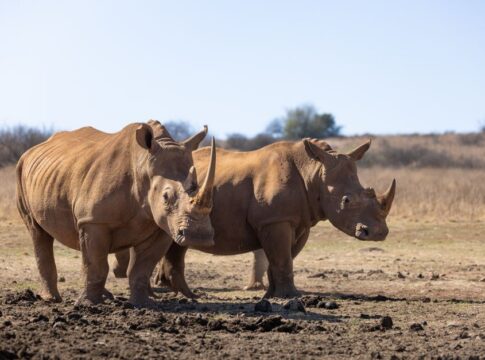
How Unicorn Legends Started With Rhino Descriptions
By Trivia Daily, Staff Writer — Published November 2, 2026
Table of Contents
- Key Takeaways
- How Unicorn Legends Started With Ancient Travelers
- The Narwhal Connection and Medieval Deception
- Comparing Original Descriptions: Rhino Versus Modern Unicorn
- Other Animals Mistaken for Mythical Creatures
- Why the Myth Persisted Despite Evidence
- Frequently Asked Questions
The majestic unicorn—a white horse with a spiraling horn—has captivated imaginations for centuries. But here’s a surprising truth: unicorn legends started not from fantasy, but from real animals described by travelers who had never seen them before. Ancient Greek and Roman writers documented a one-horned creature from distant lands, and their accounts match something very specific: the Indian rhinoceros. When you discover that the earliest Western descriptions of unicorns came from people trying to describe rhinos based on secondhand reports, the entire myth transforms from pure fiction into a fascinating case of mistaken identity.
The connection reveals how myths emerge from incomplete information. Travelers returning from India spoke of massive, aggressive beasts with a single horn on their snouts. These accounts, filtered through multiple retellings and cultural lenses, eventually became the elegant unicorn of European tapestries and medieval bestiaries.
Key Takeaways
- Greek physician Ctesias wrote the first Western description of a “unicorn” around 400 BCE after hearing reports of Indian rhinoceroses
- The Indian rhino’s single horn and fierce temperament match ancient unicorn descriptions more closely than any mythical horse
- Medieval Europeans had never seen rhinos, making secondhand descriptions sound fantastical and otherworldly
- Narwhal tusks sold as “unicorn horns” in medieval markets reinforced belief in the creature’s existence
- The transformation from rhino to horse-like unicorn happened gradually through artistic interpretation and cultural storytelling
- Chinese “qilin” legends likely stem from similar encounters with rhinoceroses in Asia
How Unicorn Legends Started With Ancient Travelers
Ctesias, a Greek physician working in Persia, compiled reports about India’s wildlife around 400 BCE. His accounts described wild asses the size of horses with white bodies, dark red heads, blue eyes, and a single horn about eighteen inches long. The horn was supposedly white at the base, black in the middle, and red at the tip. Drinking from cups made of this horn would protect against poison and disease—a detail that would influence European royalty for two thousand years.
These descriptions weren’t complete fabrications. They were attempts to document real animals through the broken telephone of ancient trade routes. The Indian rhinoceros fits remarkably well: it’s roughly horse-sized, has grayish skin that can appear pale in certain lights, and sports a single prominent horn. The aggressive temperament Ctesias described? Rhinos are notoriously dangerous when threatened.
Why did the details get so garbled? Simple geography and limited communication. Ancient Greeks couldn’t just look up images or travel easily to India. They relied on merchants, soldiers, and other travelers who themselves had often heard descriptions rather than seen the animals firsthand. Each retelling added embellishments or lost accuracy.
The Transformation From Rhino to Horse
Medieval European artists had never encountered a rhinoceros. When they illustrated manuscripts about unicorns, they defaulted to familiar animals—horses—and simply added a horn. This artistic choice cemented the modern image. By the Middle Ages, the unicorn had evolved into a symbol of purity and grace, far removed from the tank-like rhino that inspired the original reports.
The shift also served symbolic purposes. Christian allegory adopted the unicorn as a representation of Christ, requiring a more elegant, approachable form than a charging rhino could provide. Art shaped belief, and belief shaped more art, until the connection to the original animal disappeared entirely.
The Narwhal Connection and Medieval Deception
If you explore medieval markets, you’d find “unicorn horns” selling for astronomical prices. These spiraling ivory treasures supposedly detected poison and cured illnesses. European nobility paid fortunes for them. Queen Elizabeth I reportedly owned one valued at the equivalent of a castle.
The amazing truth? These were narwhal tusks. Arctic whalers knew the source but weren’t eager to deflate the lucrative market. The long, spiraling tooth of the narwhal—a real whale species—matched popular unicorn imagery perfectly. This physical “evidence” kept belief alive for centuries, even as the biological impossibility of a horse with a horn became more apparent to natural philosophers.
The deception was remarkably effective. Even educated people struggled to separate fact from legend when physical “proof” existed. The tusks seemed to validate ancient texts, creating a feedback loop of misinformation.
Comparing Original Descriptions: Rhino Versus Modern Unicorn
| Feature | Ancient “Unicorn” Descriptions | Indian Rhinoceros | Modern Unicorn Imagery |
|---|---|---|---|
| Body Size | Large as a horse or larger | Up to 6 feet tall, 4,000 pounds | Horse-sized |
| Horn | Single horn, 18+ inches | Single horn, up to 2 feet | Single spiraling horn |
| Temperament | Fierce, difficult to capture | Aggressive when threatened | Gentle, attracted to purity |
| Color | White body with colored head | Gray-brown (appears pale when muddy) | Pure white |
| Habitat | India and distant eastern lands | Northern India, Nepal | Magical forests |
Other Animals Mistaken for Mythical Creatures
The unicorn isn’t unique in this fascinating pattern of mistaken identity. Throughout history, real animals encountered by explorers became the basis for legendary beasts:
- Dragons: Large monitor lizards like the Komodo dragon likely inspired Asian and European dragon myths, especially when combined with dinosaur fossil discoveries
- Cyclopes: Ancient Greeks finding dwarf elephant skulls may have mistaken the central nasal cavity for a single eye socket
- Mermaids: Sailors’ reports of manatees and dugongs, seen from a distance after months at sea, transformed into beautiful half-human creatures
- Kraken: Giant and colossal squid, which can reach tremendous sizes, became the ship-destroying monsters of Norse legend
- Phoenix: Flamingos building nests in harsh salt flats, combined with their brilliant red coloring, may have contributed to rebirth-from-fire stories
Why the Myth Persisted Despite Evidence
Even after Europeans finally saw actual rhinoceroses in the 16th century, unicorn beliefs didn’t immediately vanish. The psychological investment was too deep. Unicorn horns had been treasured for generations. Religious symbolism had woven the creature into Christian theology. Admitting the unicorn was really a misidentified rhino meant acknowledging that priceless relics were whale teeth and that centuries of scholarship were built on confusion.
Interestingly, the first rhino brought to Europe in 1515 was itself poorly understood. Artist Albrecht Dürer created a famous woodcut of the animal that added armor-like plates and a second small horn on its back—neither of which rhinos possess. Even direct observation couldn’t immediately overcome preconceptions. The human tendency to see what we expect rather than what exists kept the legend alive far longer than logic suggested it should.
Frequently Asked Questions
Did ancient people really believe unicorns existed?
Yes, for most of history unicorns were considered real animals living in distant lands, much like elephants or tigers were to people who hadn’t seen them. The distinction between natural and mythical creatures wasn’t as clear before modern zoology.
When did people realize unicorns weren’t real?
The realization happened gradually from the 16th through 18th centuries as exploration expanded, zoological knowledge improved, and the narwhal tusk deception was exposed. By the Victorian era, unicorns had transitioned from natural history to pure mythology.
Are there any real one-horned animals besides rhinos?
The narwhal is the most famous, though its “horn” is actually an elongated tooth. Some genetic mutations can cause deer or goats to grow a single central antler, though this is extremely rare. The oryx antelope, when viewed in profile, can appear to have just one horn.
Why did unicorn horns supposedly cure poison?
Ancient medical theory held that rare, exotic materials possessed powerful properties. The supposed rarity of unicorn horns made them valuable as universal antidotes, and the placebo effect likely reinforced belief when people survived after using them.
The journey from Indian rhino to medieval unicorn reminds us that myths often have roots in reality, however tangled those roots become. Every legendary creature might have started as someone’s honest attempt to describe something genuinely strange—they just didn’t have the vocabulary, images, or context to get it quite right. What other myths might be waiting for us to trace them back to their surprising, mundane origins?