
Why Dead Sea Salt Makes Everything Float Effortlessly
By Trivia Daily, Staff Writer — Published November 2, 2026
Table of Contents
- Key Takeaways
- How Dead Salt Makes Floating Possible: The Density Difference
- Comparing Salt Concentrations Across Famous Bodies of Water
- The Surprising Limits of Life in Hypersaline Water
- Common Myths About the Dead Sea Debunked
- The Environmental Crisis Threatening This Natural Wonder
- Frequently Asked Questions
Picture a body of water so dense that a human being can recline on its surface, newspaper in hand, without sinking an inch. The Dead Sea, nestled between Jordan and Israel, offers this surreal experience thanks to one remarkable ingredient: salt. But not just any amount of salt—the Dead Sea contains roughly ten times more salt than the world’s oceans, creating a buoyancy phenomenon that defies our everyday experience with water. This amazing natural wonder has fascinated visitors and scientists alike for thousands of years, and the science behind why dead salt makes floating so effortless reveals surprising truths about density, chemistry, and the limits of life itself.
The Dead Sea isn’t actually a sea at all. It’s a landlocked salt lake sitting at the lowest point on Earth’s surface, approximately 430 meters below sea level. With no outlet for water to escape except through evaporation, minerals and salts have been concentrating in this basin for millennia, creating one of the most extreme aquatic environments on our planet.
Key Takeaways
- The Dead Sea contains approximately 34% salt by weight, compared to roughly 3.5% in typical ocean water—nearly ten times saltier.
- The extreme salinity increases water density to about 1.24 grams per cubic centimeter, significantly higher than the human body’s density of roughly 1.0 g/cm³.
- Anything less dense than Dead Sea water—including humans—experiences powerful upward buoyant force that makes sinking nearly impossible.
- The salt composition includes not just sodium chloride but also magnesium chloride, calcium chloride, and potassium chloride, creating a unique mineral cocktail.
- Despite its name suggesting lifelessness, the Dead Sea does harbor certain extremophile bacteria and fungi adapted to hypersaline conditions.
- The Dead Sea is shrinking at an alarming rate, losing roughly a meter of depth per year due to water diversion and evaporation.
How Dead Salt Makes Floating Possible: The Density Difference
Buoyancy operates on a simple principle discovered by the ancient Greek mathematician Archimedes: an object immersed in fluid experiences an upward force equal to the weight of the fluid it displaces. When you step into regular ocean water, your body displaces water that weighs slightly less than you do, so you need to tread water or swim to stay afloat. The Dead Sea flips this equation dramatically.
The extraordinary concentration of dissolved salts makes Dead Sea water substantially denser than the human body. When you enter the water, you displace a liquid that weighs more than you do. The result? The water pushes you upward with more force than gravity pulls you down. You don’t just float—you bob like a cork, with much of your body above the waterline. Trying to dive beneath the surface requires genuine effort, and swimming in the traditional sense becomes awkward and challenging.
This density difference creates an interesting effect: your legs tend to rise to the surface. Because legs are generally less dense than your torso (containing more bone and less air-filled lungs), they experience even more dramatic buoyancy. Many first-time Dead Sea swimmers find themselves involuntarily tipping backward into the classic reclining position seen in countless photographs.
The Chemistry Behind the Salinity
Dead Sea salt differs significantly from ordinary table salt or even typical sea salt. While sodium chloride makes up the majority of ocean salt, the Dead Sea’s mineral profile tells a more complex story. Magnesium chloride comprises a substantial portion of the dissolved minerals, along with calcium chloride, potassium chloride, and bromides. This unique composition gives the water its distinctive oily, slippery feel and contributes to the therapeutic properties that have attracted visitors since ancient times.
The concentration reaches these extreme levels through a process of evaporation that has continued for thousands of years. The Jordan River and several smaller streams feed freshwater into the Dead Sea, but with no outlet, water can only leave through evaporation under the intense Middle Eastern sun. Minerals remain behind, accumulating year after year, creating an ever-more-concentrated brine.
Comparing Salt Concentrations Across Famous Bodies of Water
| Body of Water | Salt Concentration | Can Humans Float Easily? |
|---|---|---|
| Freshwater Lakes | 0.01–0.05% | No, swimming required |
| Atlantic Ocean | ~3.5% | Some assistance needed |
| Mediterranean Sea | ~3.8% | Slightly easier than Atlantic |
| Great Salt Lake (Utah) | 5–27% (varies) | Yes, in most areas |
| Dead Sea | ~34% | Yes, effortlessly |
The Surprising Limits of Life in Hypersaline Water
The name “Dead Sea” stems from the ancient observation that fish cannot survive in its waters. Any fish swept in from the Jordan River die within moments, their bodies quickly preserved by the salt. For millennia, people believed nothing could live in such extreme conditions. This assumption proved only partially correct.
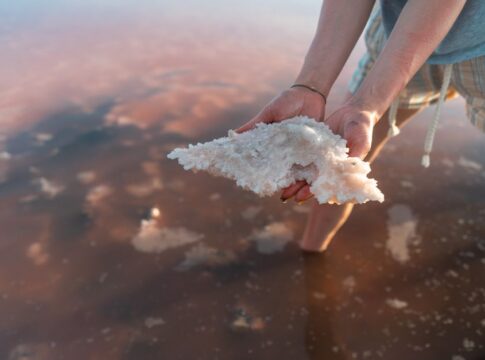
Certain microorganisms thrive in the Dead Sea’s harsh environment. Extremophile bacteria and archaea have adapted to the high salinity, along with specialized algae and fungi. During certain seasons, blooms of red-pigmented algae can tint sections of the water pink or red. These organisms possess unique cellular mechanisms to maintain proper salt balance and prevent dehydration—adaptations that fascinate researchers studying the limits of life on Earth and the potential for life on other planets.
Common Myths About the Dead Sea Debunked
Several misconceptions persist about this remarkable body of water. Some visitors arrive believing they can drink the water or that it offers universal healing properties. The reality requires more nuance.
First, Dead Sea water is absolutely not drinkable. The extreme mineral concentration would cause severe dehydration, nausea, and potentially dangerous electrolyte imbalances. Even getting splashes in your eyes or mouth creates an intensely unpleasant burning sensation. Swimmers are advised to keep their faces above water and rinse off promptly after bathing.
Second, while Dead Sea minerals do offer certain skin benefits and the water’s buoyancy can provide therapeutic relaxation, claims of miraculous healing powers exceed the evidence. The minerals may help with certain skin conditions like psoriasis, and the high barometric pressure at the lowest point on Earth creates unique atmospheric conditions. But visitors should maintain realistic expectations and consult healthcare providers for serious conditions.
The Environmental Crisis Threatening This Natural Wonder
The Dead Sea faces an uncertain future. Water levels have dropped dramatically over the past several decades, shrinking the sea’s surface area and creating sinkholes along the shoreline. The primary culprit is water diversion—both Israel and Jordan extract massive quantities of water from the Jordan River for agriculture and drinking water, reducing the flow into the Dead Sea to a fraction of historical levels.
Industrial operations that extract minerals from the southern basins for potash and other commercial products also contribute to water loss. The result is a sea dying in more than just name. Beaches that once touched the water now sit hundreds of meters from the shoreline. Hotels built at the water’s edge decades ago require shuttle buses to transport guests to the receding shore.
Various proposals aim to save the Dead Sea, including pipelines to bring water from the Red Sea or Mediterranean. Each solution carries environmental concerns and enormous costs. The fate of this natural wonder remains uncertain, making current visits all the more precious.
Frequently Asked Questions
Can you actually read a newspaper while floating in the Dead Sea?
Yes, the extreme buoyancy makes it genuinely possible to float in a reclined position with enough stability to hold a newspaper above water. However, keeping the paper dry requires care, and the position can strain your neck if maintained too long.
Why does Dead Sea water burn cuts and sensitive skin?
The high concentration of salts and minerals creates an osmotic effect that draws moisture from exposed tissue, causing intense stinging in cuts, scrapes, or recently shaved skin. The sensation is similar to rubbing salt in a wound—because that’s essentially what’s happening.
Is the Dead Sea the saltiest body of water on Earth?
No, though it ranks among the saltiest. Don Juan Pond in Antarctica and certain hypersaline lakes exceed the Dead Sea’s salinity. However, the Dead Sea is the saltiest body of water large enough for swimming and the most accessible hypersaline lake in the world.
How long should you stay in the Dead Sea?
Experts recommend limiting immersion to 10-15 minutes at a time. Extended exposure can cause dehydration, and the mineral-rich water can irritate skin. Multiple short sessions with freshwater rinses in between offer the best experience without negative effects.
The Dead Sea stands as one of Earth’s most extreme and fascinating natural environments, where the simple act of stepping into water transforms into an almost magical experience. As this ancient body of water faces modern environmental challenges, it reminds us that even the most seemingly permanent wonders of our planet can prove fragile. The salt that makes floating effortless accumulated over thousands of years—and could take far less time to disappear if conservation efforts fail.