
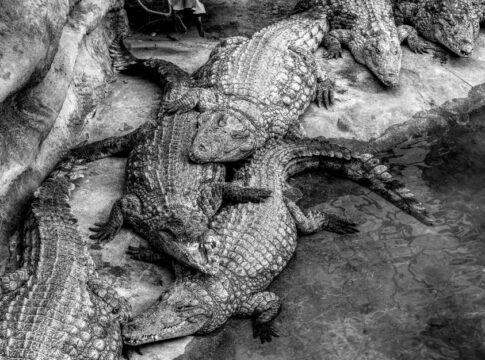
The Truth About Crocodiles Crying While Eating Prey
By Trivia Daily, Animals Desk — Published November 26, 2026
Table of Contents
- Key Takeaways
- The Truth About Crocodiles Crying: What’s Really Happening
- The Biology Behind Crocodilian Tears
- Crocodile Tears Across Different Species
- The Origin of the Expression
- What This Reveals About Predator Behavior
- Frequently Asked Questions
You’ve probably heard the expression “crocodile tears” used to describe fake crying or insincere emotion. But here’s the fascinating twist: crocodiles actually do produce tears while eating their prey. The truth about crocodiles crying, however, has nothing to do with remorse or sadness. These ancient predators aren’t weeping for their victims—they’re experiencing a quirky biological side effect that scientists have observed in nature for centuries. The phenomenon reveals something unexpected about how these remarkable creatures function, and understanding it helps us appreciate the complex behavior of one of Earth’s most successful predators.
This curious behavior has captivated wildlife researchers and animal enthusiasts alike, sparking questions about what really happens when these powerful reptiles feed. The answer combines anatomy, physiology, and the realities of being an apex predator in diverse habitats around the world.
Key Takeaways
- Crocodiles do produce tears while eating, but the tears have no emotional component whatsoever.
- The tearing occurs because of physical pressure on glands near the eyes during the intense process of feeding.
- Crocodilians have special glands that help them regulate salt and moisture, which can activate during feeding.
- The phrase “crocodile tears” dates back centuries and refers to insincere displays of emotion, not actual animal behavior.
- This phenomenon has been observed in multiple crocodilian species across different habitats worldwide.
- The behavior demonstrates how evolution shapes even the smallest details of predator physiology.
The Truth About Crocodiles Crying: What’s Really Happening
When a crocodile tears into its meal, genuine tears may stream from its eyes. Scientists have documented this phenomenon in controlled observations and field studies. The tears aren’t a sign of guilt or emotion—crocodiles lack the brain structures associated with complex emotions like empathy or regret. Instead, the tears result from physical mechanics.
During feeding, crocodiles engage in violent thrashing and twisting motions. They clamp down with tremendous force—some species can exert bite pressures exceeding 3,700 pounds per square inch. This intense physical activity, combined with the way crocodiles position their heads while eating, creates pressure on the lacrimal glands near their eyes. The glands respond by producing fluid, which appears as tears running down the reptile’s face.
The hissing and huffing sounds crocodiles make while eating also play a role. Air is forced through the sinuses and around the eye area, stimulating tear production. It’s purely mechanical, like how your own eyes might water when you yawn or sneeze.
The Biology Behind Crocodilian Tears
Crocodiles and their relatives possess specialized salt glands on their tongues and near their eyes. These glands help the animals regulate their internal salt balance, especially crucial for species that inhabit both freshwater and saltwater environments. When a crocodile feeds, particularly on large prey, the physical exertion and head positioning can activate these glands alongside the regular tear-producing structures.
The lacrimal system in crocodilians serves the same basic purpose as in other animals: keeping the eyes moist and protected. Crocodiles spend considerable time in water, but they also bask on land for hours. Their eyes need constant lubrication to function properly in both environments. The tear production during feeding is essentially this normal system being triggered by unusual physical circumstances.
What makes this especially interesting is that the behavior serves no apparent evolutionary advantage. It’s simply a byproduct of having eyes positioned near powerful jaw muscles and eating in a physically demanding way. Nature is full of these quirky side effects that emerge from the intersection of different biological systems.
Crocodile Tears Across Different Species
The tearing phenomenon isn’t limited to one type of crocodilian. Researchers have observed it in various species across the crocodilian family, which includes true crocodiles, alligators, caimans, and gharials. These creatures inhabit diverse habitats ranging from African rivers to Australian estuaries to American swamps.
| Species | Primary Habitat | Feeding Behavior |
|---|---|---|
| Saltwater Crocodile | Coastal areas, estuaries | Opportunistic predator, takes large prey |
| American Alligator | Freshwater swamps, rivers | Ambush hunter, varied diet |
| Nile Crocodile | African rivers, lakes | Powerful predator, cooperative hunting |
| Gharial | Indian river systems | Fish specialist, narrow snout |
Each species exhibits the tearing behavior to varying degrees, likely influenced by the size of prey they typically consume and their specific feeding techniques. Larger crocodilians that tackle bigger prey tend to show more pronounced tearing, simply because they exert more physical force during meals.
The Origin of the Expression
The phrase “crocodile tears” has a rich history in human language and culture. Ancient writers described crocodiles as creatures that wept while devouring their victims, though these accounts were based on observation without understanding the physiological cause. Medieval travelers and naturalists perpetuated the idea, often adding embellishments about crocodiles luring prey with false displays of distress.
By the time the expression entered common usage in English, it had become a metaphor for any insincere show of emotion. Someone shedding crocodile tears pretends to be sad while actually feeling nothing—or even taking pleasure in another’s misfortune. The irony is that real crocodiles truly do produce tears while eating, even though the tears mean nothing emotionally.
This disconnect between the biological reality and the cultural metaphor makes the whole phenomenon even more intriguing. Humans created a saying based on observed behavior, assigned it emotional meaning that doesn’t exist in nature, and now use it to describe human deception. Meanwhile, crocodiles continue doing what they’ve done for millions of years, completely unaware of the symbolic weight we’ve placed on their physiological quirk.
What This Reveals About Predator Behavior
The tearing phenomenon offers a window into the broader world of predator behavior and animal physiology. Crocodilians are among the most successful predators on Earth, with a lineage stretching back more than 200 million years. They’ve survived mass extinctions that wiped out the dinosaurs, adapting to changing climates and ecosystems.
Their hunting strategy relies on patience, explosive power, and incredible bite force. They’re ambush predators that can remain motionless for hours, then strike with startling speed. Once they’ve secured prey, the feeding process is intense and physical. They lack the ability to chew, so they must tear chunks from larger animals or swallow smaller prey whole.
Understanding these mechanical details helps wildlife biologists better comprehend crocodilian ecology and conservation needs. These animals play crucial roles in their ecosystems as apex predators, controlling prey populations and even creating habitat features like gator holes that benefit other species during dry seasons.
Frequently Asked Questions
Do crocodiles feel sad when they cry while eating?
No, crocodiles do not experience sadness or remorse. The tears are a purely physical response to pressure on their tear glands during feeding, with no emotional component whatsoever.
Do all crocodilians produce tears while eating?
Most crocodilian species can produce tears during feeding, though the behavior is more noticeable in larger individuals consuming substantial prey. The phenomenon has been documented across various species including crocodiles, alligators, and caimans.
Why did people think crocodiles cried for their prey?
Ancient observers noticed crocodiles producing tears while eating but didn’t understand the physiological cause. They interpreted the behavior as emotional, creating myths about crocodiles weeping while devouring victims, which eventually became the metaphor for false emotion.
Can crocodiles produce tears at other times besides eating?
Yes, crocodiles produce tears regularly to keep their eyes lubricated and healthy, just like other animals. The tear production during feeding is simply more noticeable because it occurs alongside dramatic feeding behavior.
The next time you hear someone accused of shedding crocodile tears, you’ll know there’s a genuine biological phenomenon behind the metaphor—even if the meaning we’ve assigned to it is entirely our own invention. These ancient predators continue to fascinate us, revealing unexpected truths about the natural world one surprising detail at a time.