
The Hidden Story of Flamingos Bending Their Ankles Not Knees
By Trivia Daily, Staff Writer — Published November 3, 2026
Table of Contents
- Key Takeaways
- The Hidden Story Flamingos Tell About Bird Anatomy
- Comparing Bird and Mammal Leg Structures
- Why Evolution Favored This Amazing Design
- Common Myths About Flamingo Legs Busted
- What This Teaches Us About Animal Diversity
- Frequently Asked Questions
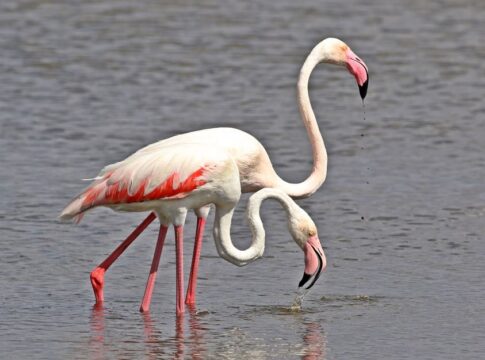
When you watch a flamingo standing on one leg with its other limb bent backward, you’re witnessing one of nature’s most persistent optical illusions. That backward-bending joint you see halfway up the leg? It’s not a knee. It’s an ankle. This surprising fact about flamingo anatomy has fooled casual observers for generations, and discovering the truth reveals just how different bird anatomy is from our own. The hidden story flamingos carry in their skeletal structure challenges our assumptions about how legs should work.
The confusion is understandable. What looks like a flamingo’s knee bends backward, which seems utterly wrong to our mammalian brains. But birds evolved from theropod dinosaurs, and their leg structure reflects a fascinating adaptation that prioritizes wading, balance, and flight over resemblance to human anatomy.
Key Takeaways
- The backward-bending joint visible on a flamingo’s leg is actually its ankle, not its knee.
- A flamingo’s true knee is hidden high up in its body, tucked beneath its feathers near the hip.
- What appears to be a flamingo’s entire leg is technically just its foot—the bird stands on its toes.
- This anatomical structure is common to all birds, not unique to flamingos, but flamingos’ long legs make it especially noticeable.
- The adaptation allows flamingos to wade in deeper water while keeping their bodies dry and balanced.
- Understanding bird leg anatomy reveals how evolution shaped different solutions to the same locomotion challenges.
The Hidden Story Flamingos Tell About Bird Anatomy
To understand this anatomical curiosity, picture yourself standing on your tiptoes with your heels raised as high as possible. Now imagine your ankle was stretched upward until it sat roughly where your knee is now. That’s essentially what a flamingo’s leg looks like. The bird’s actual knee joint is concealed deep within its body plumage, close to where the leg attaches to the hip. What we see as the “leg” is actually an elongated foot bone—the tarsometatarsus—and the bird spends its entire life standing on its toes.
The backward-bending joint is the ankle. Below it, the visible “lower leg” consists of fused foot bones. Below that? Just toes. Flamingos are digitigrade walkers, meaning they walk on their digits (toes) rather than placing their whole foot flat on the ground like humans do. This interesting arrangement isn’t exclusive to flamingos—chickens, ostriches, herons, and virtually all birds share this basic skeletal plan.
Why does this matter for flamingos specifically? Their extraordinarily long legs allow them to wade into deeper waters than many competing species, accessing food sources other birds can’t reach. By elevating the true knee inside the body, flamingos maintain a more compact center of gravity while still achieving impressive height. The ankle joint provides the flexibility needed to navigate muddy lake bottoms and shallow lagoons.
Comparing Bird and Mammal Leg Structures
| Feature | Human (Mammal) | Flamingo (Bird) |
|---|---|---|
| Hip joint | Visible, connects to upper leg | Hidden in body, beneath feathers |
| Knee joint | Bends forward, visible midway down leg | Bends forward, hidden near hip inside body |
| Ankle joint | Connects lower leg to foot | The visible backward-bending joint |
| Foot contact | Plantigrade (whole foot on ground) | Digitigrade (walks on toes only) |
| Visible “lower leg” | Shin bone (tibia/fibula) | Elongated foot bones (tarsometatarsus) |
Why Evolution Favored This Amazing Design
Birds inherited their leg structure from their theropod dinosaur ancestors, which also walked on their toes. This digitigrade stance offers several advantages. It increases leg length without requiring proportionally longer bones, providing extra reach for wading birds and extra spring for running birds. The elevated ankle acts as an additional lever, making each step more efficient.
For flamingos in particular, the design is brilliant. These birds spend hours standing in caustic alkaline lakes, often on one leg. By keeping the knee joint protected within the warm body cavity, flamingos reduce heat loss and protect the joint from harsh environmental conditions. The exposed ankle joint is simpler, with fewer delicate structures vulnerable to chemical damage from the salty, alkaline waters flamingos inhabit.
The one-legged standing posture flamingos are famous for also benefits from this anatomy. Scientists have discovered that flamingos can lock their ankle joint in place, allowing them to stand with minimal muscular effort—a bit like how horses can sleep standing up by locking their leg joints. This energy-saving adaptation matters when you’re standing in cold water for hours while filtering microscopic food.
Common Myths About Flamingo Legs Busted
The knee-ankle confusion spawns several related misconceptions worth clearing up. Some people believe flamingo legs bend “the wrong way” compared to other animals. Not true—the knee still bends forward, exactly like yours. It’s just hidden. You’re seeing the ankle, which bends backward in birds just as it does in mammals (think about pointing your toes).
Another myth suggests flamingos have weak or fragile legs because they stand on one. Actually, flamingo legs are remarkably strong, supporting the bird’s entire weight for extended periods. The single-leg stance is a choice, not a necessity, and scientists continue debating whether it’s primarily for thermoregulation, muscle rest, or both.
Some observers wonder if flamingos’ legs bend differently than other birds. They don’t. Sparrows, eagles, penguins, and flamingos all share the same basic leg structure. Flamingos simply make it more obvious because their legs are so dramatically long and visible, with less plumage obscuring the joints.
What This Teaches Us About Animal Diversity
The flamingo leg revelation offers a broader lesson about observing nature. What seems obviously true—that visible backward-bending joint must be a knee—can be completely wrong. Evolution doesn’t follow human engineering principles. It modifies existing structures in unexpected ways, repurposing and elongating bones to suit new ecological niches.
This anatomical quirk also reminds us that different animal groups solved similar problems in radically different ways. Mammals, birds, and reptiles all needed legs for locomotion, but they evolved distinct skeletal arrangements. There’s no single “correct” way to build a leg. Each design reflects millions of years of adaptation to specific environments and lifestyles.
Frequently Asked Questions
Do flamingos’ knees really bend backward?
No, flamingos’ knees bend forward just like yours, but they’re hidden inside the body near the hip. The backward-bending joint you see is the ankle, not the knee.
Why are flamingo legs so long compared to their bodies?
Long legs allow flamingos to wade into deeper water than competing species, accessing rich feeding grounds in lakes and lagoons. The length comes primarily from elongated foot bones, not the upper leg.
Do all birds have this same leg structure?
Yes, all birds share this basic skeletal arrangement with the knee hidden in the body and the visible backward joint being the ankle. Flamingos just make it more obvious because of their exceptional leg length.
Can flamingos walk normally with legs built this way?
Absolutely. This leg structure is perfectly normal for birds and allows efficient walking, wading, and running. Flamingos can walk for miles through shallow water and even run when taking off for flight.
Next time you see a flamingo balancing on one improbably long leg, you’ll know the hidden architecture beneath those pink feathers. That elegant backward bend isn’t defying anatomy—it’s revealing how evolution sculpted a wading specialist from ancient dinosaur blueprints, one elongated toe bone at a time.