
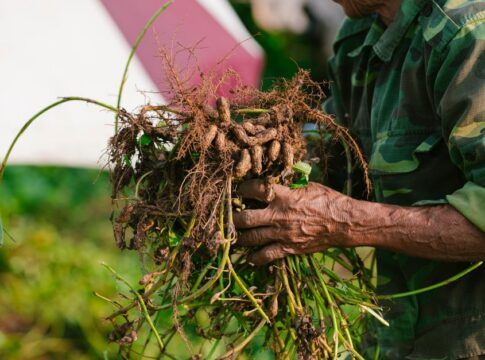
The Hidden Story of Peanuts Growing Underground
By Trivia Daily, Staff Writer — Published November 2, 2026
Table of Contents
- Key Takeaways
- The Hidden Story of Peanuts: How Underground Growth Actually Works
- Peanuts Around the World: From Ancient Origins to Modern Farms
- The Science Behind Peanut Classification
- Harvesting and Processing: Unearthing the Crop
- Nutritional Profile and Agricultural Impact
- Frequently Asked Questions
Most people enjoy peanuts as a snack, but few pause to consider the surprising truth behind how they grow. Unlike most plants that produce their edible parts above ground, peanuts develop their pods entirely underground—a botanical quirk that makes them one of nature’s most interesting crops. This hidden story of peanuts reveals a fascinating process that defies our expectations about how plants reproduce and bear fruit.
The peanut plant belongs to the legume family, which includes beans, peas, and lentils. What makes peanuts truly remarkable is their unusual growing method: after the flower is pollinated above ground, the plant sends a specialized stem called a “peg” down into the soil, where the peanut pod develops in complete darkness several inches below the surface.
Key Takeaways
- Peanuts are not nuts at all—they’re legumes that grow underground in pods, similar to how peas grow above ground.
- After pollination, the peanut plant develops a peg that pushes downward into the soil where the pods mature over several months.
- A single peanut plant can produce between 25 and 50 peanuts during its growing season.
- Peanuts originated in South America and were cultivated by indigenous peoples thousands of years ago.
- The United States produces roughly 7 billion pounds of peanuts annually, with Georgia leading production.
- Peanuts fix nitrogen in the soil, making them valuable for crop rotation and soil health.
The Hidden Story of Peanuts: How Underground Growth Actually Works
The peanut’s journey from flower to edible pod is nothing short of amazing. The plant begins its life cycle like most others, sprouting from a seed and growing leaves and stems above ground. Yellow flowers bloom on the lower part of the plant, typically about 40 days after planting. Here’s where things get curious.
After a flower is pollinated—usually by itself, since peanuts are self-pollinating—the petals fall away. The fertilized ovary at the flower’s base then begins to form a structure called a peg, which looks like a small stem. This peg exhibits negative phototropism, meaning it grows away from light. Over the course of several days, it elongates and curves downward, pushing into the soil.
Once underground, the tip of the peg turns horizontal and begins to swell. This is where the magic happens: the peg tip develops into a peanut pod containing one to four seeds—what we recognize as peanuts. The entire pod matures underground over the next two to three months, protected from sunlight, birds, and most pests. The plant must maintain healthy leaves above ground to photosynthesize and provide energy for the developing pods below.
Why This Underground Strategy Works
This geocarpic behavior—the botanical term for producing fruit underground—offers several advantages. The soil provides consistent moisture and temperature, protecting developing seeds from temperature extremes and desiccation. Underground development also shields the pods from many predators that would readily consume exposed seeds.
Peanuts Around the World: From Ancient Origins to Modern Farms
Archaeological evidence suggests that peanuts were first domesticated in South America, likely in what is now Peru or Brazil, approximately 7,600 years ago. Indigenous peoples cultivated them extensively, and Spanish and Portuguese explorers eventually carried peanuts to Africa, Asia, and North America during the colonial period.
Today, peanuts are grown in warm climates worldwide. China and India are the largest producers globally, though much of their crop is consumed domestically. The United States is the world’s third-largest producer and a major exporter. American peanut farms are concentrated in the Southeast, with Georgia producing nearly half the nation’s crop.
| Country | Annual Production | Primary Use |
|---|---|---|
| China | Approximately 17 million metric tons | Cooking oil and domestic consumption |
| India | Approximately 6 million metric tons | Domestic consumption and oil |
| United States | Approximately 3 million metric tons | Snacks, peanut butter, and export |
| Nigeria | Approximately 3 million metric tons | Domestic consumption |
The Science Behind Peanut Classification
Despite their name, peanuts aren’t true nuts. True nuts like acorns, chestnuts, and hazelnuts are hard-shelled fruits that don’t split open at maturity. Peanuts, by contrast, grow in pods that split easily—a characteristic of legumes. The confusion arises from culinary tradition rather than botanical classification.
Botanically, peanuts share more in common with beans and lentils than with almonds or walnuts. Like other legumes, peanut plants form symbiotic relationships with Rhizobium bacteria in root nodules. These bacteria convert atmospheric nitrogen into forms the plant can use, enriching the soil in the process. This nitrogen fixation makes peanuts valuable in crop rotation systems, as they naturally replenish soil nutrients that other crops deplete.
Harvesting and Processing: Unearthing the Crop
Harvesting peanuts requires specialized equipment because the pods must be dug from the ground. Farmers typically wait until late summer or fall when the plants have matured fully—usually 120 to 160 days after planting, depending on the variety.
A mechanical digger loosens the soil and lifts the entire plant, inverting it so the pods face upward. The plants are left in rows to dry in the field for several days, a process called windowing. Once dried to the proper moisture content, a combine separates the pods from the vines. The harvested peanuts are then cleaned, sorted, and either sold in-shell or shelled for further processing.
Common Peanut Varieties
- Runner peanuts: uniform size, ideal for peanut butter production
- Virginia peanuts: large kernels, often sold roasted in-shell
- Spanish peanuts: small kernels with reddish-brown skins, used for candy and snacks
- Valencia peanuts: sweet flavor with three or more kernels per pod, often sold fresh
Nutritional Profile and Agricultural Impact
Peanuts pack impressive nutritional value. They’re rich in protein, healthy fats, vitamins, and minerals. A single ounce provides about 7 grams of protein and significant amounts of niacin, folate, and vitamin E. The fats are primarily monounsaturated and polyunsaturated—types associated with heart health.
From an agricultural perspective, peanuts contribute to sustainable farming. Their nitrogen-fixing ability improves soil fertility without synthetic fertilizers. Farmers often rotate peanuts with corn, cotton, or other crops to break pest cycles and maintain soil health. The entire plant is useful: after harvest, the protein-rich vines serve as livestock feed.
Frequently Asked Questions
Are peanuts really nuts or something else?
Peanuts are legumes, not true nuts. They grow underground in pods and are botanically related to beans and peas rather than tree nuts like almonds or walnuts.
How deep underground do peanuts grow?
Peanut pods typically develop one to three inches below the soil surface. The depth varies depending on soil type, with looser soils allowing slightly deeper penetration of the pegs.
Can you grow peanuts in a home garden?
Yes, peanuts can be grown in home gardens in warm climates with a frost-free growing season of at least four months. They require loose, sandy soil that allows the pegs to penetrate easily and the pods to develop properly.
Why do some people have severe allergies to peanuts but not other legumes?
Peanuts contain specific proteins that trigger immune responses in sensitive individuals. These proteins differ from those in other legumes, which is why someone allergic to peanuts can often safely consume beans or lentils without reaction.
The next time you crack open a peanut shell, consider the remarkable underground journey that pod completed. From a flower reaching toward the sun to a peg burrowing into darkness, the peanut’s life cycle reminds us that nature’s most interesting stories often happen just beneath our feet, hidden from view but no less extraordinary.