
Did Dragons Ever Exist or What Fossils Inspired the Tales
By Trivia Daily, Staff Writer — Published October 2, 2026
Table of Contents
- Key Takeaways
- Did Dragons Ever Exist in Prehistoric Times
- Real Animals That Fueled Dragon Legends
- How Ancient Fossil Discoveries Shaped Dragon Myths
- Comparing Dragon Types Across Cultures
- The Science Behind Fire-Breathing Myths
- Frequently Asked Questions
Fire-breathing, treasure-hoarding dragons have captivated human imagination for thousands of years across nearly every culture on Earth. But did dragons ever exist beyond the realm of myth? The short answer is no—not as the scaled, winged monsters of legend. Yet the fascinating truth reveals that ancient peoples likely encountered real fossils and living creatures that sparked these enduring tales. From massive dinosaur bones unearthed by accident to enormous reptiles still roaming remote islands, the natural world provided plenty of raw material for dragon mythology.
The line between fact and fantasy becomes surprisingly blurry when you examine what our ancestors actually saw. Giant skeletons protruding from eroded hillsides, crocodiles reaching lengths of twenty feet, and even the occasional discovery of Ice Age megafauna all contributed to a global phenomenon of dragon stories. The real question isn’t whether dragons existed, but rather how much truth lies coiled within the legends.
Key Takeaways
- Dragon myths appear independently across cultures worldwide, from Chinese dragons to European wyverns, suggesting common natural inspirations rather than a single mythical origin.
- Dinosaur fossils discovered by ancient peoples likely fueled dragon legends, as massive bones and skulls would have been interpreted through the lens of existing folklore and religious beliefs.
- Living reptiles like the Komodo dragon, crocodiles, and monitor lizards exhibit dragon-like features including size, predatory behavior, and in some cases, venomous bites.
- The ancient Greek historian Herodotus wrote about “flying serpents” in Arabia, descriptions that may have been based on misidentified fossils or exaggerated accounts of real animals.
- Protoceratops skulls found in Central Asia feature beaked jaws and large eye sockets that, to ancient gold miners, could easily resemble the griffins described in their legends.
- Modern cryptozoology occasionally claims dragon sightings, but no verifiable physical evidence of any dragon-like creature has ever been scientifically documented.
Did Dragons Ever Exist in Prehistoric Times
The fossil record contains no evidence of creatures matching traditional dragon descriptions. No animal has ever evolved the ability to breathe fire, and the combination of six limbs (four legs plus two wings) seen in European dragons violates basic vertebrate body plans. All known flying vertebrates—birds, bats, and extinct pterosaurs—have four limbs total, with the front pair modified into wings.
However, prehistoric Earth was home to creatures that would seem dragon-like to modern eyes. Pterosaurs, the flying reptiles that lived alongside dinosaurs, achieved wingspans exceeding thirty feet in species like Quetzalcoatlus. These massive animals soaring overhead would have been terrifying to witness. On the ground, predatory dinosaurs like Tyrannosaurus rex stood twenty feet tall and possessed jaws capable of crushing bone. Their fossils, discovered by ancient peoples who lacked a framework of evolutionary biology, demanded explanation.
The Chinese, Greeks, Romans, and Native Americans all found fossilized bones long before modern paleontology existed. Without the concept of extinction, these cultures interpreted enormous skeletons as proof of legendary monsters. A single sauropod vertebra could weigh hundreds of pounds and dwarf a human skull. What else but a dragon could account for such remains?
Real Animals That Fueled Dragon Legends
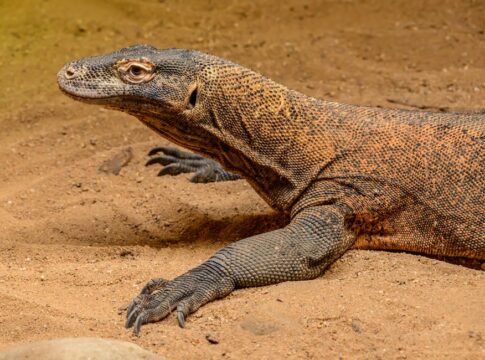
Living reptiles provided their own inspiration. The Komodo dragon, native to Indonesian islands, reaches lengths of ten feet and weights exceeding 150 pounds. These massive lizards are apex predators with venomous bites, powerful claws, and the ability to take down prey as large as water buffalo. European sailors encountering these creatures in the 16th and 17th centuries brought back tales that reinforced existing dragon mythology.
Saltwater crocodiles grow even larger, with some individuals exceeding twenty feet in length. Ancient peoples living along rivers in Africa, Asia, and Australia would have witnessed these armored predators regularly. Their scaly hides, powerful tails, and ferocious hunting behavior tick multiple boxes in the dragon checklist. Nile crocodiles in particular held religious significance in ancient Egypt, where they were both feared and worshipped—much like dragons in other cultures.
Even smaller reptiles contributed. Monitor lizards, pythons, and large constrictors all possess serpentine qualities that blend into dragon imagery. The ability of some snakes to “spit” venom, combined with their threatening displays, may have evolved into fire-breathing in oral traditions passed down through generations.
How Ancient Fossil Discoveries Shaped Dragon Myths
Paleontologist and folklore researcher Adrienne Mayor has extensively documented how ancient peoples interpreted fossils. Protoceratops fossils in the Gobi Desert feature prominent beaks and quadrupedal stances. Scythian gold miners working in these regions described griffin-like creatures guarding treasure—descriptions that align remarkably well with the fossils they would have encountered while digging.
In China, “dragon bones” have been collected for medicinal purposes for millennia. Many of these supposed dragon remains are actually fossilized dinosaur and mammal bones. The Chinese dragon, unlike its fire-breathing European cousin, is typically associated with water, wisdom, and good fortune. This cultural difference may reflect different fossil discoveries and environmental contexts that shaped each region’s mythology independently.
Cave bear skulls, with their elongated snouts and prominent teeth, could easily be misidentified by someone expecting to find a dragon. Mammoth skulls, with their central nasal opening, may have inspired Cyclops legends in Greece. The human mind seeks patterns and explanations, and without modern scientific knowledge, mythological creatures filled the gap.
Comparing Dragon Types Across Cultures
| Dragon Type | Region | Key Characteristics | Possible Natural Inspiration |
|---|---|---|---|
| European Dragon | Europe | Winged, four-legged, fire-breathing, hoards treasure | Dinosaur fossils, crocodiles, large monitor lizards |
| Chinese Long | East Asia | Serpentine, often wingless, associated with water and weather | Crocodiles, large snakes, fossilized marine reptiles |
| Wyvern | Medieval Europe | Two legs, two wings, barbed tail | Pterosaur fossils, large birds of prey |
| Lindworm | Northern Europe | Serpentine, legless or two-legged | Large constrictors, sea serpents (oarfish, whales) |
The Science Behind Fire-Breathing Myths
No known animal can produce actual flames. Biological fire-breathing would require an organism to generate and store flammable chemicals, ignite them safely, and direct the resulting flame outward—all without incinerating its own tissues. This combination has never evolved in any species because the energy costs and risks far outweigh any predatory advantage.
However, several animals produce chemical defenses that might have inspired fire-breathing legends. Bombardier beetles spray boiling, caustic chemicals from their abdomens when threatened. Some cobras spit venom that can cause burning sensations and tissue damage. If ancient observers witnessed reptiles displaying aggressive behavior while producing hissing sounds, clouds of breath vapor in cold weather, or even witnessed volcanic activity near reptile habitats, these elements could fuse into fire-breathing mythology.
The association between dragons and treasure might stem from fossils found in mineral-rich caves or gold-bearing regions. Miners discovering valuable metals alongside massive bones would naturally connect the two in their stories, creating the trope of dragons guarding hoards.
Frequently Asked Questions
Were dragons real animals that went extinct?
No, dragons as described in mythology never existed. However, dinosaurs and other prehistoric reptiles were real, and their fossilized remains likely inspired dragon legends when discovered by ancient peoples who lacked knowledge of paleontology.
What is the closest living relative to a dragon?
The Komodo dragon is the largest living lizard and shares several dragon-like traits including size, predatory behavior, venomous bite, and fearsome appearance. Despite the name, it’s a monitor lizard, not a mythical creature.
Could pterosaurs have inspired dragon myths?
Absolutely. Pterosaur fossils show massive flying reptiles with wingspans exceeding thirty feet. Ancient peoples discovering these remains or even early humans witnessing late-surviving populations could have created stories of flying monsters.
Why do so many cultures have dragon myths?
Dragon-like legends appear worldwide because humans everywhere encountered similar natural phenomena: large reptile fossils, living crocodilians and large snakes, and the universal human tendency to create explanatory myths for mysterious discoveries. These common experiences led to convergent mythology.
The truth about dragons reveals something more interesting than mere fantasy—it shows how humans have always been natural scientists, observing the world and constructing explanations from available evidence. Those ancient bone-hunters gazing at fossils eroding from cliffs weren’t foolish to imagine dragons; they were doing exactly what we still do today: trying to understand the mysteries buried in the earth beneath our feet.