
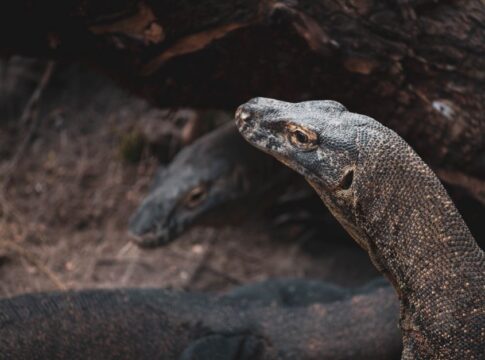
Did You Know Dragons Existed as Megalania Monitor Lizards
By Trivia Daily, Staff Writer — Published November 21, 2026
Table of Contents
- Key Takeaways
- Dragons Existed Megalania: The Science Behind the Legend
- Comparing Ancient Giants to Modern Monitors
- Living Alongside the Last Dragons
- The Dragon Connection Across Cultures
- Modern Discoveries and Ongoing Research
- Frequently Asked Questions
When ancient storytellers spoke of dragons, they might have been channeling ancestral memories of something genuinely terrifying. The Megalania, a massive monitor lizard that roamed Australia until roughly 50,000 years ago, was as close to a real dragon as the natural world has ever produced. This surprising connection between dragons existed megalania and modern paleontology reveals how fact and folklore sometimes intersect in fascinating ways. Weighing up to 600 kilograms and stretching over five meters long, this apex predator would have made even the bravest warriors think twice.
The discovery of Megalania fossils in the 19th century sparked immediate comparisons to mythical beasts. Scientists realized that humans and Megalania coexisted for thousands of years, meaning Indigenous Australians lived alongside these formidable creatures. Could ancient encounters with such massive reptiles have inspired dragon legends across cultures?
Key Takeaways
- Megalania prisca was the largest terrestrial lizard ever known, reaching lengths of 5 to 7 meters and weights up to 600 kilograms
- This giant monitor lizard lived in Australia during the Pleistocene epoch and coexisted with early human inhabitants for thousands of years
- Megalania possessed venomous glands similar to modern Komodo dragons, making it a formidable predator capable of taking down megafauna
- The creature went extinct approximately 50,000 years ago, possibly due to climate change, human hunting, or a combination of factors
- Megalania is closely related to modern monitor lizards like the Komodo dragon and perentie, sharing many anatomical features
- Fossil evidence suggests these lizards had powerful jaws, sharp teeth, and muscular tails that could be used as weapons
Dragons Existed Megalania: The Science Behind the Legend
Megalania prisca, whose name means “ancient great roamer,” was first described by paleontologist Richard Owen in 1859. The creature belonged to the family Varanidae, the same group that includes today’s monitor lizards. But Megalania dwarfed its modern relatives. While a Komodo dragon maxes out at about three meters, Megalania could reach more than double that length.
The lizard’s size alone made it dragon-like. Its skull measured over 70 centimeters long, housing rows of serrated teeth designed for slicing through flesh. Four powerful limbs ended in curved claws perfect for gripping prey or climbing. The tail, thick and muscular, served both as a counterbalance and a weapon capable of delivering bone-crushing blows.
Recent research has revealed an even more dragon-like quality: venom. Studies of Megalania’s skull structure suggest it possessed venom glands similar to those found in modern monitor lizards. The Komodo dragon’s venom causes rapid blood loss, shock, and prevents clotting. Megalania likely employed similar biochemical warfare against its prey, which included giant wombats, marsupial lions, and enormous kangaroos that populated Pleistocene Australia.
Comparing Ancient Giants to Modern Monitors
| Species | Maximum Length | Weight Range | Geographic Range |
|---|---|---|---|
| Megalania prisca (extinct) | 5–7 meters | 300–600 kg | Australia (Pleistocene) |
| Komodo dragon | 3 meters | 70–90 kg | Indonesian islands |
| Perentie | 2.5 meters | 15–20 kg | Australia (arid regions) |
| Asian water monitor | 2 meters | 20–50 kg | South and Southeast Asia |
Living Alongside the Last Dragons
The most intriguing aspect of Megalania’s story is the temporal overlap with humans. Archaeological evidence confirms that Aboriginal Australians arrived on the continent at least 65,000 years ago. Megalania survived until approximately 50,000 years ago, creating a window of at least 15,000 years of coexistence.
What would encounters have looked like? Megalania was an ambush predator, likely lurking near water sources or along game trails. Its size meant it could take down prey much larger than itself, and humans would have been easy targets. Some researchers speculate that oral traditions passed down through Aboriginal cultures may contain echoes of these encounters, though direct evidence remains elusive.
The extinction of Megalania coincides with the disappearance of much of Australia’s megafauna. Climate shifts transformed the landscape, turning lush forests into arid scrublands. Human hunting pressure may have reduced prey populations below sustainable levels. Fire-stick farming practices altered habitats. Whatever the cause, Australia lost its apex reptilian predator, leaving only smaller monitor lizards to carry on the lineage.
The Dragon Connection Across Cultures
Dragon myths appear in cultures worldwide, from European fire-breathers to Chinese water serpents. Could these legends stem from genuine encounters with large reptiles? The theory gains credibility when examining the fossil record. Dinosaur bones discovered by ancient peoples likely inspired tales of enormous beasts. In Australia’s case, Megalania fossils and living memory could have merged into stories of fearsome creatures.
Interestingly, Aboriginal rock art occasionally depicts large reptilian creatures, though definitively linking these to Megalania remains controversial. What’s certain is that humans have always been storytellers, and truly dangerous animals become embedded in cultural memory. Lions, bears, and crocodiles feature prominently in myths wherever they’re found. A seven-meter venomous lizard would surely earn its place in legend.
Modern Discoveries and Ongoing Research
Paleontologists continue to unearth Megalania fossils across Australia, particularly in caves and lake deposits. Each discovery refines our understanding of the creature’s anatomy, behavior, and ecology. Recent finds have provided better estimates of size variation, suggesting males may have grown significantly larger than females, as seen in modern Komodo dragons.
Advances in biomechanical modeling allow scientists to estimate bite force and locomotion capabilities. Computer simulations suggest Megalania could generate tremendous crushing power, though probably less than similarly sized crocodiles. The lizard likely moved with surprising speed in short bursts, using ambush tactics rather than sustained chases.
DNA analysis remains impossible, as proteins and genetic material don’t survive 50,000 years in Australia’s climate. However, comparative studies with living monitor lizards provide insights into possible physiology, metabolism, and behavior. The perentie, Australia’s largest surviving lizard, offers a living window into what a scaled-down Megalania might have been like.
Frequently Asked Questions
Was Megalania actually venomous like Komodo dragons?
Scientific evidence strongly suggests Megalania possessed venom glands based on skull structure analysis. The venom likely caused shock, blood loss, and prevented clotting, similar to modern monitor lizards, making it even more effective as a predator.
Could Megalania have survived in remote areas of Australia?
No credible evidence supports surviving populations. The fossil record clearly shows extinction around 50,000 years ago, and such a large predator would require substantial prey populations that would leave obvious ecological signs.
How does Megalania compare to the largest dinosaurs?
Megalania was tiny compared to dinosaurs—even the smallest sauropods dwarfed it. However, it was the largest terrestrial lizard ever known and the apex reptilian predator of its ecosystem, filling a similar ecological role to large theropod dinosaurs.
Did climate change or humans cause Megalania’s extinction?
Most researchers believe a combination of factors led to extinction. Climate change reduced suitable habitat and prey populations, while human hunting pressure likely accelerated the decline, though the exact contributions of each factor remain debated.
The story of Megalania reminds us that reality sometimes rivals mythology. While dragons may never have breathed fire or hoarded gold, creatures equally magnificent and terrifying once walked the earth. Perhaps the next time you visit a zoo and watch a Komodo dragon, you’ll see not just a large lizard, but a living connection to an age when dragons—or something remarkably similar—were real.