









1 / 10 Questions
0 Points

Ellis Island sits in the waters of which famous harbor?

Upper New York Bay

Boston Harbor

Chesapeake Bay

San Francisco Bay

Points won
0
Correct score
0%

More Questions

Ellis Island sits in the waters of which famous harbor?

Ellis Island sits in the waters of which famous harbor? Question 1: Ellis Island sits in the waters of which famous harbor? A. Upper New York...

11 Record-Breaking Facts About Redwood Trees Being Tallest

Redwood trees hold incredible height records that defy belief. Discover 11 fascinating facts about these towering giants and what makes them unique.

11 Strange Facts About Immortal Jellyfish Aging Backward

Immortal jellyfish can reverse their aging process and potentially live forever. Discover 11 bizarre facts about nature's most remarkable survival

More Articles

Why Wombat Poop Is Cube-Shaped: The Bizarre Science

Why Wombat Poop Is Cube-Shaped: The Bizarre Science

Why Wombat Poop Is Cube-Shaped: The Bizarre Science

By TriviaOwl, Staff Writer — Published August 19, 2026

Table of Contents

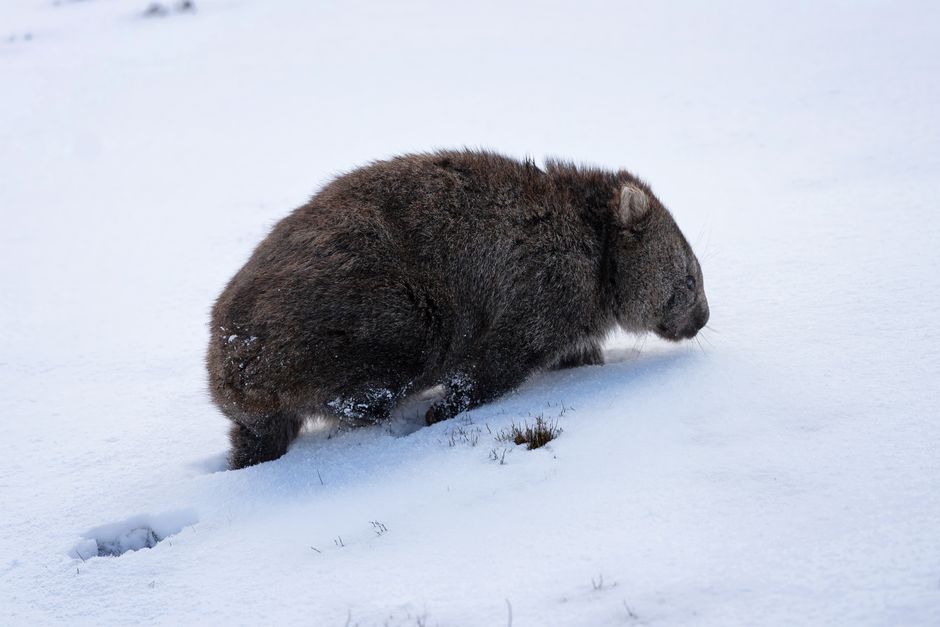
Among the world's most surprising natural phenomena, wombat poop cube formation ranks near the top. These Australian marsupials produce the only known cube-shaped feces in the animal kingdom—roughly six-sided pellets that stack neatly and resist rolling away. It's a biological curiosity that has puzzled scientists for decades, and the explanation involves intestinal elasticity, slow digestion, and territorial behavior that makes this unusual shape surprisingly practical.

The discovery of why wombats produce cubic droppings combines anatomy, physics, and ecology into one fascinating package. What seems like nature's oddest quirk turns out to be an elegant solution to communication challenges in the Australian bush.

Key Takeaways

  • Wombats are the only animals known to produce cube-shaped feces, with each pellet measuring about two centimeters per side.
  • The cubic shape forms in the last portion of the intestine, where varying elasticity creates flat surfaces and sharp edges during the two-week digestive process.
  • Wombats deposit these cubes on rocks and logs to mark territory, and the shape prevents them from rolling off elevated surfaces.
  • Researchers from the University of Tasmania and Georgia Institute of Technology discovered that alternating stiff and flexible regions in the wombat intestine sculpt the shape.
  • Wombats produce 80 to 100 individual cube-shaped droppings each night during their territorial marking activities.
  • The cubic formation doesn't require special anal sphincter muscles—the shape is set before excretion occurs.

The Wombat Poop Cube Mystery: What Makes It So Unusual

Wombats, stocky burrowing marsupials native to Australia, produce between 80 and 100 droppings per day. Each one emerges as a distinct cube. The shape is consistent across all three wombat species: the common wombat, the southern hairy-nosed wombat, and the northern hairy-nosed wombat.

For years, the cubic shape baffled biologists. Most animal droppings are cylindrical or spherical, shaped by the circular muscles of the digestive tract. Wombat feces defied this pattern. Early theories suggested the shape formed during excretion, perhaps through a uniquely shaped anal opening. That turned out to be wrong.

The real answer lies deep within the wombat's remarkably long intestinal tract. Wombats have one of the slowest digestive processes of any mammal, taking 14 to 18 days to fully process their fibrous, low-nutrient diet of grasses, roots, and bark. This extended journey allows maximum extraction of nutrients and water—critical adaptations for survival in Australia's often harsh, dry environments.

How the Intestine Sculpts Cubic Feces

Research teams studying wombat digestive anatomy discovered that the final eight percent of the wombat intestine contains alternating regions of stiff and flexible tissue. These variations in elasticity create differential contraction patterns that gradually mold the digesting material into cubes.

The process works through rhythmic intestinal contractions. Stiffer sections resist expansion, creating flat surfaces. Flexible sections between them bulge slightly, forming the edges and corners. Over the course of the lengthy digestive process, what enters as a cylinder slowly transforms into a stack of cubes—nature's own geometric manufacturing process.

Scientists confirmed this mechanism by studying intestinal tissue from wombats that had died from natural causes or vehicle collisions. They inflated sections of intestine like balloons and measured how different regions expanded. The pattern matched perfectly with the cubic shape observed in wombat droppings.

Why Evolution Favored This Shape

The cubic form serves a clear ecological purpose. Wombats are territorial animals that communicate through scent marking. They deposit their distinctive droppings on rocks, logs, and other elevated surfaces throughout their territory—sometimes stacking them in small piles.

Round droppings would roll off these surfaces. Cubic ones stay put. This simple geometric advantage means wombat scent markers remain where placed, creating more effective territorial boundaries. The higher the marker, the more visible and olfactorily prominent it becomes to other wombats.

Wombats have relatively poor eyesight but excellent senses of smell. Strategic placement of stable, non-rolling fecal markers allows them to establish clear territorial boundaries without constant maintenance or re-marking.

Comparing Wombat Digestion to Other Herbivores

Animal Digestion Time Fecal Shape Daily Output
Wombat 14-18 days Cubic 80-100 pellets
Rabbit 4-5 hours Spherical 200-300 pellets
Koala 100-200 hours Oval 150-200 pellets
Cow 24-48 hours Irregular patties 12-15 deposits

The Physics Behind Nature's Only Cubes

Creating corners and edges from soft biological material presents a genuine engineering challenge. Most soft materials naturally form curves and spheres when compressed—think of how pizza dough rounds itself or how water droplets form spheres.

The wombat intestine overcomes this tendency through precise control of tissue elasticity. Research published by teams studying biomechanics showed that the ratio of stiff to flexible tissue, combined with the duration of compression, allows the formation of distinct corners with angles approaching 90 degrees.

This discovery has attracted interest from engineers and materials scientists. The principle of using varying elasticity to create specific shapes in soft materials has potential applications in manufacturing, medical devices, and food production. Nature solved a complex engineering problem millions of years before humans began studying geometry.

Common Myths About Wombat Droppings

Several misconceptions about wombat poop cubes persist, despite scientific clarification. One common myth suggests wombats have square anuses that stamp out cubic shapes. Anatomical studies confirm this is false—wombat anal anatomy is unremarkable and similar to other marsupials.

Another misconception claims wombats consciously shape their feces or manipulate them after excretion. The cubes form entirely through passive intestinal processes. Wombats simply deposit them where territorial instinct dictates.

Some sources incorrectly state that wombat feces are perfectly cubic. In reality, they're approximately cubic, with rounded corners and slight irregularities. The term "cube-shaped" describes their general geometry, not mathematical precision.

Frequently Asked Questions

Are wombats the only animals that produce cube-shaped poop?

Yes, wombats are the only known animals that naturally produce cube-shaped feces. No other mammal, bird, reptile, or invertebrate creates droppings with this distinctive geometry.

Do all wombat species produce cubic droppings?

All three wombat species—common wombats, southern hairy-nosed wombats, and northern hairy-nosed wombats—produce cube-shaped droppings. The trait is universal across the wombat family.

Can you stack wombat poop like building blocks?

While wombat droppings are cube-shaped, they're not perfectly uniform or stable enough for serious stacking. Wombats themselves sometimes place several cubes together on prominent rocks or logs as territorial markers.

How long does it take for wombat poop to form its cubic shape?

The cubic shape develops gradually over the wombat's 14 to 18-day digestive process, with the final shaping occurring in the last portion of the intestine during the final days before excretion.

The next time you encounter an unusual natural phenomenon, remember the wombat's cubic calling card. What seems like biological absurdity often reveals elegant solutions to real survival challenges. Evolution doesn't waste energy on novelty—even the strangest adaptations serve a purpose, whether that's marking territory with non-rolling droppings or extracting every possible nutrient from tough Australian grasses. Nature's toolbox contains stranger instruments than we typically imagine.
Werewolf Myths: What Really Started the Full Moon Legend

Werewolf Myths: What Really Started the Full Moon Legend

Werewolf Myths: What Really Started the Full Moon Legend

By Trivia Owl, Staff Writer — Published September 21, 2026

Table of Contents

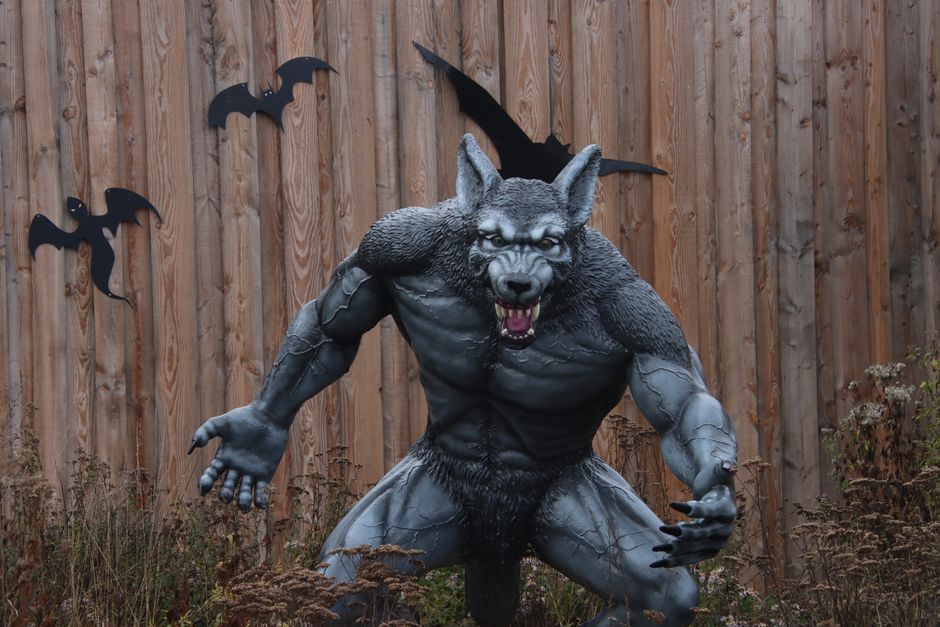
The image is iconic: a full moon rising over shadowy trees while a human transforms into a snarling beast. But when you explore the surprising facts behind werewolf myths started centuries ago, you'll discover the full moon connection is actually a recent Hollywood invention. The original werewolf legends, dating back thousands of years across European and Mediterranean cultures, rarely mentioned lunar phases at all. These transformations were tied to curses, witchcraft, and divine punishment—not celestial cycles.

What's truly amazing is how completely modern cinema rewrote ancient folklore. The werewolf-full moon association we take for granted today emerged primarily from 20th-century films, overshadowing millennia of earlier stories. Let's uncover the real origins of these enduring myths and separate fascinating historical facts from Hollywood fiction.

Key Takeaways

  • Ancient werewolf myths started with Greek and Roman stories that never connected transformations to full moons.
  • The full moon association became widespread only after 1940s Hollywood horror films, particularly "The Wolf Man."
  • Historical "werewolf" trials in medieval Europe were linked to mental illness, ergot poisoning, and superstition about witchcraft.
  • Clinical lycanthropy, a real psychiatric condition, causes people to believe they're transforming into animals.
  • Wolves were genuinely feared in medieval Europe, where attacks on humans and livestock were common, fueling supernatural explanations.
  • Hypertrichosis, a rare genetic condition causing excessive hair growth, may have inspired some transformation legends.

How Werewolf Myths Started in Ancient Civilizations

The earliest werewolf story comes from ancient Greece, specifically the myth of King Lycaon of Arcadia. According to the legend preserved by Roman poet Ovid, Zeus transformed Lycaon into a wolf as punishment for serving human flesh at a banquet. The transformation was permanent punishment, not a monthly cycle. This tale gave us the word "lycanthropy," from the Greek "lykos" (wolf) and "anthropos" (human).

Roman writers documented similar beliefs. Pliny the Elder wrote about the Anthus clan, whose members supposedly drew lots annually to determine who would transform into a wolf for nine years. These accounts treated lycanthropy as rare misfortune or divine curse—never as something triggered by moonlight.

Medieval European folklore expanded these ideas considerably. Werewolf stories proliferated across France, Germany, and Eastern Europe between the 1400s and 1600s. Most involved people donning wolf pelts, using magical ointments, or falling victim to curses. The transformation methods were diverse and creative, but lunar phases remained conspicuously absent from most accounts.

The Medical Conditions Behind the Legends

Several verifiable medical conditions likely contributed to werewolf beliefs. Clinical lycanthropy is a recognized psychiatric syndrome where patients genuinely believe they're transforming into animals, most commonly wolves. This delusion can accompany schizophrenia, bipolar disorder, or severe depression. Patients have reported feeling their bodies change and experiencing overwhelming animal urges.

Hypertrichosis, sometimes called "werewolf syndrome," causes abnormal hair growth across the face and body. This extremely rare genetic condition affects perhaps one in a billion people. Historical cases of individuals with hypertrichosis working in traveling shows may have reinforced transformation myths in public imagination.

Rabies presents another compelling explanation. The disease, transmitted through animal bites (often from wolves in medieval Europe), causes aggression, hydrophobia, sensitivity to light, and altered behavior. Infected individuals might bite others, foam at the mouth, and display animalistic rage—symptoms that terrified medieval observers lacking modern medical knowledge.

Ergot poisoning from contaminated grain also played a role. This fungal contamination causes hallucinations, convulsions, and sensations of insects crawling under skin. Communities experiencing ergotism outbreaks might have interpreted these symptoms as demonic possession or transformation.

When Hollywood Invented the Full Moon Connection

The full moon werewolf trope emerged surprisingly late. Most scholars trace it to 20th-century Gothic fiction and cinema rather than authentic folklore. The 1941 Universal Pictures film "The Wolf Man" starring Lon Chaney Jr. cemented the lunar transformation in popular culture. The movie's screenwriter created the now-famous rhyme connecting werewolves to autumn moons and pentagram marks.

Why did filmmakers choose full moons? Dramatically, it's perfect. The moon provides eerie lighting, creates a predictable transformation schedule for storytelling, and taps into existing associations between moonlight and madness. The word "lunatic" itself derives from "luna," the Latin word for moon, reflecting ancient beliefs that lunar phases affected mental states.

Earlier literary werewolves rarely transformed by moonlight. Medieval texts described transformations triggered by enchanted belts, potions, or simply nightfall. The specificity of the full moon is almost entirely a modern innovation that has now completely eclipsed the original myths in public consciousness.

Real Werewolf Trials and Persecution

Between roughly 1520 and 1630, European courts conducted numerous werewolf trials, particularly in France and Germany. These proceedings paralleled witch trials and often involved similar accusations. Defendants faced charges of murder, cannibalism, and pacts with Satan—all supposedly committed in wolf form.

One well-documented case involved Peter Stumpp in Germany in 1589. He confessed under torture to wearing a magical belt that transformed him into a wolf, during which he allegedly committed murders over 25 years. His execution was brutal even by medieval standards. Modern historians recognize these trials as tragic miscarriages of justice, likely targeting mentally ill individuals, social outcasts, or victims of false accusations.

The trials reflected genuine fear of wolves in medieval Europe. Wolf attacks on humans, while relatively rare, did occur, especially during harsh winters when natural prey grew scarce. Livestock losses were common. Communities living close to wilderness had legitimate reasons to fear wolves, making supernatural explanations for unexplained deaths psychologically compelling.

Comparing Werewolf Legends Across Cultures

Culture Creature Name Transformation Trigger Key Characteristics
European Werewolf/Loup-garou Curse, belt, ointment Human becomes wolf, often retains some human awareness
Scandinavian Eigi einhamr Berserker rage, shamanic ritual Warriors channel wolf or bear spirits for battle strength
Slavic Vukodlak Curse, witchcraft Often associated with vampirism, undead characteristics
Native American Skin-walker Wearing animal hide Shapeshifter taking various animal forms, often malevolent

Why We Still Love Werewolf Stories

Werewolf myths endure because they explore fundamental human anxieties. The loss of control, the beast within civilized humanity, the fear of our own capacity for violence—these themes resonate across centuries. Modern werewolf fiction often uses transformation as metaphor for puberty, addiction, or repressed identity.

The full moon element, though historically inaccurate, adds narrative structure. It creates countdown tension and inevitability. Characters know exactly when they'll transform, allowing stories to build suspense around that deadline. This predictability makes better drama than random or permanent transformations.

Interestingly, contemporary werewolf media increasingly portrays transformation positively—as empowerment rather than curse. This shift reflects changing cultural attitudes toward wildness, nature, and rejecting social constraints. The werewolf has evolved from monster to misunderstood antihero.

Frequently Asked Questions

Did ancient cultures actually believe werewolves were real?

Yes, many ancient and medieval cultures genuinely believed certain people could transform into wolves through magic, curses, or divine punishment. These beliefs were taken seriously enough to result in trials and executions across Europe during the 1500s and 1600s.

Why do we associate werewolves with full moons if it's not from original folklore?

The full moon connection became popular through 20th-century films, particularly Universal's "The Wolf Man" in 1941. Filmmakers found the visual and dramatic potential of lunar transformations more compelling than the varied triggers found in actual folklore, and this cinematic invention replaced authentic traditions in popular culture.

Is there a real medical condition that makes people think they're werewolves?

Clinical lycanthropy is a genuine psychiatric condition where patients believe they're transforming into wolves or other animals. It's rare and typically occurs alongside other mental health conditions like schizophrenia or severe depression, requiring psychiatric treatment.

Were wolves really dangerous enough in medieval Europe to inspire these myths?

Yes, wolves posed real threats to medieval European communities, attacking livestock regularly and occasionally humans, especially during harsh winters. This genuine danger, combined with limited understanding of animal behavior and mental illness, created fertile ground for supernatural explanations of unexplained deaths and strange behavior.

The next time you see a werewolf howling at a full moon in a movie, remember you're watching a modern invention rather than ancient lore. The real history of werewolf myths reveals something more intriguing than Hollywood magic: a complex tapestry of medical misunderstanding, genuine ecological fear, and the timeless human need to explain the inexplicable. The beast was never in the moon—it was always in our imagination.