
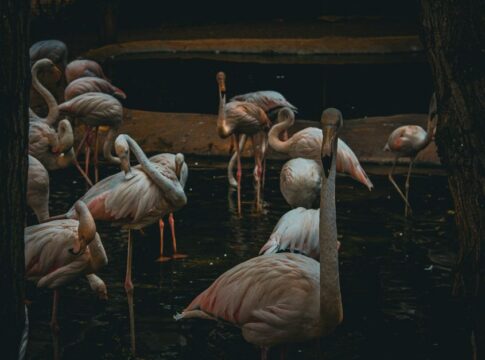
The Hidden Reason Flamingos Stand on One Leg to Sleep
By Trivia Daily, Animals Desk — Published October 8, 2026
Table of Contents
- Key Takeaways
- The Hidden Reason Flamingos Stand on One Leg: Thermoregulation
- The Remarkable Anatomy Behind the Balance
- Comparing Flamingo Species and Their Habitats
- Other Animals That Share This Behavior
- Debunking Common Myths About Flamingo Behavior
- Frequently Asked Questions
If you’ve ever watched flamingos at a zoo or in the wild, you’ve probably noticed their peculiar habit of standing on one leg while tucking the other beneath their body. This iconic pose isn’t just for show. The hidden reason flamingos adopt this stance reveals a fascinating blend of thermoregulation and energy conservation that has puzzled scientists and delighted wildlife observers for generations. These vibrant pink creatures have evolved a behavior that serves multiple practical purposes, making them one of nature’s most efficient sleepers.
Understanding why flamingos balance on a single leg requires looking at their unique anatomy, habitat challenges, and the clever adaptations that help these animals thrive in some of Earth’s most extreme environments.
Key Takeaways
- Flamingos stand on one leg primarily to conserve body heat by reducing the amount of leg surface exposed to cold water and air.
- The behavior requires virtually no muscular effort due to a specialized “stay apparatus” in their anatomy that locks the leg in place.
- Flamingos alternate legs throughout the day, giving each limb a chance to warm up inside their feathers.
- This one-legged stance helps flamingos reduce heat loss by up to 50 percent compared to standing on both legs.
- All six species of flamingos exhibit this behavior, from the Caribbean flamingo to the lesser flamingo of Africa.
- Scientists have observed that flamingos stand on one leg more frequently in colder water temperatures.
The Hidden Reason Flamingos Stand on One Leg: Thermoregulation
The primary explanation for why flamingos balance on one leg centers on heat conservation. These wading birds spend much of their lives standing in water—sometimes for hours at a time—as they filter-feed on algae, brine shrimp, and other small organisms. Water conducts heat away from the body far more efficiently than air does, creating a constant challenge for maintaining optimal body temperature.
By tucking one leg up into their plumage, flamingos dramatically reduce the surface area exposed to the cold. Their legs lack the insulating feathers that cover their bodies, making them particularly vulnerable to heat loss. Think of it as wearing shorts in winter versus long pants. The difference in warmth is substantial. When a flamingo pulls that bare leg up against its warm body and surrounds it with feathers, it creates a pocket of warmth that helps the bird maintain its core temperature without burning extra calories.
Research has shown that flamingos are more likely to adopt the one-legged stance when water temperatures drop. In warmer conditions, you’ll see more flamingos standing on both legs, suggesting the behavior is indeed temperature-dependent rather than purely habitual.
The Remarkable Anatomy Behind the Balance
Standing motionless on one leg for extended periods might seem like it would require incredible muscle strength and constant concentration. For humans, it certainly would. But flamingos possess a specialized anatomical feature that makes this posture nearly effortless.
Scientists have discovered that flamingos have what’s called a “passive stay apparatus”—a system of tendons, ligaments, and bone structures that essentially locks their leg joints in place when bearing weight. Once a flamingo shifts its center of gravity over one leg, the mechanical structure of the limb takes over, requiring minimal muscular effort to maintain balance. It’s similar to how humans can stand for long periods without thinking about it, except flamingos have refined this ability to work perfectly on a single limb.
Studies using deceased flamingos (conducted ethically through natural deaths in captivity) demonstrated that even flamingo cadavers could be balanced on one leg with relative ease, while two-legged stances were unstable. This finding confirmed that the posture is mechanically stable and doesn’t depend on active muscle control or balance adjustments.
Energy Conservation in Action
Beyond temperature regulation, the one-legged stance offers energy savings. By using their passive stay apparatus, flamingos can rest while standing, essentially sleeping on their feet without exhausting their muscles. This is crucial for species that spend their lives in open water habitats where predators might approach. The ability to rest while remaining upright and alert provides a survival advantage.
Comparing Flamingo Species and Their Habitats
| Species | Primary Habitat | Water Temperature Range | One-Leg Behavior Frequency |
|---|---|---|---|
| Greater Flamingo | Coastal lagoons, Africa/Europe/Asia | Cool to warm | High in cooler regions |
| Lesser Flamingo | Alkaline lakes, East Africa | Warm to hot | Moderate |
| Chilean Flamingo | Temperate South America | Cool | Very high |
| Andean Flamingo | High-altitude lakes | Very cold | Extremely high |
Other Animals That Share This Behavior
Flamingos aren’t alone in their one-legged sleeping habits. Several other bird species exhibit similar behavior, particularly wading birds and waterfowl that face the same thermoregulation challenges. Herons, storks, and some ducks have been observed resting on one leg, though perhaps none do it as consistently or iconically as flamingos.
The behavior appears across different bird families that share similar ecological niches, suggesting it evolved independently multiple times as a solution to the same environmental challenge. This convergent evolution demonstrates how nature often arrives at similar solutions to common problems.
Debunking Common Myths About Flamingo Behavior
Several misconceptions surround this flamingo behavior. Some people believe flamingos stand on one leg to dry off the other foot, but this doesn’t hold up under scientific scrutiny. Flamingos adopt the pose even when they’re already dry and haven’t been in water recently.
Another myth suggests the stance helps with blood circulation, but there’s no evidence supporting this claim. The thermoregulation and energy conservation explanations remain the most scientifically supported reasons.
Some observers have wondered if flamingos simply get tired standing on two legs. While muscle fatigue might play a minor role, the primary drivers are temperature control and the mechanical efficiency of the one-legged posture.
Frequently Asked Questions
Do flamingos ever fall over when sleeping on one leg?
Flamingos rarely fall over because their passive stay apparatus mechanically locks their leg in place, making the stance extremely stable. Young flamingos learning the behavior may occasionally lose balance, but adults have mastered the technique.
Which leg do flamingos prefer to stand on?
Flamingos don’t show a consistent preference for one leg over the other. They alternate throughout the day, giving each leg time to warm up and rest.
Can flamingos sleep while standing on one leg?
Yes, flamingos regularly sleep while balanced on one leg. Their specialized anatomy allows them to rest in this position without falling, providing both sleep and thermoregulation benefits simultaneously.
Do flamingos in warmer climates still stand on one leg?
Flamingos in all climates exhibit the one-legged stance, though they do it less frequently in very warm conditions. The behavior appears to be partly instinctive and partly responsive to temperature.
The next time you see a flamingo standing serenely on one leg, you’ll know you’re witnessing millions of years of evolutionary refinement. What looks like a simple quirk is actually a masterclass in biological efficiency, proving that even the most peculiar animal behaviors usually serve a practical purpose in the grand theater of wildlife survival.