
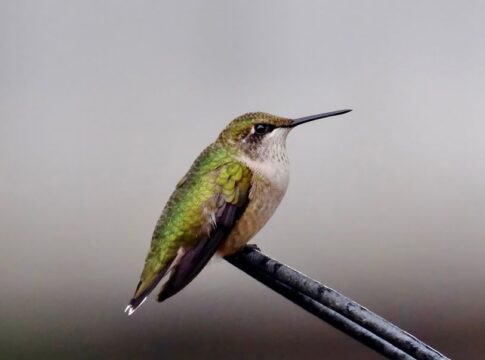
Hummingbird Metabolism: How They Eat Every 10 Minutes
By Trivia Daily, Animals Desk — Published September 6, 2026
Table of Contents
- Key Takeaways
- Understanding Hummingbird Metabolism Every Moment They’re Awake
- The Ten-Minute Feeding Clock
- Comparing Hummingbird Species’ Metabolic Adaptations
- The Digestive System Built for Speed
- Frequently Asked Questions
Hummingbirds live life in the metabolic fast lane. These tiny creatures possess the highest metabolism of any vertebrate on Earth, burning energy at rates that would be lethal to most animals. To fuel their frantic existence, a hummingbird must consume roughly half its body weight in sugar daily, visiting hundreds of flowers and feeding every ten to fifteen minutes from dawn to dusk. Without this constant refueling, these remarkable birds would starve to death in hours.
The relationship between hummingbird metabolism every few minutes and survival is one of nature’s most extreme examples of evolutionary adaptation. These birds exist on a knife’s edge between spectacular aerial ability and metabolic catastrophe, making them among the most fascinating species in the animal kingdom.
Key Takeaways
- Hummingbirds have the fastest metabolism of any vertebrate, with heart rates reaching over 1,200 beats per minute during flight.
- These birds must eat every 10 to 15 minutes throughout the day to avoid starvation, consuming up to twice their body weight in nectar daily.
- Hummingbirds can enter a state called torpor at night, reducing their metabolism by up to 95% to conserve energy while sleeping.
- Their wings beat between 50 and 80 times per second, requiring enormous caloric expenditure that drives their constant feeding behavior.
- A hummingbird’s body temperature can drop from around 105°F during the day to as low as 70°F during torpor.
- Despite their size, hummingbirds visit between 1,000 and 2,000 flowers per day to meet their energy requirements.
Understanding Hummingbird Metabolism Every Moment They’re Awake
When scientists measure metabolic rates, they typically use oxygen consumption as a proxy for energy expenditure. By this standard, hummingbirds are metabolic champions. During active flight, a hummingbird’s metabolism can be roughly ten times higher than that of an elite human athlete running a marathon. Their tiny hearts beat more than 1,200 times per minute during flight, pumping blood through a circulatory system that must deliver oxygen and glucose to muscles working at extraordinary rates.
This metabolic intensity stems from the bird’s unique flight mechanics. Unlike other birds that generate lift primarily on the downstroke, hummingbirds generate lift on both the upstroke and downstroke, allowing them to hover, fly backward, and perform aerial acrobatics. This figure-eight wing motion requires continuous, rapid muscle contractions that demand massive amounts of energy. The pectoral muscles that power these wings can account for up to 30% of the bird’s total body weight.
The price of this aerial mastery is an insatiable hunger. A hummingbird’s metabolism is so fast that if a human had an equivalent metabolic rate, they would need to consume roughly 150,000 calories per day and their skin temperature would approach 750°F. These birds must therefore spend the majority of their waking hours seeking and consuming food.
The Ten-Minute Feeding Clock
1. Constant Nectar Foraging Drives Daily Behavior
Hummingbirds structure their entire day around feeding intervals. Research has shown that most species feed every 10 to 15 minutes throughout daylight hours, though this can vary based on environmental conditions and nectar availability. In their natural habitat, this means visiting hundreds of flowers daily, with some individuals making more than 1,000 feeding visits. Between meals, they perch to conserve energy, but these rest periods are brief. The bird’s internal fuel gauge is always running low.
2. Sugar Concentration Matters More Than Volume
Not all nectar is created equal in the eyes of a hummingbird. These birds strongly prefer nectar with sugar concentrations between 20% and 30%. Solutions that are too dilute require excessive volume to meet energy needs, while overly concentrated nectar becomes difficult to digest and can actually dehydrate the bird. Hummingbirds have evolved the ability to assess sugar concentration and will preferentially visit flowers or feeders that offer optimal sweetness. This selective feeding behavior maximizes energy intake per visit.
3. Insects Provide Essential Protein
While nectar provides the sugar calories that fuel flight, hummingbirds cannot survive on sugar alone. They supplement their diet with small insects and spiders, which provide essential proteins, fats, vitamins, and minerals. These creatures catch gnats, fruit flies, and other tiny arthropods either by hawking them in midair or gleaning them from spider webs and foliage. Insect consumption typically accounts for about 10% of their diet but is crucial for reproduction, feather growth, and overall health.
4. Tongue Mechanics Enable Rapid Feeding
A hummingbird’s tongue is a marvel of biological engineering. Rather than sucking nectar like a straw, the tongue uses capillary action and dynamic grooves that open when the tongue enters nectar and close around the liquid as it’s withdrawn. The bird can lap nectar at rates of up to 20 licks per second, allowing it to extract maximum calories in minimum time. This efficiency is essential when every moment spent feeding is a moment not spent finding the next meal.
5. Territorial Defense Protects Food Sources
Many hummingbird species are fiercely territorial, aggressively defending productive feeding areas from rivals. This behavior makes evolutionary sense: a reliable food source means predictable access to the calories needed for survival. Males of many species establish and defend territories containing multiple flowering plants, chasing away intruders with aerial displays and physical confrontations. Some species even remember the locations of hundreds of individual flowers and the timing of their nectar replenishment.
6. Migration Requires Extreme Pre-Flight Fueling
Species that migrate face an extraordinary metabolic challenge. A ruby-throated hummingbird, for example, must fly nonstop across the Gulf of Mexico, a journey of roughly 500 miles. To prepare, these birds enter a period of hyperphagia, dramatically increasing their food intake to build fat reserves. A bird that normally weighs about 3 grams may nearly double its weight before migration. During the crossing itself, the bird burns through these reserves, losing up to half its body weight.
7. Torpor: The Nightly Survival Strategy
Hummingbirds face a dangerous dilemma at night. They cannot feed in darkness, yet their high metabolism would quickly exhaust their energy reserves during sleep. The solution is torpor, a hibernation-like state in which the bird’s metabolic rate drops by 50% to 95%. Body temperature plummets from around 105°F to as low as 70°F, and heart rate decreases from over 1,000 beats per minute to as few as 50. This dramatic physiological shift allows the bird to survive the night without starving. Arousing from torpor in the morning requires significant energy and can take 20 minutes or more.
8. Cold Weather Intensifies Energy Demands
Hummingbirds living in cooler climates or at high elevations face even greater metabolic challenges. Maintaining body temperature in cold weather requires additional calories beyond those needed for flight. Some mountain-dwelling species have adapted by timing their breeding to coincide with peak flower abundance and by selecting thermally favorable microclimates for nesting. During cold snaps, these birds may enter torpor even during daylight hours if food is scarce, a risky strategy that leaves them vulnerable to predators.
9. Juvenile Birds Face Learning Curves
Young hummingbirds must quickly master the art of efficient feeding or they will not survive. Fledglings initially struggle to hover steadily and to judge nectar quality, often visiting flowers that have already been depleted. Over several weeks, they learn to recognize productive flowers, remember locations, and defend small territories. Mortality is high during this learning period, and only the most efficient foragers survive to adulthood.
10. Climate Change Threatens Metabolic Balance
The tight coupling between hummingbird metabolism and flower availability makes these species vulnerable to environmental change. Shifts in flowering times due to warming temperatures can create mismatches between when birds arrive and when their food sources bloom. Extreme weather events can destroy nectar sources or force birds to expend more energy maintaining body temperature. Because hummingbirds live so close to their metabolic limits, even small disruptions to their feeding patterns can have serious consequences for individual survival and population health.
Comparing Hummingbird Species’ Metabolic Adaptations
| Species | Typical Weight | Wing Beats Per Second | Special Metabolic Adaptation |
|---|---|---|---|
| Bee Hummingbird | 1.6-2 grams | 80 | Smallest bird; proportionally highest metabolism |
| Ruby-throated Hummingbird | 2-6 grams | 53 | Doubles weight for Gulf of Mexico migration |
| Anna’s Hummingbird | 3-6 grams | 40-50 | Can survive near-freezing temperatures year-round |
| Giant Hummingbird | 18-24 grams | 15 | Slower wing beats; lower relative metabolic rate |
The Digestive System Built for Speed
To process the enormous quantities of nectar they consume, hummingbirds have evolved a remarkably efficient digestive system. Nectar passes through the digestive tract in as little as 15 to 20 minutes, with sugar absorption beginning almost immediately in the small intestine. The birds can absorb up to 99% of the sugar content from the nectar they consume, leaving almost no waste.
The liver plays a central role in managing this sugar flood. It processes incoming glucose, converts excess to fat for short-term storage, and releases energy as needed. The kidneys work overtime as well, filtering and excreting the large volumes of water that come with liquid nectar. A hummingbird may produce urine equivalent to its body weight each day.
Frequently Asked Questions
How long can a hummingbird survive without food?
A hummingbird can typically survive only 3 to 5 hours without food during the day when its metabolism is running at full speed. At night, torpor allows them to survive 8 to 12 hours without eating.
Do all hummingbird species have the same metabolic rate?
No, metabolic rates vary by species and size. Smaller species like the bee hummingbird have proportionally higher metabolic rates than larger species like the giant hummingbird, though all hummingbirds have exceptionally high metabolism compared to other birds.
Can hummingbirds taste the sugar in nectar?
Yes, hummingbirds have taste receptors specifically adapted to detect sweetness. They can distinguish between different sugar concentrations and show strong preferences for nectar with optimal sugar content for their energy needs.
Why don’t hummingbirds starve during rain or cold weather?
During prolonged bad weather, hummingbirds can enter torpor even during daylight hours to conserve energy. They also memorize reliable food sources and will continue feeding in light rain, though heavy storms can be dangerous if they last more than a few hours.
The hummingbird’s metabolic engine represents one of evolution’s most extreme experiments in miniaturization and speed. These birds exist at the absolute edge of what vertebrate physiology can achieve, turning sugar into flight with breathtaking efficiency. Every ten-minute feeding interval is not just a meal—it’s a matter of life and death.