
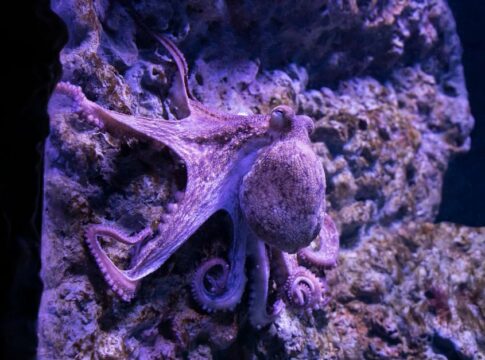
The Hidden Story Behind Why Octopuses Have Blue Blood
By Trivia Daily, Staff Writer — Published October 6, 2026
Table of Contents
- Key Takeaways
- The Hidden Story Behind Copper-Based Blood
- Why Evolution Chose Copper Over Iron
- The Three-Heart System That Powers Blue Blood
- Other Blue-Blooded Creatures
- What This Means for Octopus Intelligence
- Frequently Asked Questions
Slice open a human and you’ll find red blood. Do the same to an octopus—though please don’t—and you’ll discover something far stranger: blue blood coursing through its body. This isn’t science fiction or a quirk of evolution gone wild. It’s a fascinating adaptation that reveals the hidden story behind how these intelligent invertebrates conquered some of the ocean’s most challenging environments. The surprising truth involves copper, oxygen, and a molecular solution that would make any chemist jealous.
While we rely on iron-based hemoglobin to transport oxygen through our veins, octopuses evolved an entirely different system. Their blood contains hemocyanin, a copper-based protein that turns blue when it binds with oxygen. This amazing biological choice wasn’t random—it’s a masterclass in evolutionary problem-solving that helps these creatures thrive in cold, oxygen-poor waters where our own blood chemistry would fail us.
Key Takeaways
- Octopus blood is blue because it contains hemocyanin, a copper-based oxygen-transport protein, instead of the iron-based hemoglobin found in humans.
- Hemocyanin is more efficient than hemoglobin at transporting oxygen in cold, low-oxygen environments typical of deep ocean habitats.
- Other animals with blue blood include horseshoe crabs, most mollusks, and many arthropods like lobsters and spiders.
- The copper in hemocyanin gives oxygenated blood its distinctive blue color, while deoxygenated hemocyanin appears colorless or pale.
- This adaptation allows octopuses to remain active hunters even in frigid waters where warm-blooded animals struggle.
- Octopuses have three hearts: two pump blood to the gills, while the third circulates it to the rest of the body.
The Hidden Story Behind Copper-Based Blood
The chemical difference between red and blue blood comes down to metalloproteins. Humans and most vertebrates use hemoglobin, which incorporates iron atoms at its core. When iron binds to oxygen, it creates that familiar crimson hue. Octopuses and their cephalopod relatives took a different evolutionary path entirely.
Hemocyanin suspends copper atoms in its molecular structure. Unlike hemoglobin, which stays tucked inside red blood cells, hemocyanin floats freely dissolved in the blood plasma. When copper meets oxygen, it oxidizes and produces that startling blue color—the same chemical reaction that turns the Statue of Liberty green, just happening inside a living creature.
But here’s where the story gets interesting: this isn’t just about color. Hemocyanin performs better than hemoglobin in specific conditions. In cold water with low oxygen levels, hemocyanin maintains its oxygen-carrying capacity while hemoglobin’s efficiency drops. For an octopus hunting in the chilly depths, this difference can mean the gap between catching dinner and becoming it.
Why Evolution Chose Copper Over Iron
The ocean presents unique challenges that land animals never face. Temperature drops rapidly with depth. Oxygen becomes scarce. Pressure increases to crushing levels. An octopus needs a circulatory system that works under these extreme conditions.
Hemocyanin excels in cold environments. While mammalian blood thickens and loses efficiency as temperatures drop, hemocyanin actually becomes more effective at binding oxygen in frigid water. This adaptation allows octopuses to remain agile predators in waters that would leave warm-blooded animals sluggish and oxygen-starved.
The trade-off? Hemocyanin carries oxygen less efficiently than hemoglobin under warm, oxygen-rich conditions. This explains why octopuses are cold-blooded and why they struggle in warm water. Their entire physiology is optimized for the deep blue world they inhabit. Scientists have observed that octopuses become lethargic and stressed when water temperatures rise beyond their comfort zone—their blue blood simply can’t keep up with increased metabolic demands.
The Three-Heart System That Powers Blue Blood
Blue blood alone wouldn’t be enough. Octopuses evolved a remarkable three-heart circulatory system to maximize their copper-based chemistry. Two branchial hearts sit near the gills, pumping deoxygenated blood through the respiratory system. Once the blood picks up oxygen and turns blue, the systemic heart takes over, pushing that oxygen-rich blood throughout the body.
This setup has one curious side effect: when an octopus swims, the systemic heart stops beating. That’s why octopuses prefer to crawl along the ocean floor rather than swim—it’s literally less exhausting for their cardiovascular system. Walking preserves energy and keeps all three hearts pumping efficiently.
Other Blue-Blooded Creatures
Octopuses aren’t alone in their copper-based biology. The trait appears across multiple branches of the animal kingdom, particularly among invertebrates adapted to marine environments.
| Animal Group | Blood Color | Oxygen Carrier |
|---|---|---|
| Octopuses, squid, cuttlefish | Blue | Hemocyanin (copper-based) |
| Horseshoe crabs | Blue | Hemocyanin (copper-based) |
| Most mollusks (snails, clams) | Blue | Hemocyanin (copper-based) |
| Spiders, scorpions, lobsters | Blue | Hemocyanin (copper-based) |
| Humans and most vertebrates | Red | Hemoglobin (iron-based) |
Horseshoe crabs deserve special mention. Their blue blood contains unique properties that make it invaluable to medical science. Pharmaceutical companies use horseshoe crab blood to test for bacterial contamination in vaccines and medical devices—a multimillion-dollar industry built on ancient blue-blooded creatures that predate the dinosaurs.
What This Means for Octopus Intelligence
The connection between blue blood and brainpower might seem tenuous, but it’s real. Octopuses rank among the most intelligent invertebrates on Earth. They solve puzzles, use tools, and demonstrate complex problem-solving abilities. Their sophisticated nervous system requires substantial oxygen delivery—something their hemocyanin handles admirably in their native environment.
An octopus brain consumes significant energy. The animal’s distributed nervous system, with two-thirds of its neurons located in its arms, demands constant oxygen supply. Blue blood delivers that fuel efficiently, even when the octopus hunts in deep, cold water where other predators falter. This metabolic advantage may have created the evolutionary space for intelligence to flourish.
Frequently Asked Questions
Do all octopuses have blue blood?
Yes, all octopus species have blue blood due to the copper-based hemocyanin that transports oxygen through their bodies. This trait is shared by all cephalopods, including squid and cuttlefish.
Is octopus blood always blue?
Octopus blood appears blue only when oxygenated. Deoxygenated hemocyanin is colorless or slightly pale, turning vivid blue when it binds with oxygen molecules at the gills.
Can humans have blue blood?
No. The phrase “blue blood” referring to nobility is purely metaphorical. Human blood is always red due to iron-based hemoglobin, though veins may appear blue through the skin due to light absorption.
Why don’t land animals have blue blood?
Hemoglobin outperforms hemocyanin in warm, oxygen-rich environments like Earth’s atmosphere. Land animals evolved iron-based blood because it carries oxygen more efficiently under terrestrial conditions, making copper-based blood unnecessary.
Next time you encounter an octopus at an aquarium, remember: beneath that alien skin flows blood as blue as the ocean itself, powered by copper atoms and three beating hearts. It’s a reminder that evolution crafts wildly different solutions to the same fundamental problem—and sometimes, the strangest answers work best.