
Why Fingerprints Form Unique Patterns on Every Human
By Trivia Daily, Staff Writer — Published October 5, 2026
Table of Contents
- Key Takeaways
- How Fingerprints Form Unique Patterns During Development
- The Three Main Fingerprint Categories
- Why Identical Twins Have Different Fingerprints
- The Permanence and Recovery of Fingerprint Patterns
- Interesting Facts About Fingerprint Uniqueness
- Frequently Asked Questions
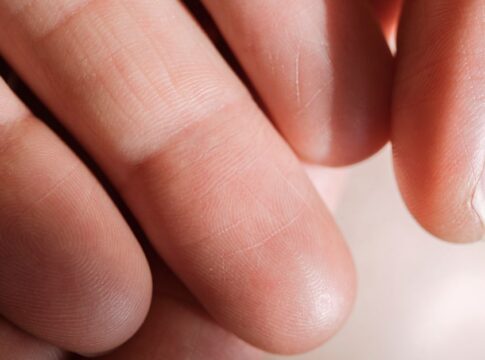
Press your thumb against a clean glass surface and examine the swirls left behind. Those ridges aren’t just useful for gripping objects—they’re a biological signature so distinct that no two people on Earth share the same pattern. Even identical twins, who share virtually all their DNA, have different fingerprints. The reason fingerprints form unique patterns on every person involves a fascinating interplay of genetics, embryonic development, and pure chance that begins before birth and lasts a lifetime.
Scientists have understood for over a century that fingerprints serve as perfect identifiers, yet the precise mechanisms behind their formation continue to reveal surprising details about human development and biological variation.
Key Takeaways
- Fingerprints develop between the 10th and 24th week of pregnancy through a combination of genetic factors and random physical forces in the womb.
- Even identical twins have different fingerprints because environmental pressures—like amniotic fluid movement and finger position—create unique ridge patterns.
- The three main fingerprint patterns are loops (found in about 60-70% of people), whorls (25-35%), and arches (5%).
- Once formed, fingerprint patterns remain unchanged throughout life, recovering the same pattern even after minor injuries.
- No database in the world has ever recorded two identical fingerprints from different people, despite billions of prints on file.
- Koalas and some primates also have fingerprints, but human prints remain the most studied for identification purposes.
How Fingerprints Form Unique Patterns During Development
The journey to unique fingerprints begins in the womb. Around the 10th week of pregnancy, a fetus develops raised pads called volar pads on its fingers, palms, and toes. These temporary structures serve as the foundation for fingerprint formation. As the fetus continues growing, these pads gradually flatten and disappear, but not before they’ve influenced the skin’s underlying structure.
Between weeks 10 and 24 of gestation, the basal layer of skin begins forming ridges. This process happens as the outer layer of skin (epidermis) grows faster than the inner layer (dermis), creating buckling and folding. The exact pattern depends on several factors working simultaneously: the timing of when ridges start forming, the size and shape of the volar pads when formation begins, and the specific conditions in the immediate environment of each finger.
Genetics determine broad characteristics—whether you’re more likely to have loops, whorls, or arches. But the fine details emerge from random physical pressures. Blood pressure in tiny capillaries, the exact position of the finger in the womb, bone growth rates, and even the density of amniotic fluid all contribute microscopic variations. These environmental factors are never identical, even for twins sharing the same womb.
Once formed by week 24, these patterns are permanent. The ridges extend through multiple layers of skin, which is why they regenerate with the same pattern after superficial cuts or burns.
The Three Main Fingerprint Categories
While every fingerprint is unique in its details, forensic scientists classify them into three basic pattern types. Understanding these categories helps explain both the commonality and diversity of human fingerprints.
| Pattern Type | Prevalence | Characteristics |
|---|---|---|
| Loop | 60-70% | Ridges enter from one side, curve around, and exit the same side; includes ulnar and radial loops |
| Whorl | 25-35% | Circular or spiral patterns with at least two deltas (triangular ridge formations) |
| Arch | 5% | Ridges enter from one side and exit the other with a rise in the center; rarest pattern |
Within these broad categories exist countless variations. A loop might curve tightly or broadly. A whorl might spiral clockwise or counterclockwise. These minute differences, combined with the specific locations where ridges split (bifurcations) or end (ridge endings), create the identifying points forensic experts use for matching.
Why Identical Twins Have Different Fingerprints
This fact surprises many people who assume identical twins are truly identical in every way. While twins share virtually 100% of their DNA, their fingerprints differ noticeably. The explanation reveals something profound about human development: not everything about us is coded in genes.
Identical twins begin as a single fertilized egg that splits early in development. They share the same genetic instructions for fingerprint formation—the same tendency toward loops or whorls, similar ridge density, and comparable overall hand structure. But each twin occupies a different position in the womb. Each experiences slightly different blood flow, different contact pressures, and different movements.
These environmental factors during the critical weeks of fingerprint formation create different outcomes. One twin might press a finger against the uterine wall at the exact moment ridges are forming. The other might have that finger floating freely in amniotic fluid. These seemingly trivial differences produce permanent, distinguishable patterns. The result is fingerprints that may look similar at first glance but contain enough unique details to tell the twins apart definitively.
The Permanence and Recovery of Fingerprint Patterns
Fingerprints remain remarkably stable throughout life. Babies are born with the same ridge patterns they’ll have at age 90. The prints grow larger as hands grow, but the relative positions of ridge characteristics stay constant. This permanence makes fingerprints valuable for identification across decades.
Even injuries don’t permanently erase fingerprints unless they’re severe. Superficial cuts, burns, or abrasions damage only the outer skin layers. As the skin heals, the deeper layers containing the ridge template regenerate the same pattern. Only deep injuries that scar the basal layer can create permanent changes, and even then, the altered pattern becomes a new unique identifier.
Some medical conditions and occupations can temporarily obscure fingerprints. Chemotherapy patients sometimes lose ridge definition. Bricklayers and people who work with harsh chemicals may wear down their ridges. But in most cases, the underlying pattern persists and becomes visible again once the damaging exposure stops.
Interesting Facts About Fingerprint Uniqueness
The mathematical probability of two people having identical fingerprints is so astronomically small that it’s considered effectively impossible. Forensic scientists typically identify a match using 12 to 15 matching ridge characteristics, though the exact number varies by jurisdiction and context.
Fingerprint identification has been used in criminal investigations since the late 19th century, and despite millions of prints collected worldwide, no confirmed case of two different people sharing identical prints has ever been documented. Modern databases maintained by organizations like the FBI contain hundreds of millions of fingerprints, yet the uniqueness principle holds.
Humans aren’t the only animals with fingerprints. Koalas have remarkably similar ridge patterns on their paws, likely evolved independently for gripping eucalyptus branches. Some primates also have fingerprints, though human prints remain the most studied and catalogued for identification purposes.
Interestingly, each of your ten fingers has a different pattern. You don’t have one fingerprint—you have ten unique ones. The same developmental variations that make your prints different from everyone else’s also make your left thumb different from your right thumb.
Frequently Asked Questions
Can fingerprints change over time?
The fundamental pattern of ridges remains unchanged from birth to death, though prints can become less distinct with age due to skin elasticity loss or wear from manual labor. The unique identifying characteristics persist throughout life.
Do fingerprints serve a biological purpose beyond identification?
Yes, fingerprint ridges improve grip by increasing friction and enhance our sense of touch by amplifying vibrations. The patterns help us manipulate small objects and feel fine textures with remarkable sensitivity.
Has anyone ever been born without fingerprints?
Extremely rare genetic conditions like adermatoglyphia result in people born with smooth fingertips lacking typical ridge patterns. Only a handful of families worldwide have been documented with this condition, sometimes called “immigration delay disease” due to passport difficulties.
Can fingerprints be permanently removed or altered?
Deliberate removal requires severe, deep damage to the skin that creates scarring, which itself becomes identifiable. Criminals who’ve tried to remove fingerprints through burning or cutting have found that the scar tissue creates a distinctive pattern that’s equally unique and identifiable.
The next time you press your finger to a touchscreen or leave a smudge on glass, consider the remarkable developmental journey that created those ridges. Your fingerprints are a visible reminder that human uniqueness emerges not just from genetics, but from the countless tiny accidents and variations that occur as we develop—a biological signature written before you ever took your first breath.