
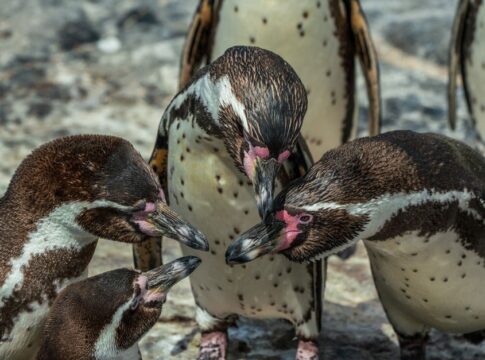
Why Penguins Can’t Taste Fish Despite Eating It Daily
By Trivia Owl, Animals Desk — Published September 5, 2026
Table of Contents
- Key Takeaways
- How Penguins Taste Fish—Or Rather, Don’t
- Why Evolution Took Taste Away
- Other Animals That Lost Their Taste
- What Penguins Can Still Sense
- Frequently Asked Questions
Penguins devour fish with astonishing efficiency, yet they experience none of the flavor. These tuxedoed birds lack the genetic machinery to taste umami, sweet, and bitter—a peculiar twist of evolution that seems almost cruel for creatures whose entire diet revolves around seafood. While you might savor a piece of grilled salmon, a penguin swallowing the same fish registers no flavor at all. This surprising gap in their sensory world reveals how evolution prioritizes survival over culinary enjoyment, shaping animal behavior in ways that defy our expectations.
The reason penguins taste fish so poorly—or not at all—lies in their DNA. Scientists discovered that penguin species have lost functional genes for three of the five basic taste receptors. This isn’t a minor deficiency; it’s a near-total absence of taste perception as most animals experience it. The only tastes penguins retain are salty and sour, a minimal palette for creatures living in one of nature’s most extreme habitats.
Key Takeaways
- Penguins lack functional genes for umami, sweet, and bitter taste receptors, leaving them with only salty and sour detection.
- This genetic loss likely occurred because penguins swallow fish whole without chewing, making taste receptors evolutionarily unnecessary.
- Cold Antarctic temperatures may have damaged taste receptor proteins, which function poorly in extreme cold environments.
- All penguin species examined show this same genetic pattern, suggesting the trait evolved in their common ancestor millions of years ago.
- Despite lacking taste, penguins thrive on diets of fish, krill, and squid, proving that flavor isn’t essential for successful feeding.
- Other marine animals like dolphins and sea lions have also lost some taste genes, suggesting a pattern among aquatic predators.
How Penguins Taste Fish—Or Rather, Don’t
Taste perception depends on specialized receptor proteins embedded in taste buds. These receptors bind to specific molecules in food, triggering signals that the brain interprets as sweet, sour, salty, bitter, or umami (savory). Mammals typically possess all five taste types, each serving an evolutionary purpose: sweet signals energy-rich foods, bitter warns of toxins, umami identifies protein, while salty and sour help regulate mineral intake and detect spoilage.
Genetic analysis of penguin DNA revealed something remarkable. The genes encoding umami, sweet, and bitter receptors exist in penguin genomes, but they’re broken. Mutations have rendered them nonfunctional pseudogenes—evolutionary relics that no longer produce working proteins. When researchers examined multiple penguin species, including Adélie, emperor, and gentoo penguins, they found the same pattern across all species. This consistency suggests the loss occurred in a common ancestor before the penguin family tree branched into its current diversity.
The umami receptor loss is particularly striking. Umami specifically detects amino acids like glutamate, the building blocks of protein—exactly what fish flesh contains in abundance. You’d think a fish-eating animal would prioritize this taste above all others. Yet penguins abandoned it entirely.
Why Evolution Took Taste Away
Natural selection is ruthless about efficiency. Traits that don’t contribute to survival become expensive luxuries that evolution tends to eliminate. Penguins swallow their prey whole, barely pausing to process what they’ve caught. A penguin hunting in frigid waters grabs a fish and gulps it down in seconds, moving immediately to the next target. There’s no chewing, no savoring, no lingering over a meal.
When an animal doesn’t use a sensory system, maintaining it becomes wasteful. Taste receptors require energy to produce and maintain. Taste buds must be constantly regenerated as they wear out. For a penguin that never chews or holds food in its mouth long enough to taste it, these receptors offer no advantage. Over millions of years, mutations that disabled taste genes weren’t weeded out by natural selection because they didn’t harm survival. Eventually, the genes deteriorated completely.
The Antarctic environment itself may have accelerated this loss. Taste receptor proteins evolved to function at typical body temperatures. In the near-freezing waters where penguins hunt, these proteins might not work properly anyway. Cold temperatures can alter protein shapes, reducing their ability to bind to taste molecules. If the receptors barely functioned in penguin habitats, there was even less evolutionary pressure to keep them.
Other Animals That Lost Their Taste
Penguins aren’t alone in their tasteless existence. Dolphins and sea lions have also lost umami receptors, while vampire bats—which drink only blood—lack sweet taste genes entirely. Giant pandas, despite eating bamboo all day, have broken umami receptors. These patterns reveal a broader principle: when an animal’s diet and feeding behavior change dramatically, taste perception often changes too.
| Animal | Lost Taste Receptors | Likely Reason |
|---|---|---|
| Penguins | Umami, sweet, bitter | Swallow fish whole; cold habitat |
| Dolphins | Umami, sweet, bitter | Swallow prey whole underwater |
| Sea lions | Umami, sweet | Fast feeding; marine environment |
| Vampire bats | Sweet, umami | Blood-only diet lacks these nutrients |
| Giant pandas | Umami | Carnivore ancestors; now herbivorous |
The pattern among marine mammals is especially clear. Animals that hunt underwater and swallow prey quickly have repeatedly lost taste genes. This convergent evolution—different species independently evolving the same trait—suggests that aquatic hunting simply doesn’t benefit from elaborate taste perception.
What Penguins Can Still Sense
Just because penguins can’t taste fish doesn’t mean they’re sensory-deprived. Vision dominates their underwater hunting. Penguins have exceptional eyesight adapted for low-light conditions beneath Antarctic ice, allowing them to spot fish and krill in murky water. Their eyes contain more rods than cones, optimizing motion detection and dim-light vision at the expense of color perception.
Touch and pressure sensors help penguins navigate and hunt. Specialized receptors around their beaks detect water movement, helping them sense nearby prey even in complete darkness. This tactile sense compensates for situations where vision fails. Smell plays a minimal role; penguins have relatively poor olfactory systems compared to many other birds, though some species can detect odors that help them locate breeding colonies from far out at sea.
The two tastes penguins retain—salty and sour—might serve basic physiological functions. Salty taste helps regulate sodium balance, crucial for animals living in saltwater environments. Sour taste can detect acids that indicate spoiled food, though given how quickly penguins eat, this benefit seems minimal. These tastes persist perhaps because they’re so fundamental that even extreme evolutionary pressure couldn’t eliminate them entirely.
Frequently Asked Questions
Do penguins have taste buds?
Yes, penguins have taste buds, but most of them don’t function properly. The taste bud structures exist, but the genetic machinery to detect sweet, bitter, and umami flavors has been lost through evolution, leaving only salty and sour detection intact.
Can any birds taste their food?
Most birds have a limited sense of taste compared to mammals, possessing far fewer taste buds—typically a few dozen compared to thousands in humans. However, many birds can detect sweet, bitter, and other basic tastes, unlike penguins which have lost most taste perception entirely.
Why don’t penguins chew their food?
Penguins lack teeth and have evolved to swallow prey whole as an adaptation to their hunting style. Chewing would slow them down during hunts in cold water where energy conservation is critical, and their digestive systems are efficient enough to process whole fish, krill, and squid.
Do other flightless birds have poor taste?
Not necessarily. Each bird species’ taste perception reflects its specific diet and feeding behavior. Ostriches, emus, and other flightless birds have different taste capabilities depending on what they eat and how they eat it, though most birds generally have fewer taste receptors than mammals.
The next time you enjoy a seafood dinner, spare a thought for penguins. These remarkable creatures thrive on the ocean’s bounty without ever experiencing its flavor, a reminder that nature’s solutions to survival challenges often sacrifice what we might consider life’s simple pleasures. Evolution doesn’t care about enjoyment—only about what works.