
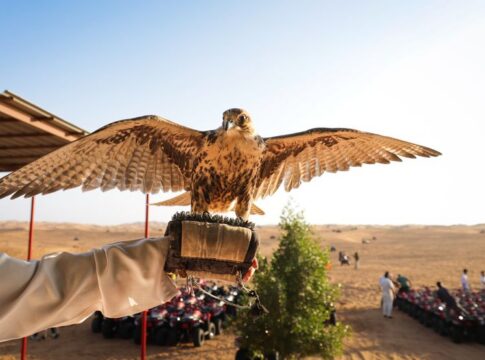
11 Record-Breaking Facts About Peregrine Falcon Dives
By Trivia Daily, Animals Desk — Published November 23, 2026
Table of Contents
- Key Takeaways
- Record Breaking Peregrine Speed: The Numbers Behind the Dive
- Physical Adaptations That Enable Extreme Speed
- Frequently Asked Questions
The peregrine falcon holds the crown as the fastest animal on Earth, reaching speeds that would make a Formula One car jealous. When this remarkable bird of prey enters its hunting stoop—a high-speed dive targeting prey below—it transforms into a living missile, achieving velocities that push the limits of what biology can withstand. These record breaking peregrine falcons have captivated scientists and wildlife enthusiasts for decades, revealing extraordinary adaptations that allow them to survive forces that would render most creatures unconscious.
From specialized respiratory systems to reinforced skeletal structures, every aspect of peregrine falcon anatomy serves the singular purpose of making them nature’s most efficient aerial hunters. Their behavior, habitat preferences, and hunting strategies all revolve around this incredible speed advantage.
Key Takeaways
- Peregrine falcons can reach diving speeds exceeding 240 miles per hour, making them the fastest animals on the planet.
- These birds possess specialized physical adaptations including baffles in their nostrils to regulate breathing at extreme speeds.
- Peregrine falcons can be found on every continent except Antarctica, adapting to diverse habitats from cliffs to urban skyscrapers.
- Their hunting success rate reaches approximately 50 percent, significantly higher than most predators.
- The species made a remarkable recovery from near-extinction after DDT pesticides were banned in the 1970s.
- Peregrines can spot prey from over two miles away thanks to exceptional eyesight that’s roughly eight times sharper than human vision.
Record Breaking Peregrine Speed: The Numbers Behind the Dive
The peregrine falcon’s maximum recorded diving speed stands at approximately 242 miles per hour, though some researchers suggest certain dives may exceed even this astonishing velocity. To put this in perspective, the bird accelerates faster than a skydiver in free fall and approaches speeds comparable to some high-speed trains. This makes the peregrine not just the fastest bird, but the fastest member of the entire animal kingdom.
What makes this speed even more remarkable is the precision involved. The falcon isn’t simply falling—it’s executing a controlled, targeted attack on prey that may itself be moving at considerable speed. The bird adjusts its trajectory mid-dive using subtle wing and tail movements, calculating angles and velocities that would challenge a computer.
| Species | Maximum Speed | Type of Movement |
|---|---|---|
| Peregrine Falcon | 242 mph | Diving |
| Golden Eagle | 200 mph | Diving |
| Cheetah | 70 mph | Running |
| Sailfish | 68 mph | Swimming |
Physical Adaptations That Enable Extreme Speed
The peregrine falcon’s body is a masterpiece of evolutionary engineering. These birds possess numerous specialized features that allow them to survive the extreme forces generated during high-speed dives. Their streamlined body shape minimizes air resistance, while powerful chest muscles provide the strength needed to pull out of dives that subject them to forces exceeding 25 times the pull of gravity.
One fascinating adaptation involves the bird’s respiratory system. Small bony tubercles—essentially baffles—inside the falcon’s nostrils slow down incoming air and prevent the extreme wind pressure from damaging their lungs or causing them to black out. The bird’s third eyelid, called a nictitating membrane, sweeps horizontally across the eye during dives, keeping the cornea moist and protected while maintaining visibility.
1. They Strike With the Force of a Bullet
When a peregrine falcon impacts its prey mid-air, the collision generates tremendous force. The bird typically strikes with its talons clenched into a fist, delivering a blow that can instantly kill or stun prey. Scientists have calculated that the kinetic energy involved in these strikes can equal that of a small-caliber bullet. This hunting technique, called “stooping,” allows the falcon to disable prey without risking injury from a struggling animal’s defensive responses.
2. Their Heart Rate Reaches Extraordinary Levels
During the intense physical exertion of a hunting dive, a peregrine falcon’s heart rate can climb to over 600 beats per minute. This cardiovascular performance ensures that oxygen-rich blood continues flowing to vital organs and flight muscles even under extreme G-forces. Between hunts, the bird’s resting heart rate drops to around 200 beats per minute, demonstrating remarkable physiological flexibility.
3. Vision Eight Times Sharper Than Human Eyesight
Peregrine falcons possess visual acuity that allows them to spot a pigeon-sized bird from over two miles away. Their eyes contain a higher density of photoreceptors than human eyes, and they can process visual information much faster, essentially seeing the world in slow motion compared to their prey. This exceptional vision proves crucial when tracking fast-moving targets during high-speed pursuits through complex environments.
4. They Hunt in Nearly Every Habitat on Earth
Few species demonstrate the habitat versatility of the peregrine falcon. These adaptable predators thrive on coastal cliffs, mountain ranges, open tundra, and increasingly in urban environments where skyscrapers serve as artificial cliff faces. They’ve been documented on every continent except Antarctica, making them one of the most widespread bird species on the planet. This adaptability has contributed significantly to their conservation success.
5. Urban Peregrines Prefer Tall Buildings Over Natural Cliffs
Modern cities have become ideal hunting grounds for peregrine falcons. Skyscrapers provide elevated nesting sites similar to natural cliff ledges, while abundant pigeon populations offer reliable food sources. Many urban peregrines actually show higher reproductive success than their cliff-dwelling counterparts, as cities often provide warmer microclimates and protection from certain natural predators. Major cities including New York, Chicago, and London now host thriving peregrine populations.
6. Their Recovery From Extinction Ranks Among Conservation’s Greatest Successes
By the 1970s, peregrine falcon populations had crashed across North America and Europe due to DDT pesticide contamination, which caused eggshell thinning and reproductive failure. The species was listed as endangered, with extinction appearing imminent in many regions. Following the ban of DDT and intensive captive breeding programs, peregrine populations rebounded dramatically. The species was removed from the U.S. endangered species list in 1999, though monitoring continues.
7. They Can Adjust Their Dive Angle With Surgical Precision
Research using high-speed cameras reveals that peregrines continuously adjust their dive trajectory, making micro-corrections throughout the descent. The bird can vary its angle anywhere from a shallow 20-degree stoop to a near-vertical 90-degree plunge, depending on prey behavior and environmental conditions. This level of control while traveling at such extreme speeds requires extraordinary neuromuscular coordination and spatial awareness.
8. Prey Species Include Over 450 Different Bird Types
While peregrines show preferences for medium-sized birds like pigeons, doves, and waterfowl, their diet demonstrates remarkable diversity. Scientists have documented peregrines hunting over 450 different bird species worldwide, from tiny warblers to birds as large as small herons. They occasionally take bats and even large insects, though birds comprise roughly 90 percent of their diet across most populations.
9. Their Hunting Success Rate Exceeds Most Predators
Peregrine falcons achieve successful kills in approximately 50 percent of their hunting attempts, a rate that surpasses most predatory animals. Lions succeed in only about 25 percent of hunts, while wolves achieve roughly 15 percent success. This efficiency stems from the peregrine’s speed advantage, exceptional vision, and the element of surprise provided by high-altitude attacks that prey often cannot detect until too late.
10. They Use Specialized Hunting Techniques for Different Prey
Experienced peregrines employ varied hunting strategies depending on their target. For fast, agile prey like swallows, they may engage in extended aerial chases rather than vertical stoops. When hunting over water, they sometimes fly low and fast, surprising waterfowl from the side. Younger birds typically use simpler techniques, developing more sophisticated strategies as they mature and gain experience.
11. Peregrine Pairs Often Mate for Life
These formidable hunters form strong pair bonds, typically remaining with the same mate for multiple breeding seasons or even life. Both parents participate in raising young, with males doing most of the hunting while females guard the nest and tear prey into pieces small enough for chicks. This cooperative breeding behavior contributes to their high reproductive success rates in suitable habitats.
Frequently Asked Questions
How do peregrine falcons survive the G-forces during high-speed dives?
Peregrine falcons possess reinforced skeletal structures, powerful muscles, and cardiovascular adaptations that allow them to withstand forces exceeding 25 Gs. Their streamlined body position during dives also helps distribute forces more evenly across their frame, preventing injury.
Can peregrine falcons see better than eagles?
Both peregrine falcons and eagles possess exceptional vision, but peregrines have slightly sharper visual acuity optimized for tracking fast-moving prey at distance. Eagles generally have better depth perception for judging distances when hunting on the ground or in water.
Do peregrine falcons ever miss their prey during a dive?
Yes, peregrines miss approximately half of their hunting attempts despite their speed and precision. Prey animals have evolved evasive behaviors, and environmental factors like wind can affect dive accuracy.
How fast can a peregrine falcon fly horizontally?
During level flight, peregrine falcons typically cruise at speeds around 40 to 60 miles per hour. Their record-breaking speeds only occur during specialized hunting dives, not during normal flight.
The next time you spot a bird of prey circling overhead, consider that you might be watching the fastest creature ever to evolve on Earth—a living testament to the remarkable solutions nature develops when speed becomes the ultimate survival advantage.