










1 / 10 Questions
0 Points

What animal appears on the back of the US buffalo nickel?

American bison

Grizzly bear

Bald eagle

Wild turkey

Points won
0
Correct score
0%

More Questions

9 Strange Facts About Venus Flytraps Counting Touch Signals

Venus flytraps count touch signals before snapping shut on prey. Discover 9 strange facts about these carnivorous plants and their hunting abilities.

Did You Know Vampires Cannot Cross Running Water

Vampire legends reveal why the undead cannot cross running water. Discover the folklore origins behind this enduring supernatural boundary and protection.

Which ice cream bar came from a boy’s tough choice?

Which ice cream bar came from a boy's tough choice? Question 1: Which ice cream bar came from a boy's tough choice? A. Edy's Pie B. Klondike...

More Articles

Top 10 The Djinn Mysteries

Top 10 The Djinn Mysteries

⏱️ 7 min read

Top 10 The Djinn Mysteries: Unveiling the Secrets of Ancient Spirit Lore

Djinn, also spelled jinn or genies, have captivated human imagination for millennia. These supernatural beings from Arabian and Islamic mythology represent one of the most fascinating and misunderstood entities in the realm of mystical lore. Far more complex than the wish-granting caricatures popularized in Western media, djinn occupy a unique position in Middle Eastern cosmology, existing between the physical and spiritual realms. The mysteries surrounding these enigmatic creatures continue to intrigue scholars, believers, and mythology enthusiasts worldwide. This article explores ten of the most compelling mysteries that shroud these ancient beings in intrigue and wonder.

1. The True Nature of Djinn Creation

One of the most profound mysteries surrounding djinn concerns their very creation. According to Islamic tradition, djinn were created from smokeless fire, distinguishing them from humans, who were formed from clay, and angels, who originated from light. This intermediate creation raises fascinating questions about their essence and capabilities. The Quran specifically mentions that djinn were created from "the fire of a scorching wind," suggesting a primal, elemental origin. This unique composition supposedly grants them abilities to shape-shift, become invisible, and move at extraordinary speeds. However, the exact nature of this "smokeless fire" and what it means in metaphysical terms remains a subject of theological debate and mystical speculation.

2. The Hidden Djinn Civilizations

Ancient texts suggest that djinn maintain their own complex societies parallel to human civilization. These hidden communities reportedly possess their own governance structures, religions, cultures, and social hierarchies. Some traditions speak of entire djinn kingdoms existing in remote deserts, abandoned ruins, and uninhabited wastelands. The mystery deepens when considering accounts of humans allegedly stumbling upon these civilizations, only to find themselves unable to locate them again. Stories from Bedouin tribes describe vast djinn cities that appear and disappear, leaving researchers to wonder whether these represent interdimensional spaces or simply exist beyond normal human perception.

3. King Solomon's Legendary Control

Perhaps no mystery is more intriguing than the legend of King Solomon's dominion over the djinn. According to both Islamic and Jewish traditions, Solomon possessed a magical ring or seal that granted him absolute authority over these beings. He allegedly commanded djinn armies to construct magnificent temples and palaces, and bound rebellious djinn in brass vessels sealed with his seal. The mystery lies in the source and nature of this power: Was it divine authority, ancient magic, or knowledge of specific incantations? The Testament of Solomon and various grimoires claim to preserve these binding techniques, but their authenticity remains highly debatable. The fate of Solomon's seal itself constitutes another layer of mystery.

4. The Classification and Tribes of Djinn

Djinn lore describes an elaborate classification system dividing these entities into distinct types and tribes, yet the exact taxonomy remains mysterious and contradictory across sources. Various traditions mention different categories: the Marid (powerful and rebellious), Ifrit (cunning and malevolent), Ghul (shape-shifting and monstrous), Si'lat (treacherous), and Jann (the weakest). Some sources list five main tribes, while others describe seven or more. Each type possesses unique characteristics, abilities, and habitats. The mystery intensifies when different cultural traditions present conflicting information about these classifications, leaving researchers uncertain about the original system or whether regional variations reflect different djinn populations.

5. Djinn Possession and Exorcism

The phenomenon of djinn possession represents one of the most contested mysteries in supernatural studies. Across the Middle East, North Africa, and parts of Asia, countless individuals report experiences attributed to djinn possession, exhibiting behavioral changes, speaking in unknown languages, or demonstrating unusual strength. Traditional healers and religious scholars perform exorcism rituals using Quranic verses, specific herbs, and ancient techniques. The mystery revolves around distinguishing genuine possession from psychological conditions, understanding the mechanism by which a djinn might inhabit a human body, and explaining the often-dramatic effects of exorcism rituals. Modern psychology offers alternative explanations, yet many cases resist conventional analysis.

6. The Forbidden Marriage Between Humans and Djinn

Numerous traditions speak of romantic and marital relationships between humans and djinn, creating one of the most controversial mysteries in djinn lore. These accounts describe unions producing hybrid offspring with extraordinary abilities. Some families in the Middle East claim ancestral lineages that include djinn blood, attributing exceptional talents to this heritage. Religious scholars generally discourage such relationships, citing incompatibility and spiritual dangers. The mystery encompasses whether such unions are physically possible, what characteristics hybrid children might possess, and why these relationships often end tragically according to folklore. Reports of such relationships continue in contemporary times, though verification remains elusive.

7. The Pre-Adamite Djinn Civilizations

Islamic tradition holds that djinn inhabited Earth long before human creation, establishing civilizations that predated Adam by thousands of years. These pre-Adamite djinn societies allegedly achieved great technological and magical advancement before falling into corruption and warfare. Some interpretations suggest that ancient ruins and megalithic structures might be remnants of djinn architecture rather than human construction. This mystery connects to broader questions about Earth's hidden history and whether archaeological anomalies might represent evidence of non-human intelligent civilizations. The idea that djinn were Earth's first rational inhabitants challenges conventional historical narratives and raises profound questions about humanity's place in the cosmic order.

8. The Nature of Djinn Free Will and Morality

Unlike angels, who lack free will and cannot disobey divine commands, djinn possess the ability to choose between good and evil. This capacity for moral choice creates profound mysteries about their spiritual status and ultimate destiny. The Quran mentions that djinn, like humans, will face judgment and can achieve paradise or damnation. Some djinn reportedly converted to Islam during Prophet Muhammad's time, becoming righteous believers, while others, led by Iblis (Satan), chose rebellion. The mystery lies in understanding how beings of such power and longevity exercise moral agency, what motivates their choices, and how their spiritual evolution differs from human development. This parallel moral journey suggests complex theological implications rarely explored in Western religious thought.

9. The Djinn's Relationship with Time and Space

Accounts consistently describe djinn as possessing abilities that transcend normal physical limitations, particularly regarding time and space. They allegedly traverse vast distances instantaneously, access multiple dimensions simultaneously, and perceive time differently than humans. Some traditions suggest djinn can glimpse future events or retrieve objects from distant locations in moments. The mystery involves understanding the mechanism behind these abilities: Do djinn manipulate spacetime, exist partially in other dimensions, or perceive reality through fundamentally different sensory frameworks? Modern attempts to explain these phenomena using quantum physics and dimensional theory provide intriguing parallels but remain speculative. The question of whether djinn experience reality as we do or inhabit an entirely different phenomenological framework continues to puzzle researchers.

10. The Modern Djinn Encounters

Despite living in an age of science and technology, reports of djinn encounters persist throughout regions with Islamic cultural influence and beyond. These contemporary accounts range from mysterious voices and apparitions to poltergeist-like phenomena and unexplained illnesses attributed to djinn interference. The mystery deepens as some modern encounters include elements that traditional lore never mentioned, such as interactions with technology or appearances in urban settings. Skeptics dismiss these reports as psychological phenomena, misidentified natural events, or cultural conditioning, while believers maintain that djinn continue to interact with the human world. The challenge lies in investigating these claims with appropriate rigor while respecting cultural contexts and distinguishing between folklore evolution, genuine anomalous experiences, and misattribution.

Conclusion

The mysteries surrounding djinn reflect humanity's enduring fascination with the unseen world and beings that exist beyond ordinary perception. These ten mysteries—from their elemental creation and hidden civilizations to their moral choices and modern encounters—demonstrate that djinn lore encompasses far more than simple fairy tales or superstition. Whether viewed as literal beings, psychological archetypes, or cultural metaphors, djinn represent a rich tradition of mystical thought that has shaped Middle Eastern culture for millennia and continues to influence contemporary belief systems. As research methodologies evolve and cross-cultural dialogue expands, perhaps some of these ancient mysteries will yield their secrets, while others may deepen, reminding us that the universe contains wonders that transcend complete human understanding. The djinn mysteries challenge us to remain open to possibilities beyond materialist frameworks while maintaining critical thinking about extraordinary claims.
The Truth About Unicorn Myths: Rhinoceros Connection

The Truth About Unicorn Myths: Rhinoceros Connection

The Truth About Unicorn Myths: Rhinoceros Connection

By Trivia Owl, Staff Writer — Published October 11, 2026

Table of Contents

The majestic unicorn—a white horse with a spiraling horn—has captivated imaginations for millennia. But the truth about unicorn myths is far stranger than fantasy. Medieval Europeans who heard travelers' tales of massive, horn-bearing beasts weren't imagining magical creatures. They were getting garbled descriptions of rhinoceroses, animals so bizarre to European ears that they seemed like legends come to life. This surprising connection reveals how real animals, misunderstood across cultures and continents, became the stuff of myth.

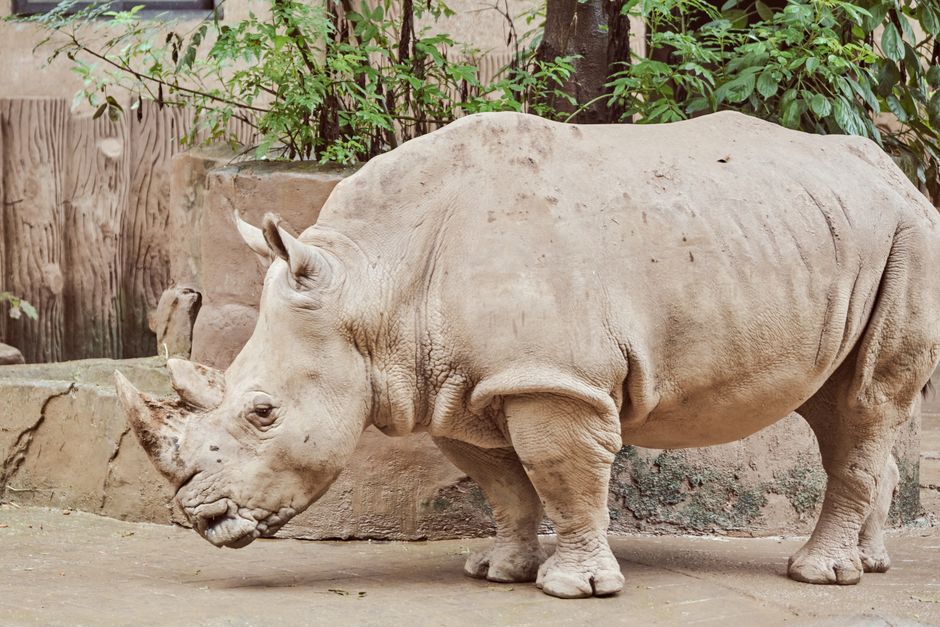
When Marco Polo encountered rhinoceroses in Southeast Asia during the 13th century, he described them as unicorns—but noted they were nothing like the elegant creatures of legend. These "unicorns" were gray, stocky, and wallowed in mud. The disconnect between expectation and reality didn't diminish the unicorn myth. Instead, it raised fascinating questions about how stories transform as they travel.

Key Takeaways

  • Medieval Europeans mistook rhinoceros descriptions for unicorn sightings, fueling centuries of myth and legend.
  • Narwhal tusks sold as "unicorn horns" in European markets commanded prices worth ten times their weight in gold.
  • Ancient Greek writers described unicorns based on travelers' reports from India, where rhinoceroses were native.
  • The scientific name for the Indian rhinoceros, Rhinoceros unicornis, literally means "one-horned nose horn."
  • Rhinoceros horn was valued in medieval Europe for supposed medicinal properties identical to those attributed to unicorn horns.
  • Marco Polo's 13th-century travel accounts explicitly identified rhinoceroses as the disappointing reality behind unicorn legends.

The Truth About Unicorn Myths: From India to Europe

The earliest written accounts of unicorns come from ancient Greek historian Ctesias, who documented tales from Persian travelers around 400 BCE. These travelers described one-horned wild asses from India—powerful, fierce animals impossible to capture alive. The descriptions match the behavior and appearance of Indian rhinoceroses far better than any mythical horse. Rhinoceroses are notoriously aggressive when threatened, difficult to domesticate, and indeed possess a single prominent horn.

As these stories passed through multiple languages and cultures, details shifted. The rhinoceros became a horse. Its thick, armored hide became a sleek coat. Its squat, powerful body became graceful and swift. Each retelling polished the creature into something more wondrous, more fitting for a legend. By the time these tales reached medieval Europe, the rhinoceros had been completely transformed into an elegant, magical beast.

The transformation wasn't entirely accidental. Medieval bestiaries—illustrated books describing animals both real and imagined—often blended fact with Christian allegory. The unicorn became a symbol of purity and Christ, while the rhinoceros remained unknown to most Europeans. These parallel traditions existed simultaneously: sailors and merchants knew about rhinoceroses, while scholars and artists immortalized unicorns in tapestries and manuscripts.

The Narwhal Deception: Selling Unicorn Horns

Medieval merchants discovered an amazing opportunity when they realized European nobility would pay fortunes for "unicorn horns." The source? Narwhals, Arctic whales whose males grow a single, spiraling tusk that can reach ten feet in length. These tusks, brought south by Norse and other northern traders, perfectly matched descriptions of unicorn horns in bestiaries and legends.

The deception was lucrative. Royal treasuries across Europe housed unicorn horns as prized possessions. The British Crown Jewels included a unicorn horn (actually a narwhal tusk) valued at £10,000 in the 16th century—an astronomical sum equivalent to the cost of a castle. These "horns" were believed to detect poison, purify water, and cure numerous ailments, making them invaluable to paranoid monarchs.

The interesting trivia here is that narwhal tusks share something with actual unicorn myth origins: both involve real animals misidentified. Just as rhinoceroses became unicorns in the retelling, narwhal tusks became proof that unicorns existed. The spiral pattern of narwhal tusks even influenced artistic depictions of unicorns, which earlier had been shown with straight horns like those of rhinoceroses and oryx antelopes.

Comparing the Candidates: Real Animals Behind the Myth

Animal Horn Type Geographic Origin Connection to Unicorn Myth
Indian Rhinoceros Single, curved horn of keratin India, Nepal Ancient Greek descriptions from travelers
Narwhal Spiraling tusk (modified tooth) Arctic waters Medieval "unicorn horn" trade item
Arabian Oryx Two straight horns (appear as one in profile) Arabian Peninsula Possible influence on Middle Eastern unicorn legends
Elasmotherium (extinct) Massive single horn (theorized) Eurasian steppes Possible basis for ancient Siberian unicorn legends

Why Rhinoceros Horn Was So Valuable

The medicinal properties attributed to unicorn horns weren't purely fantasy—they were transferred wholesale from actual rhinoceros horn traditions. In traditional Asian medicine, rhinoceros horn had been valued for centuries before Europeans heard of unicorns. When travelers brought back both rhinoceros horns and stories of unicorns, the two became conflated in European markets.

Rhinoceros horn is made of keratin, the same protein found in human hair and fingernails. Despite having no proven medicinal value, it commanded extraordinary prices. European physicians prescribed powdered "unicorn horn" for everything from plague to poisoning. Cups carved from the material were thought to neutralize toxins. This belief system made rhinoceros horns worth fortunes, driving hunting that continues to threaten rhinoceros populations today.

The amazing fact is that some European scholars recognized the truth. Italian naturalist Ulisse Aldrovandi documented rhinoceroses in the 16th century and noted their similarity to unicorn descriptions. Yet the myth persisted because it served economic and cultural purposes. Merchants profited, nobility displayed their wealth and wisdom through horn ownership, and the symbolic power of the unicorn remained useful in art and heraldry.

When Reality Met Legend: Marco Polo's Account

Marco Polo's travel writings offer one of the most interesting moments in unicorn myth history. After encountering rhinoceroses in Sumatra, he wrote that he had seen unicorns—and they were nothing like the stories. He described them as scarcely smaller than elephants, with hair like buffalo, feet like elephants, and a single black horn. They wallowed in mud and slime, he noted, and were altogether ugly beasts.

This candid disappointment didn't shatter the unicorn myth in Europe. Instead, readers assumed there must be two types of unicorns: the beautiful, pure creature of legend and these hideous imposters Polo had encountered. The human tendency to preserve cherished beliefs, even in the face of contradictory evidence, kept the elegant unicorn alive in imagination while rhinoceroses remained exotic curiosities.

The persistence of unicorn imagery in European culture, even after rhinoceroses became better known, demonstrates how myths serve purposes beyond literal truth. Unicorns represented ideals—purity, wildness, the untameable—that no real animal could embody. The rhinoceros connection reveals the myth's origins but doesn't diminish its cultural power.

Frequently Asked Questions

Did unicorns ever really exist?

No magical unicorns existed, but the myth likely originated from distorted descriptions of real animals, primarily rhinoceroses. Ancient travelers' accounts of one-horned beasts from India were transformed through retelling into the elegant horse-like creatures of European legend.

Why did people believe narwhal tusks were unicorn horns?

Narwhal tusks matched medieval descriptions of unicorn horns perfectly—long, spiraling, and rare. Since most Europeans had never seen either a narwhal or a unicorn, they had no way to verify the merchant claims, and the tusks became valuable proof that unicorns existed.

What is rhinoceros horn actually made of?

Rhinoceros horn is composed entirely of keratin, the same protein that forms human hair and fingernails. Unlike the horns of cattle or antelope, which have a bony core, rhinoceros horns are solid keratin that grows from the skin.

When did Europeans first see actual rhinoceroses?

The first rhinoceros seen in Europe since Roman times arrived in Lisbon, Portugal, in 1515 as a gift to King Manuel I. Artist Albrecht Dürer created a famous woodcut of the animal, though he never saw it himself and included fantastical armored plates in his depiction.

The rhinoceros-unicorn connection reminds us that myths often have roots in reality, however tangled and transformed. Every fantastic tale that crossed medieval trade routes carried fragments of truth—observations of real animals, filtered through language barriers, cultural expectations, and the very human desire for wonder. The next time you see a unicorn in a tapestry or story, you're glimpsing the shadow of a rhinoceros, distorted by distance and time into something magical.