
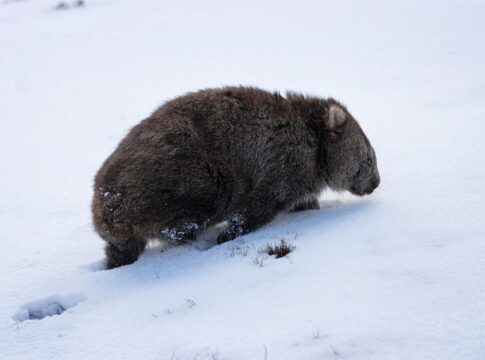
Why Wombats Produce Cube-Shaped Poop: Science Explained
By Trivia Daily, Staff Writer — Published September 18, 2026
Table of Contents
- Key Takeaways
- How Wombats Produce Cube-Shaped Droppings: The Intestinal Mystery
- Why Evolution Favored Cubic Poop: The Territorial Advantage
- Wombat Digestive Adaptations: Built for Efficiency
- Comparing Wombat Species and Their Cubic Production
- Scientific Research and Unexpected Applications
- Frequently Asked Questions
In the animal kingdom, few biological facts spark as much curiosity as this one: wombats produce cube-shaped poop. Yes, you read that correctly. These stocky, burrowing marsupials native to Australia are the only known mammals to excrete waste in the form of neat, stackable cubes. It’s one of nature’s most surprising and fascinating mysteries, and scientists have spent years trying to discover exactly how and why this happens.
This isn’t just a fun piece of trivia to share at parties. The cube-shaped droppings reveal amazing insights into digestive anatomy, territorial behavior, and the ingenious ways evolution solves problems. Let’s explore the science behind this extraordinary phenomenon.
Key Takeaways
- Wombats are the only mammals known to produce cube-shaped feces, with each dropping measuring roughly two centimeters per side.
- The cube shape forms in the final portion of the intestine through differential elasticity in the intestinal walls, not through a cube-shaped anus.
- Wombats stack their cubic droppings on rocks and logs to mark territory, and the shape prevents them from rolling away.
- The intestinal process takes approximately 14 to 18 days, making wombat digestion among the slowest of all mammals.
- Research into wombat intestinal mechanics has potential applications in manufacturing and soft-tissue engineering.
- Wombats can produce between 80 and 100 individual cubes each night during their territorial marking activities.
How Wombats Produce Cube-Shaped Droppings: The Intestinal Mystery
For decades, the mechanism behind cubic wombat feces puzzled biologists. The shape doesn’t form in a cube-shaped rectum or anus, as some initially theorized. Instead, research has revealed that the cube formation happens in the final sections of the wombat’s intestine, where the material is still soft and pliable.
The intestinal walls have varying degrees of elasticity. Some sections stretch easily, while others remain stiff and rigid. As the intestinal muscles contract in rhythmic waves, they squeeze the fecal matter into distinct corners and flat sides. This differential elasticity creates the sharp edges and flat faces that define a cube. By the time the waste reaches the end of the digestive tract, it has solidified into its distinctive geometric shape.
The process is remarkably slow. Wombats have one of the longest digestive transit times of any mammal, taking roughly two weeks to fully process their food. This extended digestion allows maximum nutrient extraction from their fibrous, plant-based diet and gives the intestinal walls plenty of time to mold the waste into cubes.
The Physics of Soft Tissue Shaping
Scientists have studied wombat intestinal tissue to understand the exact physics at play. The intestinal walls contain varying thicknesses of muscle layers, and the stiffness changes around the circumference. When peristaltic contractions move material through these regions, the softer areas bulge outward while the stiffer regions maintain straight edges. This creates corners where stiff sections meet.
Mathematical models show that this process produces shapes with four to eight sides, and wombats have evolved the precise tissue arrangement to consistently produce six-sided cubes. The discovery has interested engineers studying soft robotics and manufacturing processes that shape flexible materials without rigid molds.
Why Evolution Favored Cubic Poop: The Territorial Advantage
Function drives form in evolution, so the interesting question becomes: why cubes? The answer lies in wombat behavior and habitat.
Wombats are territorial animals that communicate through scent marking. They strategically place their droppings on elevated surfaces like rocks, fallen logs, and prominently visible spots around their territory. These markers convey information to other wombats about boundaries, breeding status, and individual identity.
Here’s where geometry matters. Spherical or cylindrical droppings would roll off these elevated surfaces, especially on Australia’s often-sloped terrain. Cubic shapes, however, stay exactly where they’re placed. The flat sides and sharp corners prevent rolling, ensuring the scent markers remain in their intended locations. This stability makes the territorial communication system far more effective.
Wombats take their marking seriously. A single wombat can deposit between 80 and 100 individual cubes in a single night, carefully positioning them to create a network of scent posts throughout its range. The cubes also stack neatly, creating visible piles that serve as both olfactory and visual signals.
Wombat Digestive Adaptations: Built for Efficiency
The cube-forming intestine is just one part of the wombat’s highly specialized digestive system. These marsupials are hindgut fermenters, meaning they extract nutrients through bacterial fermentation in an enlarged colon and cecum, similar to horses and rabbits.
Their diet consists primarily of tough, fibrous grasses, roots, and bark—materials low in nutrients and difficult to digest. The remarkably slow transit time compensates for this poor-quality food source, squeezing every possible calorie from each meal. Wombats also have continuously growing teeth, an adaptation to their abrasive diet that would otherwise wear down tooth enamel rapidly.
Water conservation plays a crucial role too. Wombats live in some of Australia’s driest regions, and their digestive system extracts nearly all moisture from food. The resulting feces are exceptionally dry and dense, which helps maintain the cubic shape once formed. This efficiency allows wombats to survive in environments where many other herbivores would struggle.
Comparing Wombat Species and Their Cubic Production
| Wombat Species | Size (Adult Weight) | Habitat | Cube Production |
|---|---|---|---|
| Common Wombat | 20–35 kg | Southeastern Australia, Tasmania | 80–100 cubes nightly |
| Southern Hairy-Nosed Wombat | 19–32 kg | Southern Australia (semi-arid) | Similar production, drier cubes |
| Northern Hairy-Nosed Wombat | 25–40 kg | Queensland (critically endangered) | Similar production, limited data |
All three wombat species produce cubic feces, though the Northern Hairy-Nosed Wombat is so rare—with fewer than 300 individuals remaining in the wild—that detailed behavioral studies remain limited. Conservation efforts focus on protecting their remaining habitat in Queensland’s Epping Forest National Park.
Scientific Research and Unexpected Applications
The wombat’s cubic poop has captured attention beyond zoology. Researchers studying the intestinal mechanics have identified principles applicable to manufacturing and biomedical engineering. Understanding how soft tissues can shape materials without rigid external molds offers insights for processes ranging from food production to medical device design.
The research also contributes to our understanding of gastrointestinal mechanics across species. Comparative anatomy reveals how different mammals have evolved diverse intestinal structures to match their diets, habitats, and behaviors. The wombat represents an extreme example of form following function in digestive evolution.
Wildlife biologists use wombat droppings as non-invasive monitoring tools. The distinctive cubes make field surveys straightforward, and DNA analysis of the feces provides information about population genetics, health status, and diet without disturbing the animals. This proves particularly valuable for studying the critically endangered Northern Hairy-Nosed Wombat.
Frequently Asked Questions
Do wombats have cube-shaped anuses?
No, wombat anuses are round like other mammals. The cube shape forms in the last portion of the intestine through varying elasticity in the intestinal walls, and the cubes emerge fully formed.
Are wombats the only animals with unusually shaped poop?
Wombats are unique in producing cubes, but other animals have distinctive feces. Caterpillars produce tiny hexagonal pellets, and some bat species create segmented droppings, though none match the geometric precision of wombat cubes.
How long does it take a wombat to produce a single cube?
The entire digestive process takes 14 to 18 days from eating to excretion. The actual cube formation happens gradually over the final portion of this journey as material passes through the specialized intestinal sections.
Can you keep wombat poop as a souvenir?
Wombat droppings are dry and stable, making them popular novelty items in Australia. Some gift shops sell varnished wombat cubes, though collecting them from the wild may be restricted in protected areas and national parks.
The next time you encounter a surprising fact about the natural world, remember the humble wombat and its geometric droppings. Evolution doesn’t always follow the paths we expect, and sometimes the most curious adaptations—stackable poop included—reveal the elegant problem-solving that shapes life on Earth.