










1 / 10 Questions
0 Points

Which frozen treat was invented by accident?

Ice cream cone

Popsicle

Fudgsicle

Snow cone

Points won
0
Correct score
0%

More Questions

Why Bananas Are Radioactive and Perfectly Safe to Eat

Radioactive bananas contain potassium-40, a natural isotope that makes them emit radiation. Learn why this common fruit is harmless despite being

9 Record-Breaking Facts About the Sahara Desert’s Size

Discover 9 incredible facts about the Sahara Desert's massive size, from its surprising area to how it compares with entire continents and countries.

Werewolf Myths: The Medical Condition Behind the Legend

Werewolf myths may have originated from a rare medical condition causing excessive hair growth and behavioral changes that terrified medieval Europe.

More Articles

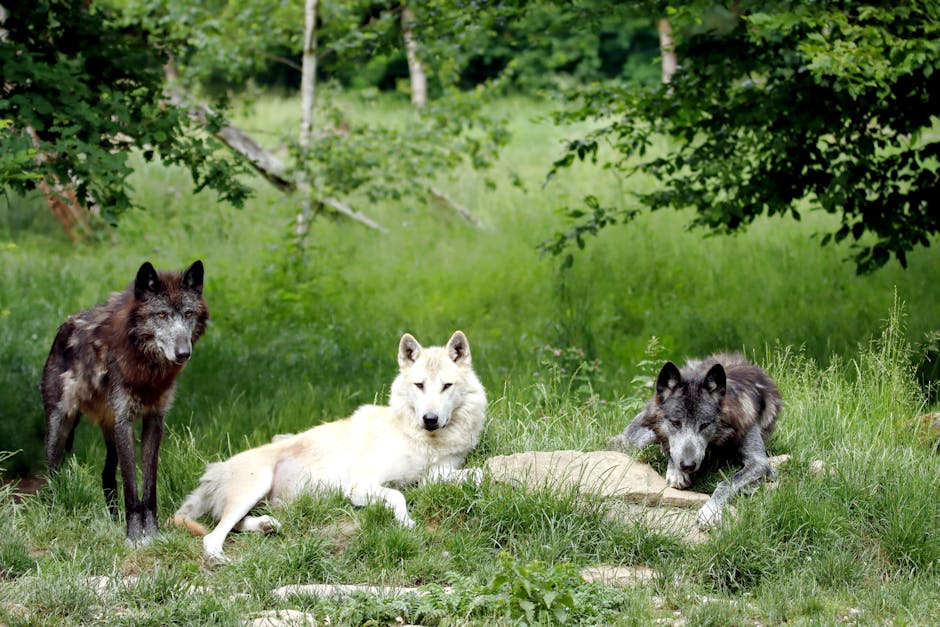
Did You Know? 10 Facts About Wolves

Did You Know? 10 Facts About Wolves

⏱️ 6 min read

Did You Know? 10 Fascinating Facts About Wolves

Wolves have long captured human imagination, appearing in folklore, mythology, and literature across cultures worldwide. These magnificent predators are far more complex and fascinating than their often-misunderstood reputation suggests. As apex predators and highly social animals, wolves play a crucial role in maintaining ecological balance while displaying remarkable intelligence and intricate social behaviors. The following ten facts reveal the extraordinary nature of these iconic creatures and shed light on why they deserve our respect and protection.

1. Wolves Are Exceptional Communicators

Wolves possess one of the most sophisticated communication systems in the animal kingdom. Their famous howling serves multiple purposes: coordinating pack activities, defending territory, locating pack members, and strengthening social bonds. A wolf's howl can be heard up to ten miles away in open terrain and six miles in forested areas. Beyond howling, wolves use an extensive vocabulary of barks, growls, whines, and whimpers, combined with body language including tail position, ear orientation, and facial expressions to convey complex messages to one another.

2. Wolf Packs Are Family Units

Contrary to popular belief about dominance hierarchies, wolf packs are actually family groups led by breeding parents, often called the alpha pair. These packs typically consist of the parent wolves and their offspring from various years. The social structure is similar to a human family, with parents guiding and teaching their young. Pack sizes vary depending on prey availability and habitat, ranging from as few as two wolves to as many as fifteen in rare cases, though the average pack contains five to eight individuals.

3. Wolves Have Incredible Stamina and Speed

These powerful predators are built for endurance hunting. Wolves can travel up to 30 miles in a single day while searching for food, and their territories can span anywhere from 50 to 1,000 square miles depending on prey density. They can reach speeds of 36 to 38 miles per hour in short bursts when chasing prey, though they typically travel at a loping pace of about five miles per hour. Their long legs and large paws, which can measure up to five inches across, act like snowshoes, allowing them to traverse deep snow more efficiently than many of their prey species.

4. Wolves Are Keystone Species

The ecological importance of wolves cannot be overstated. As keystone species, wolves help regulate prey populations and create a cascade of positive environmental effects. The reintroduction of wolves to Yellowstone National Park in 1995 demonstrated this dramatically. Wolf predation on elk allowed overgrazed vegetation to recover, which stabilized riverbanks, reduced erosion, and created habitat for numerous other species. This phenomenon, known as a trophic cascade, shows how wolves indirectly benefit entire ecosystems, affecting everything from plant communities to insects and birds.

5. Wolves Have Remarkable Bite Force

Wolves possess one of the most powerful bites in the animal kingdom, with a bite force of approximately 400 pounds per square inch—roughly twice that of a large domestic dog. Their jaws contain 42 teeth specifically designed for their carnivorous lifestyle, including specialized carnassial teeth that work like scissors to shear meat. The canine teeth can measure over two inches long, perfect for gripping and holding prey. This incredible bite force allows wolves to crush bones and access the nutritious marrow inside, an important food source especially during harsh winters.

6. Wolves Demonstrate Complex Hunting Strategies

Wolf hunting is a coordinated, intelligent endeavor that showcases their problem-solving abilities. Packs work together to strategize their hunts, with different wolves taking on specific roles such as chasers, blockers, and ambushers. They test prey animals to identify the weak, old, or sick individuals that are easier to catch. Interestingly, wolf hunts fail more often than they succeed—only about one in ten hunting attempts results in a kill. This low success rate explains why wolves must hunt large prey and why they consume large quantities when food is available.

7. Wolves Mate for Life

Wolves typically form monogamous pair bonds that last for life, though they may find new mates if their partner dies. The breeding pair in a pack is usually the only pair to reproduce, with mating occurring once per year in late winter. After a gestation period of approximately 63 days, the female gives birth to a litter of four to six pups in a protected den. All pack members participate in raising the young, bringing food, playing with pups, and teaching them essential survival skills. This cooperative breeding system increases pup survival rates significantly.

8. Wolves Have Diverse Global Populations

While the gray wolf is the most well-known and widespread species, wolves display remarkable diversity across their range. Historically, wolves inhabited most of the Northern Hemisphere, from the Arctic to Mexico and from Portugal to Japan. Today's wolves include several recognized subspecies, such as the Arctic wolf, which has adapted to extreme cold with white fur and smaller ears, and the Mexican gray wolf, one of the most endangered subspecies. Wolves can adapt to various habitats including tundra, forests, grasslands, and deserts, demonstrating their evolutionary versatility.

9. Wolves Are Highly Intelligent and Playful

Scientific studies have revealed that wolves possess intelligence comparable to that of great apes in some problem-solving tasks. They can learn through observation, remember complex spatial layouts, and even engage in deceptive behaviors. Play behavior is common among wolves throughout their lives, not just during puppyhood. Adults engage in games of chase, wrestling matches, and tug-of-war, which serve important functions in maintaining social bonds, practicing hunting skills, and establishing social relationships within the pack structure.

10. Wolves Face Ongoing Conservation Challenges

Despite their ecological importance, wolves continue to face significant threats from habitat loss, human conflict, and in some regions, legal hunting. Once nearly extinct in the lower 48 United States, conservation efforts have helped certain populations recover, though they remain absent from much of their historic range. Current global wolf populations are estimated at around 200,000 to 250,000 individuals, with the majority living in Russia, Canada, and Alaska. Successful wolf conservation requires balancing ecological needs with human interests, particularly in areas where wolves may prey on livestock, making coexistence strategies essential for their long-term survival.

Conclusion

These ten facts merely scratch the surface of what makes wolves such extraordinary animals. From their complex social structures and sophisticated communication systems to their crucial ecological roles and remarkable physical adaptations, wolves represent one of nature's most successful predators. Understanding these facts helps dispel myths and misconceptions that have plagued wolves throughout history. As we continue to learn more about these magnificent creatures, it becomes increasingly clear that protecting wolves means protecting the health and diversity of entire ecosystems. Their survival depends on human willingness to coexist with these intelligent, social, and ecologically vital animals.

Top 10 Secrets About Body Language

Top 10 Secrets About Body Language

⏱️ 6 min read

Top 10 Secrets About Body Language

Body language is a powerful form of nonverbal communication that often reveals more than spoken words ever could. While we may carefully choose what we say, our bodies constantly transmit signals that expose our true thoughts, feelings, and intentions. Understanding these subtle cues can dramatically improve personal and professional relationships, enhance communication skills, and provide insights into human behavior that most people overlook. Here are ten fascinating secrets about body language that can transform how you interpret and project nonverbal messages.

1. The Seven-Second Rule of First Impressions

Research consistently demonstrates that people form initial judgments about others within the first seven seconds of meeting. During this critical window, body language accounts for approximately 55% of the impression made, while tone of voice contributes 38%, and actual words only 7%. This means that posture, facial expressions, eye contact, and gestures create the foundation of how others perceive you before meaningful conversation even begins. Standing tall, maintaining open body positioning, and offering a genuine smile can significantly impact these crucial first moments, setting a positive tone for all subsequent interactions.

2. Microexpressions Reveal Hidden Emotions

Microexpressions are involuntary facial expressions that flash across a person's face in as little as 1/25th of a second. These brief, unconscious expressions reveal genuine emotions that someone may be trying to conceal, including fear, disgust, anger, happiness, sadness, surprise, and contempt. While most people cannot consciously detect these fleeting signals without training, they occur universally across all cultures and cannot be faked or suppressed. Learning to recognize microexpressions provides a window into someone's authentic emotional state, regardless of what they verbally communicate.

3. Crossed Arms Don't Always Mean Defensiveness

One of the most common misconceptions about body language is that crossed arms invariably indicate defensiveness, disagreement, or closed-mindedness. While this interpretation can be accurate in certain contexts, crossed arms may simply mean a person is cold, comfortable in that position, or habitually stands that way. Context matters tremendously when interpreting body language. Before concluding that someone is being defensive, consider the environment, their baseline behavior, and whether other nonverbal cues support that interpretation. Multiple signals typically cluster together when someone genuinely feels defensive or resistant.

4. The Power of Mirroring

Mirroring, also called the chameleon effect, occurs when people unconsciously imitate the gestures, speech patterns, and attitudes of those they interact with. This phenomenon naturally happens during positive interactions and indicates rapport, empathy, and connection. When strategically and subtly employed, intentional mirroring can help build trust and strengthen relationships. By matching another person's body position, gestures, or speaking pace, you create a subconscious sense of familiarity and comfort. However, this technique must be applied carefully and authentically, as obvious or exaggerated mirroring can appear manipulative or mocking.

5. Feet Reveal True Intentions

While most people focus on facial expressions and hand gestures when reading body language, feet often provide the most honest indicators of a person's thoughts and intentions. Because feet are furthest from conscious awareness, they tend to leak truthful information. When someone's feet point toward you during conversation, it typically indicates genuine interest and engagement. Conversely, feet angled toward an exit or away from the conversation suggest a desire to leave. In group settings, observing foot direction reveals who is truly engaged and who would prefer to be elsewhere, regardless of what their face might suggest.

6. Eye Contact Varies Dramatically Across Cultures

The appropriate amount and type of eye contact differs significantly across cultures, making it essential to understand cultural context when interpreting this nonverbal behavior. In Western cultures, direct eye contact typically signals honesty, confidence, and engagement, while avoiding eye contact may be interpreted as dishonesty or discomfort. However, in many Asian, African, and Latin American cultures, prolonged direct eye contact can be considered disrespectful or confrontational, particularly when interacting with authority figures or elders. Understanding these cultural nuances prevents misinterpretation and demonstrates cultural sensitivity in diverse environments.

7. The Neck Touch Indicates Stress or Discomfort

When people feel stressed, uncomfortable, or dishonest, they often unconsciously touch, rub, or cover their neck. This self-soothing behavior, known as a pacifying gesture, helps calm the nervous system during moments of anxiety. Men frequently rub the back of their neck or adjust their collar, while women might touch the suprasternal notch at the base of the throat. These gestures serve as reliable indicators that something in the conversation or environment has triggered discomfort. Recognizing this signal allows for adjustments in communication approach or topic to create a more comfortable interaction.

8. Genuine Smiles Involve the Eyes

The difference between authentic and fake smiles lies primarily in the eyes. A genuine smile, also called a Duchenne smile after the French neurologist who studied it, involves both the zygomatic major muscles that lift the corners of the mouth and the orbicularis oculi muscles that create crow's feet around the eyes. A fake or polite smile only engages the mouth muscles, leaving the eyes relatively unchanged. This distinction proves valuable in determining whether someone's expressed happiness or agreement is sincere. The inability to consciously control the muscles around the eyes makes genuine smiles difficult to fake convincingly.

9. Personal Space Boundaries Communicate Relationships

The physical distance people maintain during interactions, known as proxemics, reveals significant information about relationships and comfort levels. Intimate space extends from physical contact to approximately 18 inches and is reserved for close relationships. Personal space ranges from 18 inches to 4 feet and is typical for friends and acquaintances. Social space spans 4 to 12 feet and is common in professional settings, while public space beyond 12 feet is maintained with strangers. Violations of these invisible boundaries create discomfort and tension. Respecting appropriate distance based on relationship context demonstrates social awareness and emotional intelligence.

10. Body Language Clusters Provide Accurate Readings

Perhaps the most important secret about body language is that single gestures rarely provide reliable information when interpreted in isolation. Accurate reading requires observing clusters of behaviors that consistently point toward the same conclusion. For example, someone who is lying might display several indicators simultaneously: touching their face, avoiding eye contact, shifting weight, creating physical barriers, and showing inconsistency between verbal and nonverbal messages. Establishing a person's baseline behavior in relaxed situations also proves essential, as it provides a reference point for noticing significant deviations that signal emotional changes or deception.

Conclusion

Understanding these ten secrets about body language provides powerful tools for enhancing communication, building stronger relationships, and navigating social situations with greater awareness and effectiveness. From recognizing the critical importance of first impressions and microexpressions to understanding cultural differences in eye contact and the honesty of foot positioning, these insights illuminate the rich, complex world of nonverbal communication. By learning to read body language clusters rather than isolated gestures, respecting personal space boundaries, and recognizing the difference between genuine and fake smiles, anyone can develop more sophisticated interpersonal skills. Whether in professional negotiations, personal relationships, or casual encounters, applying these body language secrets creates opportunities for deeper understanding and more authentic connections with others.