
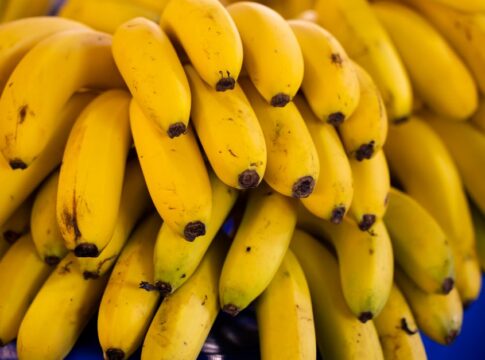
Why Bananas Are Radioactive and Perfectly Safe to Eat
By Trivia Daily, Staff Writer — Published September 26, 2026
Table of Contents
- Key Takeaways
- The Potassium Connection: Why Bananas Are Radioactive and Perfectly Natural
- The Banana Equivalent Dose: When Scientists Get Creative
- How Radioactive Are You?
- Comparing Natural Radiation Sources
- Why You Can’t Get Radiation Poisoning from Bananas
- Frequently Asked Questions
Every banana you’ve ever eaten has been radioactive. This surprising trivia isn’t a cause for alarm—it’s a fascinating glimpse into the natural world around us. Bananas are radioactive because they contain potassium, and a tiny fraction of all potassium on Earth is radioactive. The amazing part? You’d need to eat millions of bananas in one sitting to experience any harm. This curious fact about everyday fruit opens the door to discover how radiation exists all around us, in our food, our bodies, and even the air we breathe.
Understanding why bananas are radioactive and perfectly safe reveals one of nature’s most interesting paradoxes: radiation is everywhere, yet most of it poses no danger whatsoever. The story behind radioactive bananas combines chemistry, physics, and the reassuring truth that our bodies have evolved to handle the natural radiation we encounter daily.
Key Takeaways
- Bananas contain potassium-40, a naturally occurring radioactive isotope that makes them measurably radioactive.
- The “banana equivalent dose” is a real unit scientists use to communicate low levels of radiation exposure to the public.
- You would need to eat approximately 10 million bananas at once to receive a fatal radiation dose.
- Your own body is more radioactive than a single banana due to the potassium, carbon-14, and other isotopes you naturally contain.
- Natural background radiation from soil, rocks, cosmic rays, and food contributes far more to your annual exposure than any banana consumption.
- The human body maintains strict potassium balance, quickly eliminating excess through urine regardless of banana intake.
The Potassium Connection: Why Bananas Are Radioactive and Perfectly Natural
Potassium is essential for life. Every cell in your body depends on it to function properly, from nerve signals to muscle contractions. Bananas are famously rich in potassium, which is exactly what makes them radioactive. About 0.012% of all naturally occurring potassium is potassium-40, an isotope with an unstable nucleus that decays over time, releasing radiation in the process.
This isn’t unique to bananas. Any food high in potassium—including sweet potatoes, spinach, white beans, avocados, and Brazil nuts—contains the same radioactive isotope. Bananas simply became the poster child for edible radiation because they’re common, portable, and contain a consistent, measurable amount of potassium-40. A typical banana contains about 450 milligrams of potassium, of which roughly 0.05 milligrams is the radioactive variety.
The radiation emitted is primarily beta particles and gamma rays, both forms of ionizing radiation. But the dose is extraordinarily small. A single banana delivers approximately 0.1 microsieverts of radiation—a measurement so tiny it requires scientific notation to appreciate. For context, a chest X-ray delivers about 100 microsieverts, making it equivalent to eating 1,000 bananas in terms of radiation exposure.
The Banana Equivalent Dose: When Scientists Get Creative
Nuclear engineers and health physicists face a communication challenge: how do you explain radiation doses to people unfamiliar with sieverts, grays, or rems? Enter the banana equivalent dose, an informal unit that compares radiation exposure to eating a single banana. While not used in official scientific literature, this concept helps illustrate that low-level radiation is part of everyday life.
The banana equivalent dose works because it’s relatable. Telling someone they received 5 microsieverts from a dental X-ray might not resonate, but saying it’s like eating 50 bananas suddenly makes sense. The comparison humanizes an abstract concept and provides much-needed perspective on what constitutes dangerous versus negligible radiation.
However, the analogy has limitations. Your body doesn’t accumulate potassium-40 from bananas because it maintains tight homeostatic control over potassium levels. Eat a banana, and your kidneys will excrete an equivalent amount of potassium in your urine within hours. This means banana radiation doesn’t build up over time—each banana is a zero-sum game for your body’s radioactivity.
How Radioactive Are You?
Here’s a mind-blowing truth: you are more radioactive than a banana. The average human body contains about 140 grams of potassium, meaning you’re carrying around 16 milligrams of potassium-40 at any given moment. That’s roughly 280 times more radioactive potassium than a single banana contains.
But potassium-40 isn’t your only internal radiation source. Carbon-14, another naturally occurring radioactive isotope, exists in every carbon-based molecule in your body. Your DNA, proteins, and fats all contain trace amounts of this isotope, which is constantly created in the atmosphere by cosmic rays and absorbed through the food chain. Together, these natural isotopes make the human body emit approximately 4,000 to 5,000 beta particles every second.
This internal radiation has been part of life on Earth for billions of years. Our cells have evolved sophisticated DNA repair mechanisms to fix the occasional damage caused by radioactive decay. The dose is so low and so constant that it’s considered part of the baseline against which all other radiation exposures are measured.
Comparing Natural Radiation Sources
| Source | Approximate Dose (microsieverts) | Banana Equivalents |
|---|---|---|
| One banana | 0.1 | 1 |
| Sleeping next to someone for 8 hours | 0.05 | 0.5 |
| Living in a brick house for one year | 70 | 700 |
| Round-trip flight New York to Los Angeles | 40 | 400 |
| Annual background radiation (U.S. average) | 3,000 | 30,000 |
| Chest X-ray | 100 | 1,000 |
Why You Can’t Get Radiation Poisoning from Bananas
The dose makes the poison. Radiation becomes dangerous when it’s intense enough or sustained enough to damage cells faster than your body can repair them. Acute radiation sickness requires exposure of at least 1 million microsieverts over a short period. To reach that threshold from bananas alone, you’d need to eat roughly 10 million bananas immediately.
Physical impossibility aside, your body’s potassium regulation would prevent accumulation long before radiation became an issue. Hyperkalemia—dangerously high potassium levels in the blood—would occur after eating just a few hundred bananas in rapid succession, causing cardiac arrest well before radiation poisoning could develop. Nature has built-in safeguards that make banana-induced radiation exposure essentially impossible.
The radioactive decay of potassium-40 has a half-life of 1.25 billion years, meaning it decays extremely slowly. This glacial pace ensures that the radiation released at any given moment is minimal. By the time all the potassium-40 in a banana has decayed, the Earth will be unrecognizable, the Sun will have expanded into a red giant, and humanity will have long since vanished or evolved into something unimaginable.
Frequently Asked Questions
Are organic bananas less radioactive than conventional bananas?
No. Radioactivity in bananas comes from naturally occurring potassium-40, which exists in all potassium regardless of farming methods. Organic and conventional bananas contain essentially identical amounts of radioactive material.
Can radiation detectors actually detect a banana?
Yes. Sensitive radiation detectors can measure the gamma rays emitted by potassium-40 in bananas. Truckloads of bananas have occasionally triggered radiation alarms at border crossings and security checkpoints designed to detect smuggled radioactive materials.
What food is the most radioactive?
Brazil nuts are significantly more radioactive than bananas due to high concentrations of radium absorbed from the soil. A single Brazil nut can deliver up to 10 times more radiation than a banana, though still a perfectly safe amount.
Does cooking a banana reduce its radioactivity?
No. Cooking doesn’t change the atomic structure of potassium-40. Whether raw, baked, fried, or blended, bananas retain the same level of natural radioactivity because the isotope remains stable through heat and processing.
The radioactive banana reminds us that radiation isn’t always the invisible monster portrayed in popular culture. It’s woven into the fabric of existence, from the potassium in our muscles to the cosmic rays streaming down from space. Every breath, every meal, every moment of life on this planet involves tiny amounts of radiation that our bodies handle effortlessly. That humble banana sitting on your counter isn’t just a convenient snack—it’s a tiny ambassador from the atomic world, perfectly safe and quietly decaying one nucleus at a time.