
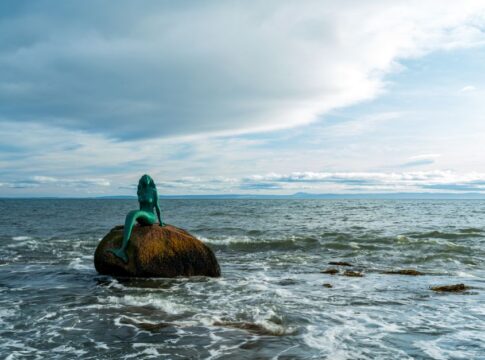
Why Mermaid Legends Appear in Coastal Cultures Worldwide
By Trivia Owl, Staff Writer — Published October 25, 2026
Table of Contents
- Key Takeaways
- Why Mermaid Legends Appear Across Disconnected Cultures
- The Psychology of Seeing Mermaids
- Cultural Variations in Mermaid Mythology
- Practical Functions of Mermaid Myths
- Modern Persistence of Mermaid Beliefs
- Frequently Asked Questions
From the rocky shores of Scotland to the tropical waters of the Caribbean, mermaid legends appear with remarkable consistency. These half-human, half-fish beings have captivated imaginations for millennia, appearing in folklore from ancient Assyria to modern-day Japan. The persistence of these myths across unconnected cultures raises a fascinating question: why do societies separated by oceans and centuries tell such similar stories about mysterious aquatic women?
The answer lies in a surprising blend of biology, psychology, and the universal human experience of confronting the unknown depths of the sea. What you might discover is that mermaid legends aren’t just flights of fancy—they’re rooted in real encounters, misidentifications, and the timeless need to explain what lurks beneath the waves.
Key Takeaways
- Mermaid legends appear in virtually every coastal culture worldwide, from ancient Mesopotamia to Pacific Island nations, despite no historical contact between these societies.
- Marine mammals like manatees and dugongs, known as sirenians, were frequently misidentified as mermaids by sailors, especially when viewed from a distance or in poor lighting.
- The oldest known mermaid-like deity is Atargatis, a Syrian goddess from around 1000 BCE who transformed into a fish after accidentally killing her human lover.
- Mermaid myths served practical purposes in coastal communities, warning children about dangerous waters and explaining phenomena like drownings and shipwrecks.
- The human brain’s pattern-recognition tendency, combined with isolation at sea and sometimes scurvy-induced hallucinations, contributed to widespread mermaid sightings.
- Different cultures attributed vastly different characteristics to their water spirits—some benevolent, others deadly—reflecting local attitudes toward the ocean itself.
Why Mermaid Legends Appear Across Disconnected Cultures
The global distribution of mermaid myths presents an intriguing puzzle. Ancient Greek sirens lured sailors to their deaths. Japanese ningyo brought storms and misfortune. African Mami Wata spirits controlled fertility and fortune. Scottish selkies shed their seal skins to walk on land. These stories emerged independently, long before global communication could spread a single myth worldwide.
The answer lies in convergent cultural evolution. Coastal peoples everywhere faced identical challenges: unpredictable seas, mysterious disappearances, and the psychological strain of maritime life. When fishermen vanished or ships sank, communities needed explanations. Attributing these tragedies to supernatural beings provided both comfort and caution.
The ocean itself demands mythmaking. Covering over 70 percent of Earth’s surface, it remains largely unexplored even today. Ancient mariners confronted an environment that was simultaneously life-giving and lethal, filled with strange creatures that occasionally surfaced before disappearing into the depths. The human mind abhors a vacuum of understanding, so it fills unknowns with stories.
The Sirenian Connection
Marine biologists point to a concrete explanation for many historical mermaid sightings: sirenians. This order of aquatic mammals includes manatees and dugongs, gentle herbivores that can grow up to 13 feet long and weigh over 1,000 pounds. These creatures possess several human-like characteristics that could fool observers under the right conditions.
Manatees nurse their young while holding them with their flippers, a posture remarkably similar to a human mother cradling an infant. They have flexible necks that allow head movement unusual among marine mammals. Their rounded, fleshy bodies, when glimpsed partially above water at dusk or dawn, could suggest a human torso. Even the scientific name “sirenian” acknowledges this connection to the mythical sirens.
Christopher Columbus himself reported seeing three mermaids off the coast of Hispaniola in 1493, noting they were “not as pretty as they are depicted.” He was almost certainly observing manatees, which are indeed not conventionally attractive by human standards. This misidentification wasn’t unique to Columbus—sailors across centuries made similar mistakes, especially after months at sea with deteriorating eyesight from vitamin C deficiency.
The Psychology of Seeing Mermaids
Human perception is unreliable, especially under stress. Sailors spent months isolated on wooden vessels, surrounded by endless water, facing storms, disease, and uncertainty. These conditions created the perfect environment for pareidolia—the tendency to see meaningful patterns in random stimuli, like faces in clouds or figures in shadows.
Scurvy, caused by vitamin C deficiency, affected most sailors on long voyages before the 18th century. Advanced scurvy causes hallucinations, paranoia, and visual disturbances. Dehydration produces similar effects. Combine these physiological factors with the human brain’s pattern-recognition systems, and you have a recipe for seeing humanoid shapes in waves, seals, or floating debris.
Loneliness played a role too. Crews spent months without seeing women, creating a psychological hunger that might manifest in wishful sightings. The ocean’s constant motion, the play of light on water, and the brief glimpses of marine life all provided raw material for the imagination to construct what it desperately wanted to see.
Cultural Variations in Mermaid Mythology
While the basic concept appears globally, the details reveal each culture’s unique relationship with the sea. This diversity shows these weren’t borrowed stories but independent creations shaped by local experiences and values.
| Culture | Name | Characteristics | Cultural Role |
|---|---|---|---|
| Greek | Sirens | Bird-women or fish-women with enchanting voices | Represented dangerous temptation and the peril of distraction |
| West African | Mami Wata | Beautiful water spirit, often with snake companions | Controlled fortune, fertility, and healing; demanded devotion |
| Japanese | Ningyo | Fish-like humanoids with golden scales | Eating their flesh granted immortality but brought curses |
| Celtic | Merrow | Green-haired beings wearing red caps | Sometimes friendly, sometimes ominous; predicted storms |
| Slavic | Rusalka | Freshwater spirits of drowned women | Embodied the dangerous allure of rivers and lakes |
These variations aren’t random. Cultures with abundant marine resources often portrayed merfolk more positively, as potential allies or trading partners. Societies that lost many people to the sea created darker myths, transforming grief into cautionary tales. The mermaids reflected the ocean itself—in the Mediterranean’s relatively calm waters, they might be helpful; in the North Atlantic’s treacherous currents, they became harbingers of doom.
Practical Functions of Mermaid Myths
These legends served concrete purposes beyond entertainment. Parents used mermaid stories to keep children away from dangerous shorelines and deep water. A tale about a beautiful creature who drags curious children into the depths proved more effective than simple prohibition.
Fishing communities used mermaid myths to encode maritime wisdom. Stories about mermaids appearing before storms functioned as weather folklore, teaching observers to watch for specific atmospheric or oceanic conditions. Legends about mermaids in certain areas might warn of dangerous currents, hidden rocks, or unpredictable tides.
The myths also provided psychological comfort. When a loved one drowned, believing they’d been taken by a supernatural being rather than simply dying in cold water offered a narrative with meaning, however tragic. It transformed random disaster into purposeful action, making the loss slightly more bearable.
Modern Persistence of Mermaid Beliefs
Despite scientific understanding of marine biology, mermaid legends endure. Professional “mermaids” perform in aquariums and entertainment venues, keeping the imagery alive. Cryptozoology enthusiasts continue searching for evidence of unknown aquatic humanoids. Social media regularly circulates videos claiming to show mermaids, though these invariably prove to be hoaxes, digital effects, or misidentified animals.
This persistence reveals something fundamental about human nature. We’re drawn to liminal beings—creatures that exist between categories, neither fully human nor fully animal. Mermaids represent the boundary between our world and the alien environment of the ocean, embodying both our fascination with and fear of the unknown.
The mermaid also symbolizes transformation and duality. In an age of rigid categories, the mermaid’s hybrid nature appeals to our sense that identity can be fluid, that we contain multitudes. The enduring popularity of mermaid stories in literature and film suggests they fulfill psychological needs that pure realism cannot satisfy.
Frequently Asked Questions
What is the oldest recorded mermaid legend?
The ancient Assyrian goddess Atargatis, dating to approximately 1000 BCE, is considered the oldest known mermaid-like deity. According to myth, she accidentally killed her human lover and transformed herself into a fish out of shame, though her beauty was so great she retained her human upper body.
Did sailors really mistake manatees for mermaids?
Yes, historical records confirm that sailors frequently misidentified manatees, dugongs, and seals as mermaids, particularly when viewing them from a distance or in poor lighting conditions. These marine mammals’ nursing behavior and occasional upright postures in water contributed to the confusion, especially among vitamin-deficient, isolated crews.
Why do mermaids appear in landlocked cultures?
Many “landlocked” cultures actually have rich river and lake traditions, spawning freshwater mermaid equivalents like the Slavic rusalka or Germanic nixie. Even cultures far from coasts often had contact with seafaring peoples through trade routes, allowing myths to travel inland and adapt to local waterways.
Are there male mermaid legends?
Absolutely. Mermen appear in numerous traditions, including the Greek Triton, Celtic merrows, and Japanese mizuchi. However, female mermaids dominate folklore, likely because they embodied both the ocean’s allure and danger in ways that resonated with predominantly male seafaring populations.
The next time you stand at the ocean’s edge, consider that you’re experiencing the same mystery that inspired countless generations to imagine what might live beneath those waves. The mermaid legends may not be literally true, but they reveal a deeper truth about humanity’s endless fascination with the boundary between the known and the unknowable, the safe shore and the perilous deep.