
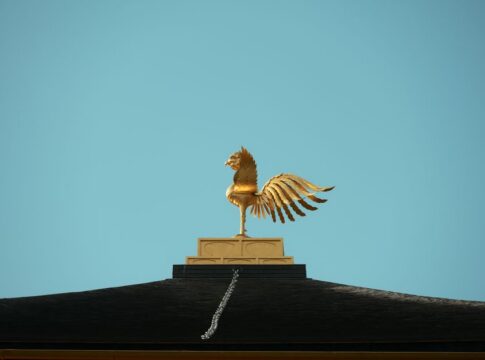
The Truth About Phoenix Birds Being Based on Real Ostriches
By Trivia Owl, Staff Writer — Published November 2, 2026
Table of Contents
- Key Takeaways
- Discover the Truth About Phoenix Birds and Ancient Encounters
- Amazing Facts Behind the Fiery Transformation
- Explore How Mythology Transformed Reality
- Surprising Trivia About Real Birds and Mythical Legends
- Frequently Asked Questions
The phoenix, that legendary bird that bursts into flames and rises from its own ashes, may owe its existence to ancient travelers’ encounters with a very real—and very large—bird. While the phoenix has captivated imaginations for millennia, scholars have long debated whether this mythical creature was inspired by actual animals. The truth about phoenix birds reveals a surprising connection to ostriches, the world’s largest living birds, whose unusual behaviors and dramatic appearance may have sparked one of mythology’s most enduring legends.
Ancient trade routes brought Mediterranean peoples into contact with exotic African wildlife, and the ostrich—with its impressive size, fiery plumage, and bizarre habits—left quite an impression. What seemed magical to ancient observers often had a perfectly natural explanation, though the facts got embellished with each retelling.
Key Takeaways
- Ancient Greek and Roman historians described the phoenix with characteristics strikingly similar to ostriches, including size, coloring, and geographic origin in Arabia or Ethiopia.
- Ostriches display behaviors that could easily be misinterpreted as mystical, including their habit of sitting on nests that appear like funeral pyres and their reddish-orange plumage.
- The phoenix legend appears in multiple ancient cultures, with the earliest known written accounts dating to the 5th century BCE by Greek historian Herodotus.
- Male ostriches perform elaborate courtship displays involving wing-spreading and ground-sitting that, from a distance, could resemble a bird surrounded by flames.
- Ancient confusion between different bird species and second-hand accounts likely contributed to the transformation of real ostriches into immortal phoenixes.
- Modern scholars have identified interesting parallels between ostrich biology and phoenix mythology that suggest a basis in observable natural phenomena.
Discover the Truth About Phoenix Birds and Ancient Encounters
Herodotus, often called the father of history, wrote about the phoenix in the 5th century BCE. He described it as a bird from Arabia with gold and red plumage that lived for 500 years. When it died, the phoenix supposedly carried its parent’s body to the Temple of the Sun in Heliopolis, Egypt, encased in myrrh. Herodotus himself expressed skepticism about the story, noting he had never seen one and was merely reporting what he’d been told.
The description, however, aligns remarkably well with ostriches. These birds can stand up to nine feet tall and weigh over 300 pounds. Male ostriches sport dramatic black and white plumage with hints of reddish-brown, while their skin can flush pink during mating season. In the harsh sunlight of desert regions, a male ostrich sitting on its nest could appear to glow with warm, fiery colors.
Ostriches were native to Arabia and North Africa in ancient times, exactly the regions associated with phoenix sightings. They also exhibit behaviors that ancient observers might have found mystical. During breeding season, male ostriches dig shallow nests in the ground and take turns with females incubating eggs. These nests, surrounded by dried vegetation in desert settings, could resemble the “funeral pyre” described in phoenix legends.
Amazing Facts Behind the Fiery Transformation
The phoenix’s supposed ability to burst into flames and be reborn finds an interesting parallel in ostrich behavior. When threatened or during courtship, male ostriches perform dramatic displays. They spread their wings wide, revealing the white plumage underneath, and drop to the ground in a swaying motion. Their wings beat rhythmically while they rock back and forth. Witnessed at sunset or in shimmering heat waves, this display could easily appear supernatural to someone unfamiliar with the bird.
Ancient peoples also observed ostriches eating strange objects—stones, metal, and other hard materials. Ostriches swallow rocks to aid digestion in their gizzards, but to ancient observers, a bird that consumed seemingly indestructible materials might appear equally indestructible itself. The idea of a bird that could not truly die may have grown from this misunderstanding of digestive biology.
The ostrich’s famous speed—they can run up to 45 miles per hour—contributed to their mystique. A bird that could outrun horses and disappear into the desert horizon might seem to vanish and reappear magically, reinforcing ideas about resurrection and rebirth.
Explore How Mythology Transformed Reality
The transformation from ostrich to phoenix involved layers of cultural storytelling. Egyptian priests at Heliopolis may have kept exotic birds, including ostriches, as sacred animals. Travelers hearing stories about these rare, impressive birds would embellish details with each retelling. The human tendency to make stories more exciting meant that an unusually long-lived bird became immortal, a bird with colorful plumage became wreathed in flames, and a bird that nested in the desert became one that built its own funeral pyre.
Roman naturalist Pliny the Elder wrote about the phoenix in the 1st century CE, describing it as the size of an eagle with gold around its neck and a rosy body. This description differs from earlier accounts and shows how the legend evolved. Later medieval bestiaries depicted phoenixes as increasingly fantastical, moving further from any real animal basis.
| Phoenix Characteristic | Possible Ostrich Origin |
|---|---|
| Large size, impressive stature | Ostriches stand up to 9 feet tall, largest living bird |
| Gold and red plumage | Male ostriches have reddish-brown and black feathers that glow in sunlight |
| Associated with Arabia and Ethiopia | Ostriches native to these exact regions in ancient times |
| Sits on nest resembling a pyre | Males incubate eggs in shallow ground nests surrounded by vegetation |
| Appears to burst into flames | Courtship displays with wing-spreading and ground movements |
| Extremely long-lived or immortal | Ostriches can live 40-45 years, exceptional for birds |
Surprising Trivia About Real Birds and Mythical Legends
The phoenix wasn’t the only mythical bird with possible real-world origins. The roc, a giant bird from Arabian Nights, may have been inspired by the elephant bird of Madagascar, which stood over ten feet tall. The griffin, part eagle and part lion, might have originated from Central Asian fossil discoveries of Protoceratops, whose beaked skulls resembled bird heads.
Ostriches themselves have remarkable characteristics that seem almost mythical. Their eyes are larger than their brains. They can go without water for days, extracting moisture from desert plants. A single ostrich egg weighs about three pounds and is equivalent to roughly two dozen chicken eggs. These genuine facts are impressive enough without embellishment.
Ancient confusion between different bird species also played a role. Flamingos, also native to the region, display pink and red coloring and gather in large groups. Herons and other wading birds were sacred in Egyptian culture. The phoenix legend may represent a composite of several real birds filtered through cultural mythology and limited zoological knowledge.
Frequently Asked Questions
Did ancient people really mistake ostriches for phoenixes?
Ancient writers likely heard descriptions of ostriches from travelers and traders, then embellished these accounts with mythological elements. Herodotus himself expressed doubt about the phoenix stories, suggesting even ancient people distinguished between real birds and legends, though the line blurred through cultural storytelling.
Are there any other animals that inspired famous mythical creatures?
Yes, many mythical creatures have real-world origins. Narwhal tusks inspired unicorn legends, manatees likely inspired mermaid stories, and fossil discoveries of extinct megafauna contributed to dragon myths across multiple cultures.
Why did the phoenix become associated with fire specifically?
The fire association likely came from multiple sources: the reddish-gold coloring of male ostriches in sunlight, their dramatic courtship displays, their desert habitat where heat shimmers create optical illusions, and the symbolic connection between the sun-worshiping cultures of Egypt and rebirth mythology.
Do ostriches actually live for hundreds of years?
No, ostriches typically live 40 to 45 years in the wild, though some in captivity have reached 50 years. While impressive for birds, this is far shorter than the 500 or 1,000 years attributed to phoenixes in various legends.
The next time you see an ostrich at a zoo or in nature footage, imagine encountering one for the first time in the ancient world—a towering bird with fiery plumage, bizarre habits, and supernatural speed. The truth about phoenix birds reminds us that reality, properly observed, can be just as captivating as any myth.