










1 / 10 Questions
0 Points
Points won
0
Correct score
0%

More Questions

Medieval jesters wore bells mainly to do what?

Medieval jesters wore bells mainly to do what? Question 1: Medieval jesters wore bells mainly to do what? A. Announce their presence B. Ward off evil spirits C....

The Hidden Story of Why Nutmeg Was Worth More Than Gold

Discover the fascinating nutmeg history that made it more valuable than gold, sparked wars, and changed global trade forever in the spice islands.

11 Record-Breaking Facts About Peregrine Falcon Dives

Discover how peregrine falcons achieve the fastest speeds in the animal kingdom and what makes their hunting dives so extraordinary and precise.

More Articles

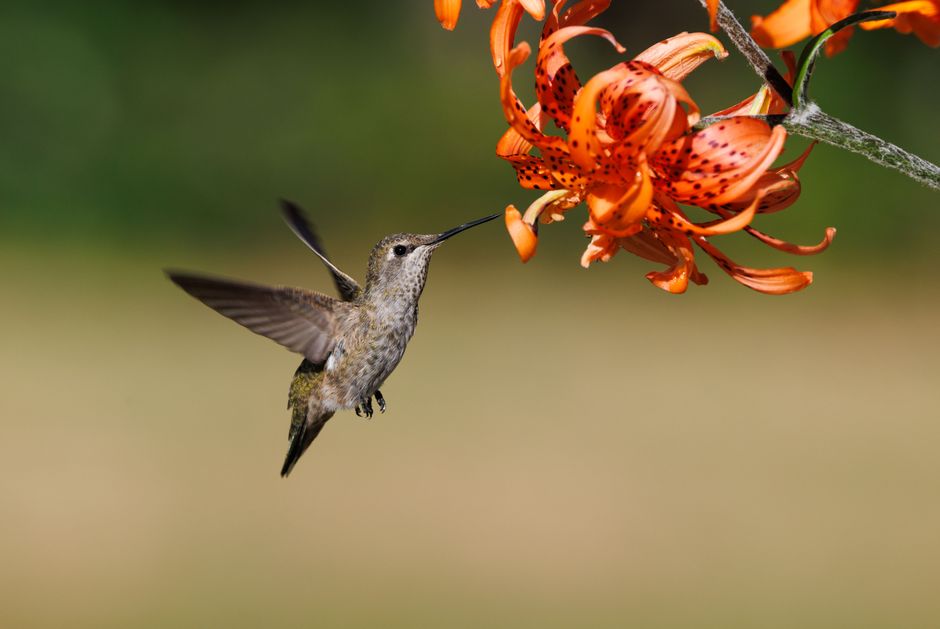
How Hummingbirds Remember Every Flower They Visit

How Hummingbirds Remember Every Flower They Visit

How Hummingbirds Remember Every Flower They Visit

By Trivia Owl, Animals Desk — Published October 27, 2026

Table of Contents

A tiny hummingbird, weighing less than a nickel, can remember the exact location of hundreds of flowers scattered across several acres. Even more remarkable, these creatures recall not just where each bloom is, but when they last visited it and how long it will take for that flower to refill with nectar. This extraordinary feat of memory allows hummingbirds to optimize their feeding routes with the precision of a seasoned delivery driver, never wasting energy on depleted food sources.

The ability of hummingbirds to remember every flower they visit ranks among nature's most impressive cognitive achievements. For an animal whose brain is roughly the size of a pea, the spatial memory and temporal tracking required to manage this mental map challenges our assumptions about intelligence in the animal kingdom.

Key Takeaways

  • Hummingbirds possess exceptional spatial memory that allows them to track hundreds of individual flowers across their habitat and remember when each was last visited.
  • These birds can recall the refill rates of different flower species, knowing precisely when nectar will be replenished after their last visit.
  • The hippocampus in hummingbirds is proportionally larger than in other bird species, supporting their superior memory capabilities.
  • Male and female hummingbirds may have different memory strengths, with some research suggesting females excel at spatial tasks during breeding season.
  • Hummingbirds update their mental maps constantly, deleting flowers that have died and adding new blooms to their foraging routes.
  • This memory system is so precise that hummingbirds can distinguish between flowers they visited five minutes ago versus five hours ago.

How Hummingbirds Remember Every Flower Through Brain Structure

The secret to hummingbird memory lies in a brain structure called the hippocampus, the same region humans use for spatial navigation and memory formation. In hummingbirds, this area is significantly enlarged compared to other birds of similar size. The hippocampus makes up a larger percentage of total brain volume in hummingbirds than in chickadees, sparrows, or most other avian species.

This enlarged hippocampus serves as a biological GPS and calendar combined. When a hummingbird visits a flower, neurons in this region encode multiple pieces of information: the flower's location relative to landmarks, its color and shape, the quality and quantity of nectar available, and a timestamp of the visit. This neural encoding happens in real-time, requiring no conscious effort from the bird.

The energy demands of hovering flight make this memory system a survival necessity rather than a luxury. Hummingbirds burn calories at such an extreme rate that they must consume roughly half their body weight in nectar daily. Flying to an empty flower wastes precious energy reserves, so remembering feeding schedules becomes a matter of life and death.

The Science Behind Flower Tracking Behavior

Researchers have documented this remarkable memory through carefully controlled experiments. In one study design, scientists set up artificial feeders on a grid pattern and observed how hummingbirds learned and remembered the layout. The birds not only memorized feeder locations but also tracked which feeders they had already emptied, avoiding them until researchers refilled them.

What makes this behavior even more sophisticated is the concept of temporal memory. Different flower species refill their nectar at different rates. A trumpet creeper might replenish its nectar within an hour, while a columbine could take several hours. Hummingbirds learn these refill schedules and time their return visits accordingly, demonstrating an internal clock synchronized with floral biology.

This temporal awareness extends beyond simple waiting periods. Hummingbirds appear to categorize flowers into mental groups based on refill rates, creating efficient foraging circuits. They might visit fast-refilling flowers multiple times while making longer loops to check slower-refilling species, maximizing energy intake while minimizing flight costs.

Memory Differences Among Hummingbird Species and Sexes

Not all hummingbirds demonstrate identical memory capabilities. Among the hundreds of hummingbird species found throughout the Americas, those inhabiting complex environments with diverse floral resources tend to show enhanced spatial memory compared to species in simpler habitats. Tropical species navigating rainforest canopies with thousands of plant species face greater cognitive demands than desert specialists visiting a handful of cactus types.

Sexual differences in memory performance have also emerged in wildlife research. During breeding season, female hummingbirds, who bear sole responsibility for nest building and chick rearing, show enhanced spatial memory compared to males. This seasonal cognitive boost helps females remember not just flower locations but also the locations of spider webs, where they harvest silk for nest construction, and safe perching spots near their nests.

Male hummingbirds, meanwhile, invest cognitive resources differently. They must remember the boundaries of their territories, the locations of prime perches for courtship displays, and the feeding routes of rival males. Their memory systems are tuned to social and territorial information rather than pure foraging efficiency.

Comparing Memory Capabilities Across Animal Species

Animal Memory Specialty Capacity
Hummingbirds Spatial and temporal flower tracking Hundreds of locations with timestamps
Clark's Nutcracker Seed cache locations Up to 30,000 individual hiding spots
Honeybees Flower patches and hive location Multiple sites communicated through dance
Elephants Water source locations across seasons Dozens of sites over decades
Chimpanzees Fruit tree locations and ripening schedules Hundreds of trees across territory

How This Memory Shapes Hummingbird Ecology

The memory prowess of hummingbirds creates fascinating ecological relationships with flowering plants. Many plant species have evolved to match their nectar production rates with hummingbird memory and foraging behavior. Flowers that refill quickly attract more frequent visits, increasing pollination success. Plants essentially exploit hummingbird memory to ensure reliable pollinator service.

This relationship runs both ways. Hummingbirds have evolved preferences for flower colors and shapes that are easy to remember and distinguish. Red tubular flowers dominate hummingbird-pollinated plant species, not because hummingbirds can't see other colors, but because red stands out against green foliage and creates memorable visual landmarks.

The memory system also influences hummingbird migration patterns. Some species return to the same breeding territories year after year, remembering productive feeding areas from previous seasons. They time their arrival to coincide with peak flowering, suggesting they retain seasonal information across months of migration to distant wintering grounds.

Frequently Asked Questions

Do hummingbirds recognize individual humans?

Yes, hummingbirds can recognize and remember individual people, especially those who regularly refill their feeders. They distinguish between different humans based on appearance and behavior, often showing less fear toward familiar caretakers than strangers.

How long can hummingbirds remember flower locations?

Hummingbirds can remember flower locations for at least several months, and likely much longer. Some evidence suggests they retain spatial memories across migration cycles, remembering productive feeding sites from one breeding season to the next.

Do hummingbirds have better memories than other birds?

Hummingbirds excel at spatial and temporal memory related to food sources, but some bird species like Clark's nutcrackers show even more impressive feats, remembering thousands of seed cache locations. Different species have evolved memory systems suited to their specific ecological needs.

Can hummingbirds remember artificial feeders as well as real flowers?

Hummingbirds remember artificial feeders with the same precision they apply to natural flowers, tracking locations, refill schedules, and even the specific people who maintain them. They quickly learn human patterns and may arrive at feeding stations just as someone steps outside to refill them.

The next time you watch a hummingbird dart from flower to flower with apparent randomness, consider the invisible mental map guiding each movement. Behind those rapid wingbeats lies a navigation computer that would impress any software engineer, proof that extraordinary intelligence comes in remarkably small packages.

Why Humans Are the Only Animals With Chins

Why Humans Are the Only Animals With Chins

Why Humans Are the Only Animals With Chins

By Trivia Owl, Staff Writer — Published October 27, 2026

Table of Contents

Look in the mirror and you'll see something truly unique: a bony protrusion at the bottom of your face that no other creature on Earth possesses. While many animals have lower jaws, humans are the only species with a true chin—that distinctive forward projection of bone below the lower lip. This curious anatomical feature has puzzled scientists for generations, and the facts behind why we evolved this peculiar trait are more surprising than you might think. Exploring the mystery of why humans animals chins exist as a singular phenomenon reveals fascinating insights into our evolution and biology.

The chin is so distinctively human that even our closest evolutionary relatives, the Neanderthals, lacked this feature. Their faces sloped backward from the teeth to the neck in a smooth line. This amazing difference sets modern humans apart in the animal kingdom and raises an intriguing question: why did we develop something so unique?

Key Takeaways

  • Humans are the only species in the entire animal kingdom with a true bony chin that projects forward from the lower jaw.
  • Even Neanderthals and other extinct human relatives lacked chins, making this feature unique to Homo sapiens.
  • The chin serves no obvious mechanical purpose for eating or speaking, making its evolutionary origin a scientific puzzle.
  • Leading theories suggest chins may result from changes in face shape, diet, or even social selection for attractive facial features.
  • The chin typically begins forming during childhood as the jaw develops and becomes fully pronounced in adulthood.
  • No other primate, mammal, bird, reptile, or any other animal has evolved this distinctive facial feature.

What Exactly Makes Humans Animals Chins Different From Other Jaws

Not every protruding lower jaw qualifies as a true chin. The scientific definition is specific: a chin is a bony projection of the mental eminence—the front portion of the mandible that extends beyond the natural curve of the jawbone. Many animals have mandibles, and some have prominent lower jaws, but none feature this distinctive forward and upward projection of bone.

Elephants appear to have chins, but that's just soft tissue and skin hanging below their mouths. Gorillas and chimpanzees have powerful jaws, yet these slope backward beneath the teeth rather than projecting forward. The difference is architectural. The human chin forms a distinct point where the two halves of the mandible fuse, creating a triangular protrusion that serves no apparent mechanical function.

This anatomical quirk becomes even more interesting when examining human fossils. Early human ancestors like Homo erectus and Homo habilis lacked chins entirely. The feature appears exclusively in Homo sapiens, emerging roughly 200,000 years ago. Even Neanderthals, who survived until about 40,000 years ago and interbred with modern humans, had receding chins despite having robust jaws and large teeth.

The Puzzling Theories Behind Chin Evolution

Scientists have proposed numerous explanations for why chins evolved, but no single theory has achieved universal acceptance. One prominent hypothesis links the chin to changes in our diet and jaw mechanics. As humans began cooking food and developing tools, we needed less powerful jaw muscles for chewing. Our faces became shorter and flatter, with smaller teeth and reduced jaw size. The chin may have emerged as a structural consequence of this facial remodeling—a byproduct of other evolutionary changes rather than an adaptation serving a specific purpose.

Another theory focuses on speech. Some researchers have suggested that the chin provides structural support for the complex tongue and jaw movements required for human language. Yet this explanation faces challenges: the chin doesn't appear to strengthen the jaw where speech-related stresses occur, and other articulate animals manage without this feature.

A third possibility involves sexual selection. Chins may have become markers of genetic fitness or social status, with humans preferring mates who displayed more prominent chins. This would explain why chins became more pronounced over time even without serving an obvious survival function. Facial attractiveness varies across cultures, but chin prominence often factors into perceptions of strength, health, and desirability.

The most recent research suggests the chin might simply be a structural consequence of how our faces evolved. As our skulls became rounder and our faces flatter, the lower jaw needed to maintain its strength while accommodating smaller teeth in a shorter dental arch. The chin may represent the most efficient engineering solution to these competing demands.

Comparing Jaw Structures Across Species

Species Jaw Type Chin Present Notable Features
Humans (Homo sapiens) Shortened, flat face Yes Only species with true bony chin projection
Neanderthals Robust, protruding face No Receding chin despite large jaw
Chimpanzees Prognathic (protruding) No Jaw slopes backward below teeth
Gorillas Massive, powerful No Strong jaw for plant processing, no forward projection
Elephants Modified for trunk attachment No Apparent "chin" is soft tissue, not bone

Common Myths About Chins Debunked

Several misconceptions persist about this unique human feature. One widespread myth claims that chins evolved to protect our jaws from punches during fights. While an interesting idea, biomechanical studies show that the chin doesn't significantly strengthen the jaw against impacts from the front. If anything, the mandible is weakest precisely where the chin projects.

Another false belief suggests that certain apes or monkeys have chins. While some primates have pronounced lower jaws, none possess the distinctive forward projection of bone that defines a true chin. The confusion often arises from photographs taken at certain angles or from species with unusual facial features, but anatomical examination always reveals the absence of this structure.

Some people believe chin size correlates with intelligence or personality traits. No scientific evidence supports these claims. Chin prominence varies widely among humans due to genetics, developmental factors, and individual variation, but these differences don't predict cognitive abilities or behavioral characteristics.

How Chins Develop Throughout Life

Humans aren't born with fully formed chins. Newborn babies have relatively flat lower jaws, and the chin gradually emerges as the face grows during childhood and adolescence. The mental eminence begins to project forward as the permanent teeth develop and the jaw expands to accommodate them. By adulthood, the chin reaches its final prominence, though its exact size and shape vary considerably among individuals and populations.

Genetic factors play a significant role in determining chin characteristics. Some people develop strong, prominent chins while others have weaker, more receding ones. Environmental factors during development, including nutrition and overall health, can also influence final chin formation. Orthodontic treatments and jaw positioning can affect how pronounced the chin appears, though they don't change the underlying bone structure significantly.

Frequently Asked Questions

Do any other animals besides humans have chins?

No, humans are the only animals with true bony chins. While some animals appear to have chin-like features, these are either soft tissue or differently structured jaw anatomy that doesn't match the human chin's forward bony projection.

Did Neanderthals have chins?

Neanderthals did not have chins despite being closely related to modern humans. Their lower jaws sloped backward from the teeth, lacking the forward projection that characterizes Homo sapiens. This makes the chin one of the distinguishing features between the two species.

What purpose does the chin serve?

Scientists remain uncertain about the chin's specific function. Current theories suggest it may be a byproduct of facial evolution, a structural consequence of our shortened faces and smaller jaws, or possibly a feature that became prominent through sexual selection rather than serving a mechanical purpose.

When did humans first evolve chins?

Chins appear in the fossil record with the emergence of anatomically modern Homo sapiens approximately 200,000 years ago. Earlier human species and relatives lacked this feature, making it a relatively recent evolutionary development in the human lineage.

The humble chin stands as a reminder that evolution often works in mysterious ways, creating features whose purposes aren't immediately obvious. This small projection of bone separates us from every other creature that has ever lived, yet we still don't fully understand why we have it. Perhaps that's what makes discovering these interesting facts about our own biology so compelling—sometimes the most familiar things turn out to be the most extraordinary.