
The Hidden Story of Why Giraffes Have Black Tongues
By Trivia Daily, Animals Desk — Published November 27, 2026
Table of Contents
- Key Takeaways
- The Hidden Story Giraffes Tell Through Evolutionary Adaptation
- How Giraffe Feeding Behavior Shaped This Adaptation
- Comparing Tongue Adaptations Across Wildlife Species
- The Broader Picture of Giraffe Adaptations
- Debunking Common Myths About Giraffe Tongues
- Frequently Asked Questions
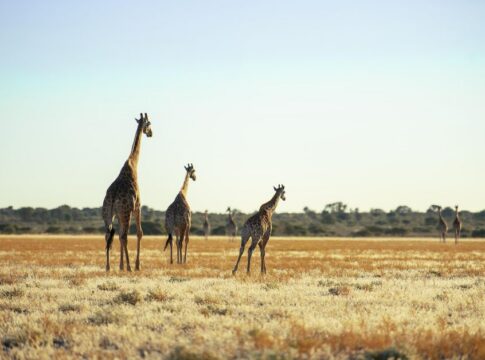
Stand close enough to a giraffe at feeding time, and you’ll notice something unexpected: its tongue isn’t pink like most mammals, but a deep bluish-black or purple. This isn’t a random quirk of nature. The hidden story giraffes carry on their tongues reveals a brilliant evolutionary adaptation that protects these towering creatures from one of Africa’s harshest challenges—the relentless sun beating down on the savanna. These remarkable animals spend up to 12 hours a day foraging, their tongues extended and exposed for much of that time.
The dark pigmentation serves as natural sunscreen, shielding the tongue tissue from ultraviolet radiation damage. When you consider that a giraffe’s tongue can extend 18 to 20 inches beyond its mouth to strip leaves from thorny acacia branches, the need for protection becomes clear. The front portion of the tongue—the part most frequently exposed—displays the darkest coloration, while the base, which remains inside the mouth, appears lighter pink.
Key Takeaways
- Giraffe tongues are dark bluish-black or purple due to melanin pigmentation that protects against sun damage during extended feeding sessions.
- These impressive tongues measure 18 to 20 inches long and are prehensile, allowing giraffes to grasp and strip leaves with remarkable precision.
- The darkest coloration appears on the front portion of the tongue, which receives the most sun exposure, while the base remains lighter.
- Giraffes spend up to 12 hours daily foraging with their tongues extended, making UV protection essential for survival.
- The same melanin that darkens human skin in response to sun exposure provides giraffes with built-in protection from birth.
- This adaptation allows giraffes to feed efficiently on acacia trees in their African habitat without risking painful sunburn on sensitive tongue tissue.
The Hidden Story Giraffes Tell Through Evolutionary Adaptation
Evolution doesn’t waste energy on unnecessary features. Every characteristic that persists across generations serves a purpose, and the giraffe’s distinctive tongue color is no exception. The pigment responsible for this dark hue is melanin, the same compound that determines human skin and hair color. In giraffes, melanin concentrates heavily in the tongue tissue, creating a natural barrier against ultraviolet radiation.
Consider the giraffe’s daily routine. These herbivores browse almost constantly during daylight hours, preferring the leaves, shoots, and fruits of acacia trees. Their long necks position them perfectly to reach vegetation other animals cannot access, but this advantage comes with a challenge. To efficiently strip leaves from branches, giraffes must extend their tongues repeatedly throughout the day. Unlike humans who can seek shade or apply sunscreen, giraffes needed a biological solution.
The tongue’s dark pigmentation isn’t uniform. Scientists have observed that the tip and forward sections display the deepest black or purple coloration, precisely where sun exposure is greatest. Moving toward the base, the color gradually lightens to pink. This gradient pattern provides compelling evidence that UV protection drives the coloration, rather than some other physiological function.
How Giraffe Feeding Behavior Shaped This Adaptation
Understanding why giraffes evolved black tongues requires examining their feeding behavior and habitat. In the African savanna, shade is scarce and the sun intense. Temperatures regularly exceed 90 degrees Fahrenheit, and UV radiation levels are high year-round. Giraffes don’t have the luxury of feeding only during cooler morning or evening hours—their massive bodies require enormous quantities of food.
A single adult giraffe consumes approximately 75 pounds of vegetation daily. Meeting this nutritional requirement means nearly constant browsing. The animal’s tongue works like a precision tool, wrapping around branches, navigating between thorns, and stripping leaves with practiced efficiency. This prehensile tongue can curl, grip, and manipulate branches in ways that seem almost hand-like.
Without melanin protection, this extended exposure would cause severe tissue damage. Sunburn on the tongue would make feeding painful or impossible, threatening the animal’s survival. Natural selection strongly favored individuals with darker tongue pigmentation, as they could feed longer and more comfortably, leading to better nutrition, health, and reproductive success.
Comparing Tongue Adaptations Across Wildlife Species
| Animal | Tongue Color | Primary Function | Notable Adaptation |
|---|---|---|---|
| Giraffe | Bluish-black/purple | Browsing high vegetation | UV protection via melanin |
| Okapi | Dark blue/purple | Forest browsing | Similar to giraffe relative |
| Chameleon | Pink to pale | Capturing prey | Extremely fast projection |
| Anteater | Pink | Extracting insects | Covered in sticky saliva |
| Woodpecker | Pink with barbs | Extracting insects from wood | Wraps around skull for storage |
The Broader Picture of Giraffe Adaptations
The black tongue represents just one piece of the giraffe’s remarkable evolutionary puzzle. These creatures have developed numerous specialized features for their unique ecological niche. Their extremely long necks—which contain the same seven vertebrae as humans, just greatly elongated—allow access to food sources beyond the reach of competing herbivores. Their height also provides exceptional visibility for spotting predators across the open savanna.
Giraffes possess thick, tough lips and a palate that can handle the sharp thorns of acacia trees. Their saliva contains properties that help protect against toxins some plants produce as defense mechanisms. Even their cardiovascular system shows extraordinary adaptation: a giraffe’s heart must generate tremendous pressure to pump blood up that long neck to the brain, while specialized valves prevent blood from rushing down too quickly when the animal lowers its head to drink.
Each adaptation connects to others in an integrated system. The dark tongue works in concert with the animal’s feeding behavior, which itself depends on the long neck, which requires the specialized cardiovascular system. Nature designs in comprehensive solutions.
Debunking Common Myths About Giraffe Tongues
Several misconceptions circulate about why giraffes have dark tongues. Some people claim the color comes from tannins in the acacia leaves staining the tissue, similar to how tea can stain teeth. This explanation sounds plausible but doesn’t hold up under scrutiny. Baby giraffes are born with dark tongues before they’ve consumed any acacia leaves, proving the pigmentation is genetic rather than acquired.
Another myth suggests the dark color helps camouflage the tongue from predators. While giraffes do face threats from lions and other large carnivores, their tongue color provides no meaningful concealment advantage. Predators hunt giraffes based on the animal’s overall profile and movement, not by spotting an extended tongue.
The UV protection explanation remains the only hypothesis supported by anatomical evidence, behavioral observation, and evolutionary logic. The pigmentation gradient, the correlation with sun exposure patterns, and the presence of melanin all point to the same conclusion.
Frequently Asked Questions
How long is a giraffe’s tongue?
A giraffe’s tongue typically measures 18 to 20 inches long, allowing the animal to reach leaves and branches that would otherwise be inaccessible. This impressive length, combined with the tongue’s prehensile ability, makes it an extremely effective feeding tool.
Are all giraffe tongues the same color?
All giraffes have darkly pigmented tongues, though the exact shade varies from deep purple to bluish-black. The tip is always darkest, while the base inside the mouth remains lighter pink, demonstrating the UV protection gradient.
Do any other animals have black tongues for sun protection?
The okapi, a close relative of the giraffe living in African forests, also has a dark purple tongue. While they face less direct sun exposure due to forest canopy cover, they retain this trait from their shared evolutionary ancestry with giraffes.
Can giraffes get sunburned on other body parts?
Giraffes have relatively thick skin and short hair that provides some protection, but they can experience sun damage on less-protected areas. Their dark tongue pigmentation represents the most dramatic adaptation because that tissue faces the most sustained exposure during feeding.
Next time you see a giraffe at a zoo or in wildlife footage, watch for that distinctive dark tongue at work. What appears as a simple color difference actually represents millions of years of evolutionary problem-solving, a biological innovation as elegant as it is effective. The hidden story giraffes carry isn’t really hidden at all—it’s written in plain sight, waiting for curious observers to notice and understand the remarkable logic of nature’s designs.