
Why Arctic Foxes Change Fur Color Between Summer and Winter
By Trivia Daily, Animals Desk — Published November 27, 2026
Table of Contents
- Key Takeaways
- Why Arctic Foxes Change Color: The Science of Seasonal Camouflage
- The Two Color Morphs of Arctic Foxes
- How Photoperiod Controls the Transformation
- Beyond Color: The Winter Coat’s Extreme Insulation
- Climate Change and the Future of Color-Changing
- Frequently Asked Questions
In the frozen expanses of the Arctic tundra, few animals demonstrate nature’s adaptive genius quite like the arctic fox. This remarkable creature performs one of the animal kingdom’s most dramatic transformations twice each year, swapping its brilliant white winter coat for earthy brown or gray summer fur. The reason arctic foxes change their appearance so drastically isn’t vanity—it’s survival. This seasonal color shift serves as one of the most effective camouflage systems in the wildlife world, allowing these small predators to blend seamlessly into their ever-changing habitat.
The arctic fox’s ability to transform with the seasons showcases evolution at its finest. While many species adapt to their environment in subtle ways, these creatures have developed a biological mechanism that completely reinvents their appearance based on the calendar. Understanding why and how this happens reveals fascinating insights into animal behavior and the extreme measures some species take to thrive in harsh climates.
Key Takeaways
- Arctic foxes change fur color twice annually through a molting process triggered by seasonal changes in daylight duration, not temperature.
- The white winter coat provides camouflage against snow while hunting prey and avoiding predators like wolves and golden eagles.
- Summer brown or gray fur helps the fox blend with tundra rocks, soil, and vegetation when snow melts.
- The winter coat is not only a different color but also significantly denser, with up to 70% more fur to provide insulation in temperatures as low as negative 70 degrees Fahrenheit.
- Some arctic fox populations living in coastal areas maintain a blue-gray coloration year-round, called the “blue morph,” which better matches rocky coastal habitats.
- This color-changing ability is controlled by photoperiod—the length of daylight—which signals hormonal changes that trigger molting.
Why Arctic Foxes Change Color: The Science of Seasonal Camouflage
The arctic fox inhabits one of Earth’s most visually dynamic environments. During winter, the Arctic becomes a vast white wilderness where anything dark stands out like a beacon. Come summer, the landscape transforms into a patchwork of brown earth, gray rocks, and green vegetation. An animal wearing the wrong color scheme becomes instantly visible to both the prey it hunts and the predators that hunt it.
Camouflage serves dual purposes for the arctic fox. As a predator, the fox relies on stealth to catch lemmings, voles, birds, and bird eggs—its primary food sources. A white fox stalking across winter snow becomes nearly invisible to its prey. But the arctic fox is also prey for larger carnivores including wolves, wolverines, and golden eagles. That same white coat protects it from becoming a meal.
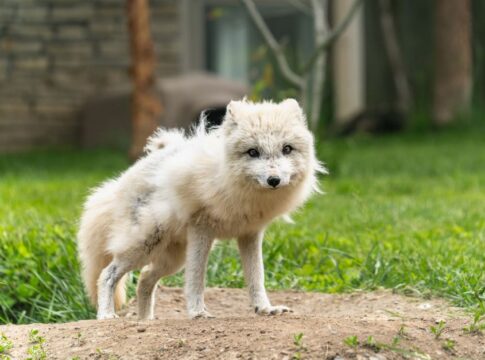
The color change happens through molting, a biological process where the fox sheds its old fur and grows new fur adapted to the coming season. This isn’t a gradual fade but a complete replacement of the coat. The process is triggered by photoperiod—the amount of daylight the fox experiences each day. As days grow shorter in autumn, hormonal changes signal the fox’s body to grow the thick white winter coat. When days lengthen in spring, the reverse happens, and brown or gray summer fur emerges.
The Two Color Morphs of Arctic Foxes
Not all arctic foxes follow the white-to-brown pattern. The species actually exhibits two distinct color morphs: the white morph and the blue morph. The white morph, which represents the majority of the population, transitions from pure white in winter to brown or grayish-brown in summer. The blue morph, however, maintains a slate-blue or charcoal-gray coloration year-round, simply becoming slightly lighter or darker with the seasons.
The blue morph is more common in coastal and island populations, particularly in areas like Iceland, the Aleutian Islands, and other rocky maritime regions. This makes evolutionary sense. Coastal habitats don’t experience the same complete snow coverage as inland tundra. Rocky shores, dark cliffs, and ice-free waters mean that year-round dark coloration provides better camouflage than seasonal white. Both morphs can appear in the same litter, and the trait is genetically determined.
| Color Morph | Winter Appearance | Summer Appearance | Typical Habitat |
|---|---|---|---|
| White Morph | Pure white | Brown to grayish-brown | Inland tundra, snow-covered regions |
| Blue Morph | Dark slate-blue or charcoal | Lighter blue-gray | Coastal areas, rocky islands |
How Photoperiod Controls the Transformation
The arctic fox doesn’t consciously decide when to change its coat based on weather forecasts. Instead, its body responds to an environmental cue that’s far more reliable than temperature: the length of the day. The Arctic experiences extreme variations in daylight, from 24-hour darkness in winter to 24-hour sunlight in summer. These predictable changes in light exposure affect the fox’s pineal gland, which produces melatonin and influences the release of hormones that control molting.
This photoperiod-based system is remarkably precise. It ensures that arctic foxes begin growing their winter coats before the first snow falls and start shedding that heavy insulation before summer temperatures arrive. Temperature alone would be an unreliable trigger—Arctic weather can be unpredictable, and a warm spell in autumn or cold snap in spring might cause a fox to change at the wrong time if it relied on warmth or cold as its signal.
The entire molting process takes several weeks. You might spot an arctic fox during transition periods looking patchy, with white and brown fur creating a mottled appearance. While this temporary state offers less effective camouflage, the timing usually coincides with spring and fall when the landscape itself is transitional—partly snow-covered and partly bare ground.
Beyond Color: The Winter Coat’s Extreme Insulation
The seasonal transformation involves more than just color. The arctic fox’s winter coat is one of the warmest in the animal kingdom. The fur becomes dramatically denser, providing insulation that allows the fox to remain active in temperatures that would kill most mammals. The winter pelage includes both a dense underfur layer and longer guard hairs, creating an air-trapping system that maintains body heat.
Arctic foxes have the lowest recorded lower critical temperature of any mammal—the point at which they must increase their metabolic rate to stay warm. They can maintain their normal body temperature without shivering in conditions as cold as negative 70 degrees Fahrenheit. The summer coat, by contrast, is much thinner and shorter, preventing overheating when temperatures rise above freezing.
Even the fox’s tail serves multiple functions. The bushy tail, which the fox wraps around its body when sleeping, acts as a built-in blanket. The tail’s fur follows the same seasonal pattern as the body, becoming exceptionally full and white in winter.
Climate Change and the Future of Color-Changing
The arctic fox’s precisely timed color change faces a new challenge: climate change is altering the Arctic landscape faster than evolutionary processes can adapt. Warming temperatures mean snow arrives later in fall and melts earlier in spring, but the foxes’ molting schedule remains tied to daylight patterns that haven’t changed. This creates a mismatch where white foxes stand out against brown landscapes, or brown foxes contrast sharply with early snow.
Research has documented this timing problem in various Arctic regions. A white fox on bare ground or a brown fox on fresh snow becomes much more visible to both prey and predators, potentially affecting survival rates. Some scientists worry this could reduce hunting success and increase predation, putting pressure on arctic fox populations already stressed by other climate-related changes like reduced sea ice and shifting prey availability.
Whether arctic foxes can adapt through behavioral changes—such as spending more time in areas that match their current coat color—or whether evolutionary pressure will eventually shift their molting schedule remains an open question. The species has survived ice ages and warm periods before, but the current rate of change is unprecedented in recent evolutionary history.
Frequently Asked Questions
How long does it take for an arctic fox to change color?
The molting process typically takes several weeks, during which the fox appears patchy with both old and new fur visible. The exact duration varies by individual and environmental conditions, but the transition generally occurs over four to six weeks in both spring and autumn.
Do arctic fox pups change color?
Arctic fox pups are born with dark brown or grayish fur in spring and summer. They undergo their first molt in their first autumn, developing their winter coat just like adults. Pups born to blue morph parents maintain darker coloration year-round from birth.
Are arctic foxes the only animals that change fur color seasonally?
No, several other species exhibit seasonal color changes, including snowshoe hares, ermines (short-tailed weasels), and ptarmigans. This adaptation has evolved independently in multiple Arctic and subarctic species as a response to seasonal snow cover.
Can arctic foxes control when they change color?
No, the color change is an involuntary biological process controlled by hormonal responses to changing daylight hours. Arctic foxes cannot consciously trigger or delay their molting, which is why climate-related mismatches between coat color and landscape are becoming problematic.
The arctic fox’s twice-yearly wardrobe change remains one of nature’s most elegant solutions to the challenge of surviving in a world that looks completely different from one season to the next. Every white hair that turns brown and every brown hair that becomes white represents millions of years of evolutionary refinement—a living reminder that sometimes the best strategy for thriving in a changing world is to change right along with it.