
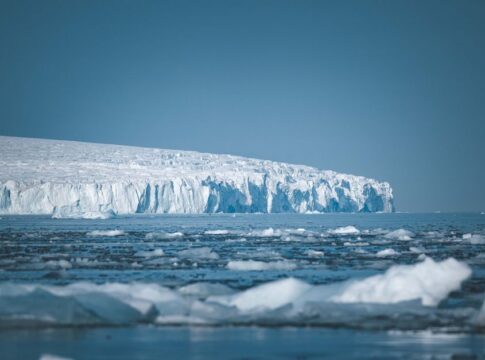
11 Strange Facts About Antarctica Never Having Rain
By Trivia Owl, Staff Writer — Published November 14, 2026
Table of Contents
- Key Takeaways
- Strange Antarctica Never Sees Liquid Rain Due to Extreme Cold
- Antarctica’s Classification as the World’s Largest Desert
- The Fascinating Science Behind Antarctica’s Weather Patterns
- Eleven Remarkable Facts About Antarctica’s Rain-Free Environment
- Comparing Antarctica’s Precipitation to Other Extreme Environments
- Frequently Asked Questions
Antarctica is the driest continent on Earth, yet it’s covered in ice. This paradox puzzles many people who assume frozen water means precipitation. The reality is far more strange: Antarctica never experiences rain in the way most of us understand it. Instead, this frozen desert receives less moisture annually than the Sahara, and what little precipitation falls comes exclusively as snow or ice crystals. These strange Antarctica never-before-considered facts reveal a world where weather operates by entirely different rules.
The continent’s extreme cold creates atmospheric conditions so unique that liquid rain simply cannot exist in most regions. Understanding why Antarctica remains rain-free opens a window into one of Earth’s most extreme environments, where temperature, pressure, and moisture interact in fascinating ways that challenge our everyday weather assumptions.
Key Takeaways
- Antarctica receives less than two inches of precipitation annually in its interior, making it technically a desert despite being covered in ice.
- Temperatures across most of the continent never rise high enough for rain to form, staying well below freezing year-round.
- The coastal regions occasionally experience sleet, but true liquid rain is extraordinarily rare even there.
- Antarctica’s dry valleys are among the driest places on Earth, having received no precipitation for millions of years.
- The continent holds 90% of Earth’s ice, yet paradoxically receives almost no fresh precipitation to replenish it.
- Scientific research stations have documented fewer than a dozen rain events in the past century.
Strange Antarctica Never Sees Liquid Rain Due to Extreme Cold
The primary reason Antarctica never experiences rain is brutally simple: it’s too cold. For rain to fall, atmospheric temperatures must remain above freezing from cloud level all the way to the ground. In Antarctica’s interior, temperatures average minus 70 degrees Fahrenheit in winter and rarely climb above minus 20 degrees Fahrenheit even during summer. Any moisture that forms in clouds immediately crystallizes into ice or snow.
The coastal regions fare slightly better, with summer temperatures occasionally approaching 32 degrees Fahrenheit. Even so, the air masses moving over Antarctica are so cold that they cannot hold sufficient moisture to produce rain. The few documented instances of liquid precipitation have occurred only during unusual warm spells on the Antarctic Peninsula, the continent’s northernmost extension.
This perpetual deep freeze creates a unique atmospheric condition. Water vapor exists in the air, but it transitions directly from gas to solid through a process called deposition, bypassing the liquid phase entirely. This phenomenon explains why Antarctica can have clouds and precipitation without ever producing rain as we know it.
Antarctica’s Classification as the World’s Largest Desert
Most people picture deserts as hot, sandy expanses. Antarctica shatters this assumption. The continent qualifies as Earth’s largest desert based on precipitation levels, not temperature. A desert is technically defined as any region receiving less than 10 inches of precipitation annually. Antarctica’s interior receives less than two inches per year, making the Sahara seem positively wet by comparison.
The McMurdo Dry Valleys, located in the Transantarctic Mountains, represent the driest places on the planet. Some areas within these valleys haven’t seen precipitation of any kind for an estimated two million years. The combination of extreme cold, high altitude, and descending dry air creates conditions so hostile to moisture that even snow cannot accumulate.
This desert classification creates interesting scientific parallels. Researchers studying Mars use Antarctica’s dry valleys as analog environments because conditions there closely resemble the Red Planet’s surface. The lack of liquid water, extreme temperatures, and minimal precipitation make these valleys perfect testing grounds for equipment and theories about extraterrestrial environments.
The Fascinating Science Behind Antarctica’s Weather Patterns
Antarctica’s weather operates under principles that seem alien compared to temperate regions. The continent sits beneath a persistent high-pressure system caused by intense cold. Cold air is denser than warm air, creating a massive dome of heavy atmosphere that sinks rather than rises. Rising air is necessary for cloud formation and precipitation, so this sinking motion suppresses weather systems.
What little moisture does reach Antarctica comes primarily from oceanic evaporation around the continent’s edges. As moist air moves inland and encounters rising terrain, it cools further and deposits its moisture as snow along coastal mountains. By the time these air masses reach the interior plateau, they’ve been wrung nearly dry. The result is clear skies and virtually no precipitation across vast stretches of the continent.
Katabatic winds intensify this drying effect. These powerful downslope winds form when cold, dense air on the high plateau flows downward toward the coast, reaching speeds exceeding 200 miles per hour. As the air descends, it compresses and warms slightly, but it also becomes even drier, creating conditions completely incompatible with rain formation.
Eleven Remarkable Facts About Antarctica’s Rain-Free Environment
1. The Interior Receives Less Moisture Than the Sahara Desert
Antarctica’s polar plateau experiences precipitation levels that would shock most people. Annual snowfall equivalent translates to less than two inches of liquid water in many areas. The Sahara Desert receives roughly three inches annually, making Antarctica measurably drier. This occurs despite Antarctica holding 70% of Earth’s fresh water in frozen form, creating one of nature’s most interesting contradictions between water presence and water availability.
2. Temperatures Must Exceed Freezing Throughout the Entire Atmospheric Column
Rain requires a continuous column of above-freezing air from cloud to ground. In Antarctica, temperatures at ground level rarely approach freezing, and upper atmospheric temperatures plunge even lower. Even when surface temperatures briefly reach 32 degrees Fahrenheit on the peninsula, the air just a few hundred feet up remains well below freezing, ensuring any falling moisture crystallizes into snow or ice pellets before reaching the surface.
3. The Continent Experiences “Diamond Dust” Instead of Rain
On clear, calm days, Antarctica produces a phenomenon called diamond dust—tiny ice crystals that precipitate directly from the air without forming clouds. These crystals catch sunlight and create sparkling displays that resemble falling glitter. This occurs when water vapor deposits directly into ice crystals, a process impossible with rain. Diamond dust contributes to Antarctica’s minimal annual precipitation totals while creating one of the continent’s most beautiful atmospheric displays.
4. Only the Antarctic Peninsula Has Recorded Rare Rain Events
The Antarctic Peninsula extends northward toward South America and experiences the continent’s mildest conditions. Scientists at research stations there have documented fewer than a dozen confirmed rain events in the past century. These exceptional occurrences happen only during summer when warm air masses from lower latitudes temporarily push temperatures above freezing. Even then, rain typically mixes with snow or sleet and lasts only minutes before conditions revert to normal.
5. Antarctica’s Dry Valleys Haven’t Seen Precipitation in Millions of Years
The McMurdo Dry Valleys represent extreme aridity taken to its logical conclusion. These ice-free valleys receive no precipitation whatsoever due to their unique geographic position. Surrounding mountains block ice flow from the polar plateau, while katabatic winds evaporate any moisture before it can settle. Some scientists estimate portions of these valleys have remained precipitation-free for two million years, creating landscapes that more closely resemble Mars than Earth.
6. The Continent Holds 90% of Earth’s Ice Despite Minimal Precipitation
Antarctica contains approximately 6.5 million cubic miles of ice, representing nine-tenths of all ice on Earth. This massive accumulation seems contradictory given the continent’s desert classification. The explanation lies in time: Antarctica’s ice sheet has been building for roughly 34 million years. Even tiny annual accumulations compound over geological time scales. The ice sheet averages nearly a mile thick, with some areas exceeding two miles in depth.
7. Atmospheric Moisture Content Drops to Near Zero in Winter
Cold air holds exponentially less moisture than warm air. At minus 40 degrees Fahrenheit, air can hold only about one-tenth the moisture possible at 32 degrees Fahrenheit. During Antarctic winter, when temperatures plunge to minus 100 degrees Fahrenheit, atmospheric moisture content approaches zero. The air becomes so dry that it can actually pull moisture from exposed skin, causing instant frostbite and making breathing painful without protective gear.
8. Snow That Does Fall Takes Centuries to Compress Into Ice
The minimal snow that accumulates in Antarctica doesn’t immediately become ice. Instead, it undergoes a gradual transformation over hundreds of years. Fresh snow compresses under its own weight into firn, a granular intermediate state between snow and ice. Eventually, after centuries of pressure, firn becomes glacial ice. Scientists can drill ice cores that reveal climate conditions from over 800,000 years ago by analyzing air bubbles trapped during this slow compression process.
9. Sublimation Removes More Ice Than Melting
In Antarctica’s dry environment, ice doesn’t melt—it sublimates. Sublimation is the direct transition from solid to gas without passing through a liquid phase. This process removes moisture from the ice sheet without producing meltwater. The extremely dry air and intense solar radiation during summer create perfect conditions for sublimation. Scientists estimate that sublimation accounts for more ice loss than melting across most of the continent, though both remain minimal compared to ice accumulation.
10. Coastal Regions Experience Blizzards Without New Snow
Antarctica’s powerful katabatic winds create blizzards by lifting existing snow rather than delivering fresh precipitation. These ground blizzards reduce visibility to zero and create whiteout conditions despite clear skies overhead. Wind speeds can exceed 100 miles per hour, picking up surface snow and suspending it in the air for days. Research stations have recorded blizzard conditions lasting weeks during which no new precipitation fell, demonstrating how Antarctica’s weather operates by different rules than temperate climates.
11. Climate Change May Bring Antarctica’s First Regular Rainfall
Scientists monitoring Antarctic climate patterns have detected concerning trends. The Antarctic Peninsula has warmed faster than almost any other place on Earth, with temperatures rising approximately 5 degrees Fahrenheit over the past 50 years. This warming has increased the frequency of above-freezing days, raising the possibility that rain could become more common in coming decades. Research stations are now equipped to monitor precipitation types more carefully, as the transition from snow-only to occasional rain would signal significant climate shifts with implications for ice sheet stability.
Comparing Antarctica’s Precipitation to Other Extreme Environments
| Location | Annual Precipitation | Primary Precipitation Type | Temperature Range |
|---|---|---|---|
| Antarctic Interior | Less than 2 inches | Snow and ice crystals | -40°F to -100°F |
| Antarctic Coast | 8-12 inches | Snow, occasional sleet | -20°F to 32°F |
| Sahara Desert | 3 inches | Rare rain | 50°F to 120°F |
| Atacama Desert (Chile) | 0.6 inches | Rare rain | 32°F to 77°F |
| McMurdo Dry Valleys | 0 inches (some areas) | None for millions of years | -60°F to 32°F |
Frequently Asked Questions
Has it ever rained in Antarctica?
Yes, but extremely rarely. Fewer than a dozen confirmed rain events have been documented at Antarctic research stations over the past century, occurring only on the Antarctic Peninsula during unusual warm spells. The interior has never experienced rain in recorded history.
Why is Antarctica considered a desert if it’s covered in ice?
Deserts are defined by precipitation levels, not temperature or appearance. Antarctica receives less than two inches of precipitation annually in its interior, well below the 10-inch threshold that defines desert regions. The ice present accumulated over millions of years from minimal snowfall.
What happens to the snow that does fall in Antarctica?
Snow that falls in Antarctica accumulates slowly over centuries, gradually compressing into firn and eventually glacial ice. Some of this ice flows toward the coast as glaciers, while much remains locked in the ice sheet for hundreds of thousands of years.
Could Antarctica ever experience regular rainfall?
Climate models suggest that continued global warming could make rainfall more common on the Antarctic Peninsula and coastal regions within this century. However, the interior plateau would likely remain too cold for rain even under extreme warming scenarios.
Antarctica’s rain-free existence reveals how profoundly environment shapes basic phenomena we take for granted. In a world where precipitation seems universal, this frozen continent stands apart, operating under atmospheric rules so extreme that one of weather’s most common features simply cannot occur. The ice beneath our feet in Antarctica fell as snow when mammoths still walked the Earth, each flake a tiny addition to a frozen archive that has never known the touch of rain.