
The Truth About Basilisk: Serpent King Origins Revealed
By Trivia Daily, Staff Writer — Published October 10, 2026
Table of Contents
- Key Takeaways
- The Truth About Basilisk Serpent Origins in Ancient Texts
- Medieval Transformations and the Cockatrice Confusion
- Real Basilisks: The Amazing Lizards That Run on Water
- Cobras, Vipers, and the Science Behind the Myth
- Frequently Asked Questions
Few mythical creatures have inspired as much terror throughout history as the basilisk, the legendary “king of serpents” whose very gaze could supposedly turn victims to stone. But the truth about the basilisk serpent is far more fascinating than fiction, rooted in ancient misunderstandings, medieval embellishments, and remarkable real-world reptiles that may have sparked the legend. This creature’s story weaves through centuries of natural history, literature, and cultural mythology, revealing surprising facts about how humans have always tried to make sense of the natural world’s most mysterious inhabitants.
The basilisk legend didn’t emerge from pure imagination. Ancient writers combined observations of actual venomous snakes with exaggerated travelers’ tales, creating a monster that would haunt European consciousness for over two millennia. Discover how this mythical serpent evolved from classical texts to medieval bestiaries, and explore the amazing real animals that might have inspired the legend.
Key Takeaways
- The basilisk legend originated in ancient Greece and Rome, with Pliny the Elder providing the first detailed written description in his Natural History around 79 CE.
- Medieval writers transformed the basilisk from a small snake into a deadly hybrid creature, often depicted with a rooster’s head and a serpent’s body, confusing it with the cockatrice.
- Real-world basilisk lizards in Central and South America can run across water on their hind legs, earning them the nickname “Jesus Christ lizard.”
- The myth likely originated from encounters with cobras, whose hood displays and venomous strikes appeared supernatural to ancient observers.
- Weasels were believed to be the only creatures immune to the basilisk’s deadly powers, a curious detail that appears in bestiaries across Europe.
- The basilisk’s “killing gaze” may have been inspired by the paralyzing effect of snake venom or the mesmerizing pre-strike behavior of certain serpents.
The Truth About Basilisk Serpent Origins in Ancient Texts
The basilisk first slithered into written record through the works of ancient Roman naturalist Pliny the Elder. His encyclopedic Natural History described the basilisk as a small snake, no more than twelve fingers in length, native to the deserts of North Africa. According to Pliny, this serpent wore a distinctive white marking on its head resembling a crown or diadem, which gave it the name “basiliskos”—Greek for “little king.”
Pliny’s account, though brief, established the creature’s legendary lethality. He claimed the basilisk could kill with its breath, wither plants with its touch, and shatter stones with its venom. These descriptions weren’t entirely fantastical for the time. Ancient observers lacked the scientific framework to understand how venom worked, so they attributed supernatural powers to snakes that could kill quickly after a bite. The spitting cobra, which can spray venom at potential threats, may have contributed to stories about deadly breath and killing gazes.
Greek writers before Pliny had mentioned similar creatures, but his version became the standard reference for medieval scholars. The interesting part? Pliny himself was skeptical of some claims, noting that certain stories seemed exaggerated. Yet his text became gospel for naturalists who had never seen the creatures they wrote about, leading to centuries of increasingly embellished accounts.
Medieval Transformations and the Cockatrice Confusion
As the basilisk legend traveled through medieval Europe, it underwent a dramatic transformation. Bestiaries—illustrated volumes describing real and mythical animals—began depicting the creature as a bizarre hybrid. Writers claimed the basilisk hatched from an egg laid by a rooster and incubated by a toad or serpent. This impossible biology reflected medieval attempts to explain the creature’s supposedly unnatural powers.
The cockatrice emerged as either a synonym for the basilisk or a closely related creature, depending on which text you consulted. Artists depicted it with a rooster’s head, wings, and legs, combined with a serpent’s tail. Some versions added dragon-like features. These illustrations had little to do with Pliny’s original description of a small crowned snake, but they captured medieval imaginations and appeared in everything from church carvings to heraldic crests.
Why the rooster connection? Medieval scholars believed in spontaneous generation and symbolic animal properties. Roosters represented vigilance and resurrection in Christian symbolism, while serpents embodied evil and temptation. Combining them created the ultimate symbol of corrupted nature—a creature that perverted the natural order itself. The weasel, meanwhile, became the basilisk’s nemesis in medieval lore, supposedly immune to its powers and capable of killing it with its scent alone.
Real Basilisks: The Amazing Lizards That Run on Water
The name “basilisk” lives on today, but not where you might expect. Several species of lizards native to Central and South America bear the name, and they possess a truly remarkable ability. When threatened, common basilisks can sprint across water surfaces on their hind legs, covering several meters before sinking. This surprising locomotion works because of their specially adapted feet with fringed toes and their ability to slap the water rapidly, creating air pockets that support their weight.
| Basilisk Species | Primary Habitat | Distinctive Feature |
|---|---|---|
| Common Basilisk | Central America | Runs on water; males have cranial crest |
| Brown Basilisk | Mexico to Colombia | Excellent swimmer; adaptable to urban areas |
| Plumed Basilisk | Southern Mexico to Ecuador | Elaborate crests and plumes on males |
| Western Basilisk | Western Mexico | Largest species; semi-aquatic lifestyle |
These lizards earned their mythical name from the crest-like structures on their heads, reminiscent of the crown that gave the legendary serpent its “king” title. Male basilisks sport particularly impressive crests during breeding season. They’re harmless to humans, feeding primarily on insects, small vertebrates, and plant matter. Their water-running ability has made them subjects of biomechanics research, as scientists study how they achieve this seemingly impossible feat.
Cobras, Vipers, and the Science Behind the Myth
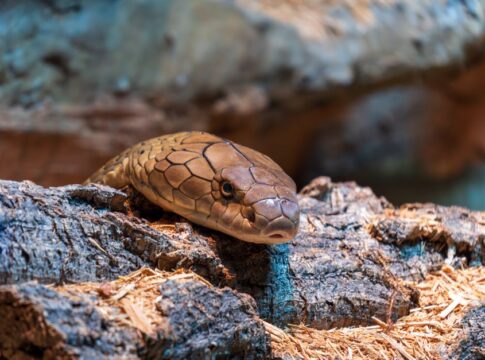
Modern herpetologists recognize several real snakes that likely inspired basilisk legends. The Egyptian cobra, native to North Africa where Pliny claimed basilisks lived, displays a distinctive hood when threatened and delivers potentially fatal venom. To ancient observers unfamiliar with snake biology, this hood expansion might have resembled a crown, and the snake’s ability to kill with a single bite would have seemed supernatural.
The horned viper, another North African species, sports horn-like scales above its eyes that could be interpreted as a crown. These vipers employ a sidewinding locomotion across desert sand that appears alien and unsettling. Their heat-sensing abilities allow them to strike accurately in darkness, which might have contributed to stories about basilisks sensing prey through supernatural means.
Snake venom itself contains complex proteins that can cause hemorrhaging, paralysis, or tissue death depending on the species. Victims of cobra bites sometimes experience neurological symptoms before death, including vision problems and paralysis. Could this have inspired tales of the basilisk’s petrifying gaze? The connection seems plausible when you consider how pre-scientific cultures explained mysterious deaths.
Frequently Asked Questions
What was the basilisk’s greatest weakness according to legend?
Medieval bestiaries consistently identified the weasel as the basilisk’s natural enemy, claiming the weasel’s scent was fatal to the serpent king. Mirrors were also said to turn the basilisk’s deadly gaze back upon itself, killing it instantly. These weaknesses reflected medieval beliefs about natural hierarchies and divine balance in creation.
Did anyone in history actually claim to see a basilisk?
No credible eyewitness accounts exist of basilisk encounters, though medieval texts occasionally included secondhand stories attributed to travelers or ancient authorities. These accounts were typically copied from earlier sources rather than based on direct observation. The creature remained firmly in the realm of natural philosophy rather than documented zoology.
How did the basilisk legend influence literature and culture?
The basilisk appeared throughout medieval and Renaissance literature, from Chaucer’s Canterbury Tales to Shakespeare’s works. The creature symbolized deadly sin, corrupted nature, and supernatural evil. Modern fantasy literature, including the Harry Potter series, has revived the basilisk as a powerful monster, though these contemporary versions often deviate significantly from classical descriptions.
Are basilisk lizards dangerous to humans?
No, basilisk lizards are completely harmless to people. They’re shy, fast-moving creatures that flee when approached. Their diet consists of insects, small fish, and vegetation. The most “dangerous” thing about them is their startling ability to dash across water when escaping, which can surprise unsuspecting observers but poses no actual threat.
The basilisk’s journey from Pliny’s modest crowned serpent to medieval Europe’s ultimate monster reveals how myths evolve when divorced from their original context. Each generation added layers of symbolism and supernatural power, transforming a misunderstood snake into a creature of pure imagination. Yet the truth behind the legend—venomous cobras, remarkable water-running lizards, and humanity’s eternal fascination with nature’s mysteries—proves just as captivating as any medieval bestiary tale.