











1 / 10 Questions
0 Points

What classical composer became deaf later in life?

Beethoven

Handel

Mozart

Bach

Points won
0
Correct score
0%

More Questions

The Hidden Reason Owls Fly Silently Through the Night

Owl flight is silent due to specialized feather adaptations that muffle sound. Discover the three unique features that make owls nature's stealthiest

What sport awards the Vince Lombardi Trophy?

What sport awards the Vince Lombardi Trophy? Question 1: What sport awards the Vince Lombardi Trophy? A. Ice hockey B. Baseball C. Professional football D. College basketball Explanation: The Vince...

What classical composer became deaf later in life?

What classical composer became deaf later in life? Question 1: What classical composer became deaf later in life? A. Beethoven B. Handel C. Mozart D. Bach Explanation: Ludwig van Beethoven...

More Articles

Did You Know? 10 Facts About Loki

Did You Know? 10 Facts About Loki

⏱️ 7 min read

Did You Know? 10 Fascinating Facts About Loki

Loki stands as one of the most complex and intriguing figures in Norse mythology. Often misunderstood as simply a villain, this enigmatic deity embodies contradictions and complexities that have captivated storytellers for over a millennium. From his ambiguous origins to his pivotal role in Ragnarök, Loki's tales weave through Norse mythology like a thread of chaos and cunning. Here are ten remarkable facts about the trickster god that reveal the depth and nuance of his mythological significance.

1. Loki Was Not Technically a God

Despite being commonly referred to as a god, Loki was actually a Jötunn, or giant, by birth. His father was Fárbauti, a giant, and his mother was Laufey or Nál. This giant heritage placed Loki outside the divine lineage of the Aesir gods, making his close association with them particularly unusual. He became a blood brother to Odin, the All-Father, through a sacred ritual, which granted him a place among the gods of Asgard. This outsider status proved significant throughout Norse mythology, as Loki never fully belonged to either the giants or the gods, existing perpetually between two worlds.

2. The Master Shapeshifter Had No Limits

Loki possessed extraordinary shapeshifting abilities that surpassed those of other Norse deities. He could transform not only into different human forms and animals but also change his gender at will. In various myths, Loki appeared as a salmon, a mare, a fly, an old woman, and even a seal. His most notable transformation occurred when he became a mare to distract the stallion Svaðilfari, ultimately giving birth to Sleipnir, Odin's eight-legged horse. This unparalleled shapeshifting ability made Loki an invaluable asset to the gods when solving problems, though it also enabled his most devious schemes.

3. Loki Had Three Monstrous Children

With the giantess Angrboda, Loki fathered three children who would play crucial roles in Norse eschatology: Fenrir the wolf, Jörmungandr the world serpent, and Hel, the ruler of the underworld realm that bears her name. The gods, fearing prophecies about these offspring, took drastic measures against them. Fenrir was bound with magical chains, Jörmungandr was cast into the ocean where he grew to encircle the world, and Hel was banished to the underworld. Despite these precautions, all three children were prophesied to participate in Ragnarök, the end of the world, fighting against the gods who had rejected them.

4. He Was Both Problem and Solution

A recurring pattern in Norse mythology shows Loki creating problems for the gods, only to devise clever solutions to fix them. When he cut off Sif's golden hair as a prank, he resolved the crisis by commissioning the dwarves to create magical treasures, including new hair for Sif and several powerful artifacts for other gods. Similarly, when his scheme involving the master builder threatened Asgard's security, Loki transformed into a mare to sabotage the construction. This duality made Loki simultaneously indispensable and dangerous, a source of both innovation and chaos in the Norse cosmos.

5. The Death of Baldr Was His Ultimate Crime

Loki's most unforgivable act was orchestrating the death of Baldr, the beloved god of light and purity. When Baldr's mother, Frigg, secured oaths from all things not to harm her son, she overlooked the mistletoe, deeming it too young and harmless. Loki discovered this oversight and fashioned a dart from mistletoe, which he gave to the blind god Höðr, guiding his hand to throw it at Baldr during what the gods thought was harmless sport. The dart killed Baldr instantly, plunging the gods into grief and setting in motion the events leading to Loki's punishment and eventually Ragnarök.

6. His Punishment Was Extraordinarily Cruel

Following Baldr's death, the gods captured Loki and devised a horrific punishment. They transformed one of his sons, Váli, into a wolf who then killed his brother Narfi. The gods used Narfi's entrails to bind Loki to three rocks deep within a cave. The giantess Skaði placed a venomous serpent above him, arranged so that its poison would drip onto his face. Loki's faithful wife, Sigyn, remained by his side, catching the venom in a bowl, but when she turned to empty it, the poison fell upon Loki, causing him to writhe in agony so violently that the earth itself shook, creating earthquakes.

7. Loki's Name Meaning Remains Debated

The etymology of Loki's name continues to puzzle scholars. Some researchers suggest it derives from the Old Norse word "loka," meaning "to close" or "to end," which would be fitting given his role in bringing about Ragnarök. Others propose connections to words meaning "flame" or "lightning," associating him with fire and destruction. Another theory links his name to "lúka," meaning "loop" or "knot," reflecting his tendency to create and untangle complicated situations. This linguistic ambiguity mirrors the god's own elusive and multifaceted nature, resisting simple categorization or understanding.

8. He Led the Forces of Chaos at Ragnarök

In the prophesied end of the world, Loki would break free from his bonds and assume leadership of the forces opposing the gods. He would captain the ship Naglfar, constructed from the fingernails and toenails of the dead, carrying giants and the dishonored dead to the final battlefield. There, Loki would face Heimdallr, the watchman of the gods, in single combat. According to prophecy, these two ancient adversaries would slay each other, their mutual destruction symbolizing the complete dissolution of the old cosmic order and the cyclical nature of Norse cosmology.

9. Loki Had a Complex Family Beyond His Monstrous Children

Besides his infamous offspring with Angrboda, Loki had a legitimate family with his wife Sigyn, with whom he had two sons: Narfi and Váli. Sigyn represented unwavering loyalty and devotion, standing by Loki even through his imprisonment and torture. Additionally, as mentioned earlier, Loki himself gave birth to Sleipnir after his transformation into a mare, making him the mother of Odin's steed. This complicated family tree, involving multiple partners and gender transformations, reflected the fluid and transgressive nature of Loki's character within Norse mythology.

10. Loki's Character Evolved Over Time

Early Norse sources present Loki as more of a mischievous trickster than an outright villain, someone whose cunning helped the gods as often as it hindered them. However, later sources, particularly those written after Christianization, increasingly portrayed him as an evil figure, possibly influenced by Christian concepts of the devil. The Prose Edda, compiled by Snorri Sturluson in the 13th century, presents a more negative view of Loki than earlier skaldic poetry suggests. This evolution reflects how mythological figures transform through retelling and cultural change, making it challenging to identify a single "authentic" version of Loki's character.

Conclusion

These ten facts reveal Loki as far more than a simple antagonist in Norse mythology. He emerges as a deeply complex figure whose very existence challenged the boundaries between categories: neither fully god nor giant, neither purely helpful nor completely destructive, neither exclusively male nor female. His cunning intelligence, shapeshifting abilities, and willingness to transgress social boundaries made him simultaneously valuable and dangerous to the cosmic order. From his mysterious origins and his monstrous progeny to his terrible punishment and his destined role in the world's end, Loki embodies the chaos and unpredictability that lurked at the edges of the Norse cosmos. Understanding these facets of his character provides crucial insight into how the Norse peoples understood the forces of disruption, change, and transformation in their world, making Loki one of mythology's most enduringly fascinating figures.
The Truth About Elephants Mourning Their Dead

The Truth About Elephants Mourning Their Dead

The Truth About Elephants Mourning Their Dead

By Trivia Daily, Animals Desk — Published October 6, 2026

Table of Contents

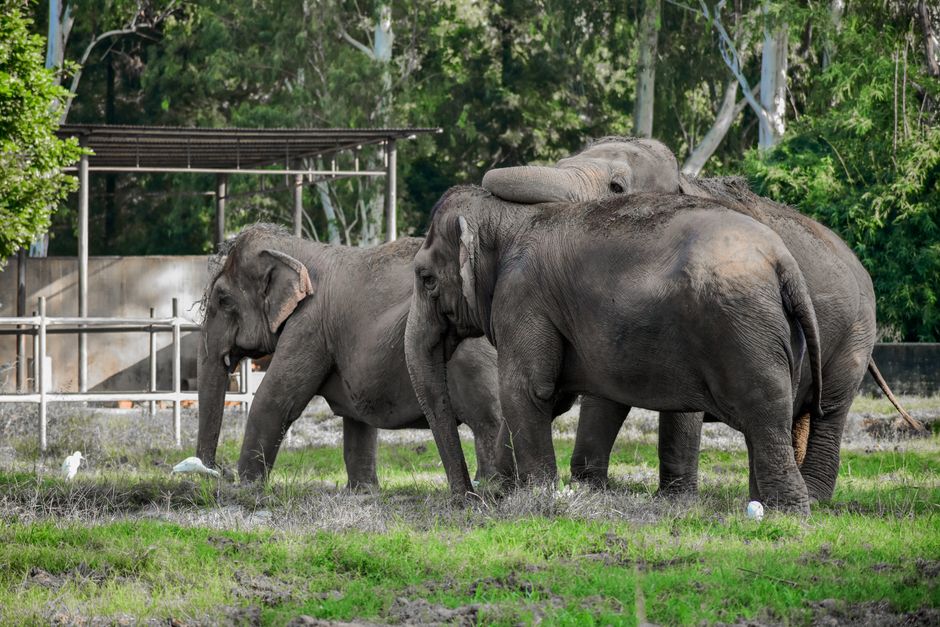
When an elephant dies, something remarkable happens. The herd doesn't simply move on. Instead, these giants of the animal kingdom gather around the body, touching it gently with their trunks, standing vigil for hours or even days. The truth about elephants mourning their dead goes beyond folklore—it's one of the most profound examples of animal behavior documented in wildlife research. Elephants display what scientists call "death-related behavior," a rare trait in the animal world that reveals just how emotionally complex these creatures really are.

Their response to death isn't limited to their own species. Elephants have been observed returning to the bones of deceased herd members years later, carefully examining skulls and tusks with their sensitive trunks. This behavior suggests a level of memory and emotional processing that challenges our understanding of animal intelligence and forces us to reconsider what separates human grief from that experienced by other species in nature.

Key Takeaways

  • Elephants demonstrate verifiable mourning behaviors including touching deceased herd members, standing vigil, and showing signs of distress when encountering elephant remains.
  • These animals possess the largest brain of any land creature, with particularly developed areas associated with memory and emotional processing in mammals.
  • Elephants can recognize the bones of their own species and show special interest in elephant skulls and tusks, even years after death.
  • Mother elephants have been documented trying to lift or carry dead calves, sometimes for days, refusing to leave the body behind.
  • This mourning behavior extends beyond immediate family—entire herds participate in death rituals, demonstrating complex social bonds.
  • Elephants are among only a handful of species that show clear evidence of understanding death, joining humans, great apes, and certain cetaceans.

The Truth About Elephants Mourning: What Science Has Observed

Field researchers studying elephant populations in their natural habitat have documented consistent patterns when these animals encounter death. The behavior isn't random or instinctive in the way a bird might abandon a nest. Elephants actively engage with deceased individuals through deliberate, repeated actions.

When a herd member dies, elephants gather around the body. They touch it repeatedly with their trunks, particularly focusing on the head and tusks. The touching is gentle, almost investigative, as if trying to understand what has happened. Some elephants will attempt to lift the body or cover it with branches and dirt. The herd may remain with the deceased for several days, and younger elephants often show visible signs of agitation.

What makes this behavior even more striking is the elephants' reaction to bones. Unlike most wildlife species that ignore skeletal remains, elephants stop to examine elephant bones they encounter during their travels. They pick up tusks and skulls, turning them over with their trunks and feet. Research has shown they can distinguish elephant bones from those of other large animals like buffalo or rhinos, suggesting they recognize their own kind even after death.

The Biology Behind Elephant Emotion

Understanding elephant mourning requires looking at their remarkable brains. An adult elephant's brain weighs around 11 pounds, making it the heaviest brain of any land animal. Size alone doesn't tell the whole story—what matters is structure.

The elephant brain has a highly developed hippocampus and cerebral cortex, regions associated with memory formation and emotional processing in all mammals. The temporal lobes, which handle auditory processing and memory, are particularly large. This neurological architecture gives elephants exceptional memory capabilities and likely supports their complex emotional lives.

Elephants also possess spindle neurons, specialized brain cells once thought to exist only in humans and great apes. These neurons are associated with social cognition, empathy, and the ability to recognize oneself as distinct from others—all prerequisites for understanding death as a concept rather than simply reacting to a motionless herd member.

Comparing Death Awareness Across Species

Species Death-Related Behavior Duration of Response
Elephants Vigils, touching remains, covering bodies, returning to bones Days to years
Chimpanzees Cleaning bodies, protecting deceased infants, quiet observation Hours to days
Dolphins Supporting dead calves at surface, staying near bodies Hours to days
Crows Gathering around dead crows, alarm calls, avoiding location Minutes to hours
Dogs Searching for deceased companions, decreased activity Days to weeks

Maternal Grief and Calf Loss

Perhaps the most heart-wrenching examples of elephant mourning involve mothers and their calves. Female elephants invest tremendous energy in raising their young—calves nurse for several years and remain dependent on their mothers for guidance well into adolescence.

When a calf dies, the mother's response can be intense. Documented cases show mothers attempting to lift dead calves with their trunks and tusks, trying to get them to stand. Some mothers carry the body for considerable distances, refusing to abandon it even as the herd moves on. The mother may return repeatedly to the location where her calf died, standing silently for extended periods.

This isn't anthropomorphism—it's observed behavior that researchers have recorded across different elephant populations in Africa and Asia. The response varies by individual, just as human grief varies, but the pattern is consistent enough to indicate genuine emotional distress rather than confusion or instinct.

Social Bonds and Herd Dynamics

Elephant society is matriarchal, built around family units led by the oldest females. These herds consist of related females and their offspring, with bonds that last decades. Males eventually leave to form bachelor groups or live solitarily, but females remain together for life.

When a matriarch dies, the loss affects the entire herd's survival. The matriarch holds decades of environmental knowledge—where to find water during droughts, which routes are safest, how to respond to threats. Her death represents not just an emotional loss but a practical one.

The herd's mourning behavior may serve social functions beyond grief. Gathering around the deceased reinforces social bonds among survivors. Young elephants learn from observing these rituals, potentially developing their own understanding of mortality. The behavior might also serve as a form of closure, allowing the herd to process the loss before moving forward.

Frequently Asked Questions

Do elephants actually cry tears when sad?

Elephants do produce tears to lubricate their eyes, but there's no scientific evidence that they cry emotional tears the way humans do. Their mourning behavior manifests through actions—touching, vocalizations, and prolonged attention to the deceased—rather than tear production.

How long do elephants remember deceased herd members?

Elephants can remember deceased individuals for many years, possibly decades. They've been observed showing recognition when encountering the bones of elephants that died years earlier, paying particular attention to the remains of former herd members.

Do elephants mourn animals from other species?

While elephants primarily show mourning behavior toward their own species, there are documented cases of elephants appearing distressed by the deaths of humans they knew well, particularly handlers or researchers who worked closely with them over extended periods.

Are Asian and African elephants similar in mourning behavior?

Both African and Asian elephants display death-related behaviors, though most long-term field studies have focused on African populations. The fundamental patterns—touching bodies, standing vigil, and showing interest in bones—appear consistent across elephant species.

The elephant's relationship with death reveals something profound about the inner lives of animals. These creatures don't just survive in their habitat—they experience it, remember it, and grieve losses within it. Every time researchers document these behaviors in wildlife populations, the boundary between human and animal emotion becomes a little less distinct, reminding us that we share this planet with other species capable of genuine feeling.