
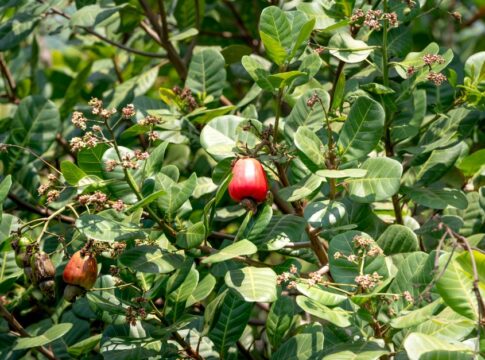
Did You Know Cashews Grow Outside the Fruit They Produce
By Trivia Daily, Staff Writer — Published November 13, 2026
Table of Contents
- Key Takeaways
- How Cashews Grow Outside the Fruit: A Botanical Curiosity
- The Dangerous Journey from Tree to Table
- Comparing Cashews to Other Botanical Oddities
- Global Cashew Production and Cultural Significance
- Nutritional Profile and Health Considerations
- Frequently Asked Questions
Most people enjoy cashews as a snack without realizing something remarkable: cashews grow outside the fruit they produce, hanging beneath a fleshy, pear-shaped structure called a cashew apple. This surprising botanical quirk makes the cashew one of nature’s most interesting and unusual foods. While we typically think of nuts growing inside shells protected by fruit flesh—like peaches or plums—the cashew defies this pattern entirely, displaying its kidney-shaped seed externally in a way that fascinates botanists and trivia enthusiasts alike.
The cashew tree is native to northeastern Brazil but now grows throughout tropical regions worldwide. Understanding how cashews grow outside their fruit reveals amazing facts about plant biology and challenges our assumptions about how nature packages its seeds.
Key Takeaways
- Cashews grow as external seeds hanging below the cashew apple, a false fruit technically called an accessory fruit.
- The cashew apple is edible and widely consumed in tropical countries, though it rarely appears in international markets due to its short shelf life.
- Raw cashews contain urushiol, the same toxic oil found in poison ivy, making proper processing essential before consumption.
- Cashew shells must be carefully roasted and removed by hand in most operations, contributing to the nut’s relatively high cost.
- The cashew tree belongs to the same family as mangoes, pistachios, and poison ivy—the Anacardiaceae family.
- Brazil was the world’s only source of cashews until Portuguese colonizers introduced the tree to India and Africa in the 16th century.
How Cashews Grow Outside the Fruit: A Botanical Curiosity
The cashew’s growth pattern represents a fascinating reversal of typical fruit-and-seed relationships. The cashew apple develops from the flower’s receptacle—the thickened part of the stem—rather than from the ovary itself. This makes it a “false fruit” or accessory fruit, similar to strawberries where the actual fruits are the tiny seeds on the outside. The true fruit of the cashew tree is the kidney-shaped drupe that hangs beneath this swollen stem.
This drupe contains the cashew seed we eat. The hard shell surrounding the edible kernel contains caustic phenolic resins and urushiol oil between its layers. Nature designed this toxic barrier as a defense mechanism against animals and insects, though humans have developed processing methods to safely extract the nutritious nut inside.
The cashew apple itself ranges from yellow to red when ripe and has a sweet, astringent flavor. In Brazil, India, and parts of Africa, people juice it, ferment it into alcoholic beverages, or eat it fresh. The fruit’s high tannin content and extremely short shelf life—it begins fermenting within 24 hours of harvest—explain why it remains virtually unknown in temperate countries despite its pleasant taste.
The Dangerous Journey from Tree to Table
Harvesting and processing cashews requires careful handling due to the toxic oils in the shell. Workers must roast the shells to neutralize the urushiol before cracking them open. Even with protective measures, cashew processing can cause skin irritation and burns among workers, particularly in countries with less stringent safety regulations.
The roasting process serves dual purposes: it neutralizes the toxic resin and makes the shell brittle enough to crack without damaging the delicate kernel inside. Some operations use steam or oil baths instead of dry roasting. After roasting, workers crack each shell individually—a labor-intensive process that explains why cashews cost more than many other nuts.
The caustic shell liquid isn’t wasted in modern operations. Known as cashew nut shell liquid (CNSL), it contains anacardic acid and cardanol, compounds used in industrial applications including brake linings, paints, and resins. This byproduct adds economic value to cashew processing and reduces waste.
Comparing Cashews to Other Botanical Oddities
| Plant | Unusual Characteristic | Edible Part |
|---|---|---|
| Cashew | Seed grows outside the accessory fruit | Seed (nut) and false fruit (cashew apple) |
| Strawberry | Seeds grow on the outside of the fruit | Fleshy receptacle; tiny seeds are actual fruits |
| Pineapple | Multiple fruits fuse into one structure | Entire fused fruit cluster |
| Fig | Flowers bloom inside the fruit | Hollow receptacle containing tiny flowers/fruits |
Global Cashew Production and Cultural Significance
Vietnam and India now dominate global cashew production, though the trees originated in Brazil. Vietnam processes more cashews than any other country, importing raw nuts from Africa and Asia to meet demand from its extensive processing facilities. India cultivates cashews extensively along its western coast and has developed the crop into a major agricultural industry supporting millions of workers.
African nations including Ivory Coast, Nigeria, and Tanzania have emerged as significant growers in recent decades. The cashew tree thrives in tropical climates with distinct wet and dry seasons, making much of sub-Saharan Africa ideal for cultivation. These trees also help prevent soil erosion and require relatively little water once established, making them valuable for sustainable agriculture in developing regions.
In Brazil, cashew culture runs deep. The cashew apple appears in traditional beverages, desserts, and preserves. Cajuína, a clarified cashew apple juice, holds cultural significance in northeastern Brazilian states. The Portuguese introduced cashews to their colonies specifically because both the nut and apple had economic potential, though international trade ultimately focused almost exclusively on the nut.
Nutritional Profile and Health Considerations
Cashews offer impressive nutritional benefits despite their reputation as a high-calorie snack. They contain heart-healthy monounsaturated fats, copper, magnesium, and manganese. The nuts also provide plant-based protein and dietary fiber. Unlike some tree nuts, cashews contain relatively low amounts of omega-3 fatty acids but compensate with other beneficial compounds.
Research has explored cashew consumption’s potential cardiovascular benefits. The nuts’ fat profile resembles that of olive oil, with oleic acid as the predominant fatty acid. Studies suggest moderate cashew consumption may support healthy cholesterol levels, though individual results vary and cashews remain calorie-dense foods requiring portion control.
Cashew allergies affect fewer people than peanut or tree nut allergies overall, though reactions can be severe when they occur. Interestingly, people allergic to cashews often react to pistachios and mangoes as well, since these plants share the Anacardiaceae family and similar allergenic proteins.
Frequently Asked Questions
Why are cashews never sold in their shells?
The shells contain toxic urushiol oil and caustic resins that cause severe skin irritation and burns. Removing these dangerous compounds requires specialized roasting and processing that must happen before the nuts reach consumers, making in-shell sales impractical and unsafe.
Can you eat the cashew apple fruit?
Yes, cashew apples are edible and widely consumed in tropical regions where cashews grow. They taste sweet with astringent notes but spoil within 24 hours of harvest, preventing export to distant markets. People enjoy them fresh, juiced, or fermented into beverages.
Are cashews actually nuts or something else?
Botanically, cashews are seeds of a drupe fruit, not true nuts. True nuts like acorns and hazelnuts have hard shells that don’t split open naturally. The cashew’s classification as a “nut” in culinary contexts reflects common usage rather than botanical accuracy.
Why do cashews cost more than peanuts or almonds?
Cashew processing is extremely labor-intensive because each toxic shell must be carefully roasted and cracked by hand without damaging the delicate kernel inside. The specialized processing, lower yields per tree, and careful handling requirements all contribute to higher prices.
The next time you reach for a handful of cashews, consider the remarkable journey these seeds take from their exposed perch beneath a tropical fruit to your snack bowl. Few foods display their botanical oddities so openly or require such careful human intervention to become edible—a reminder that nature’s designs often surprise us in the most delicious ways.