
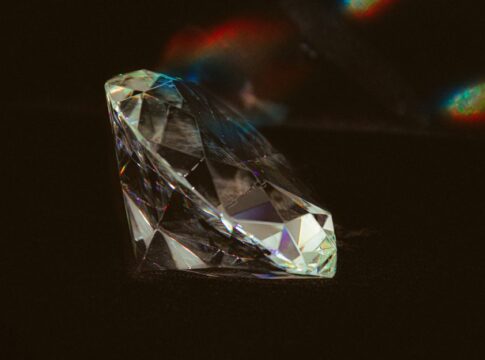
The Truth About Diamonds Not Being the Hardest Material
By Trivia Daily, Staff Writer — Published November 13, 2026
Table of Contents
- Key Takeaways
- Understanding What “Hardness” Really Means
- Materials That Surpass Diamond in Hardness
- Why the Diamond Myth Persists
- Comparing the Hardest Materials
- The Broader Picture of Material Properties
- Frequently Asked Questions
For generations, the phrase “hard as diamonds” has symbolized ultimate strength and durability. Diamonds have long held the crown as the hardest natural material on Earth, but the truth about diamonds and hardness is more surprising than most people realize. Scientists have discovered and synthesized materials that surpass diamonds in hardness, shattering one of the most persistent myths in popular science. This fascinating fact reveals how our understanding of materials science continues to evolve, uncovering amazing truths that challenge what we thought we knew.
The story of hardness is more complex than simply ranking materials from soft to hard. While diamonds remain remarkably hard and valuable for industrial applications, they no longer stand alone at the top of the hardness scale.
Key Takeaways
- Diamonds are the hardest naturally occurring material, but several synthetic materials now exceed their hardness.
- Aggregated diamond nanorods and wurtzite boron nitride both surpass diamond in hardness tests.
- Hardness is measured on the Mohs scale for minerals, but scientists use more precise methods for cutting-edge materials.
- The confusion stems from conflating “hardest natural material” with “hardest material ever,” a distinction that matters in materials science.
- Diamond’s industrial value persists despite harder alternatives, thanks to its unique combination of properties.
- Lonsdaleite, a rare form of carbon found in meteorites, may be up to 58% harder than regular diamond.
Understanding What “Hardness” Really Means
Hardness in materials science refers to a substance’s resistance to scratching, cutting, or deformation. The Mohs scale, developed in 1812 by German mineralogist Friedrich Mohs, ranks minerals from 1 (talc) to 10 (diamond). This simple scratch test served geologists well for centuries. Diamond sits at the top because no natural mineral can scratch it.
But the Mohs scale has limitations. It’s ordinal, not linear—diamond isn’t just slightly harder than corundum (9 on the Mohs scale). It’s dramatically harder. Modern scientists use more sophisticated measurements like the Vickers hardness test, which applies a precise load through a diamond indenter and measures the resulting indentation. These methods reveal subtle differences the Mohs scale cannot detect.
The distinction between natural and synthetic materials becomes crucial here. When people say diamonds are the hardest material, they often mean the hardest naturally occurring material. That statement remains accurate. But human ingenuity has pushed beyond nature’s boundaries.
Materials That Surpass Diamond in Hardness
Aggregated diamond nanorods represent one of the most remarkable achievements in materials science. Created under extreme pressure and temperature, these structures consist of diamond nanocrystals fused together in a specific arrangement. Tests show they resist indentation better than single-crystal diamond. The key lies in their structure—the boundaries between nanocrystals actually strengthen the material rather than weaken it.
Wurtzite boron nitride offers another fascinating example. This material exists only under extreme conditions and cannot be manufactured in large quantities yet. Computer simulations and limited physical tests suggest it may exceed diamond’s hardness by up to 18%. Its crystal structure, similar to diamond but with alternating boron and nitrogen atoms, creates exceptional resistance to deformation.
Lonsdaleite, sometimes called hexagonal diamond, forms when meteorites containing graphite strike Earth. The impact’s extreme pressure and heat transform the carbon into a diamond-like structure with hexagonal rather than cubic symmetry. Scientists believe this subtle difference could make lonsdaleite significantly harder than regular diamond, though obtaining enough material for thorough testing remains challenging.
Why the Diamond Myth Persists
Several factors keep the “diamonds are hardest” belief alive in popular culture. First, diamonds remain the hardest natural material readily available. You won’t find wurtzite boron nitride or aggregated diamond nanorods in nature. Second, diamond’s cultural significance as a symbol of permanence and value reinforces the hardness association. Marketing campaigns spanning decades have cemented this connection in public consciousness.
The industrial world still relies heavily on diamonds for cutting, drilling, and grinding applications. Industrial-grade diamonds, which lack the clarity and beauty of gemstones, play essential roles in manufacturing. This practical dominance keeps diamonds in the conversation about hardness, even as newer materials emerge.
Educational materials often lag behind cutting-edge research. Many textbooks and general science resources continue teaching that diamonds are the hardest material, period. Updating this information across millions of educational resources takes time, leaving the simplified version in circulation.
Comparing the Hardest Materials
| Material | Type | Vickers Hardness (GPa) | Notable Properties |
|---|---|---|---|
| Diamond (natural) | Natural | 70-100 | Hardest natural material; widely available |
| Aggregated diamond nanorods | Synthetic | ~150 | Resists indentation better than diamond |
| Wurtzite boron nitride | Synthetic | ~114 | Exists only under extreme conditions |
| Lonsdaleite | Natural (rare) | ~152 (theoretical) | Found in meteorites; difficult to test |
| Cubic boron nitride | Synthetic | ~50 | Second hardest natural material; heat resistant |
The Broader Picture of Material Properties
Hardness represents just one property among many that determine a material’s usefulness. Diamonds excel in multiple areas: exceptional thermal conductivity, optical clarity, and chemical inertness. These combined properties make diamonds valuable beyond their hardness alone.
Some ultra-hard synthetic materials prove too brittle for practical applications. Others cannot be produced in meaningful quantities. A material might score higher on hardness tests but shatter under impact stress that diamond would withstand. Materials scientists must balance multiple properties when selecting substances for specific applications.
The search for harder materials continues, driven by industrial needs for better cutting tools, more durable coatings, and improved protective equipment. Each discovery reveals new possibilities and challenges our assumptions about material limits.
Frequently Asked Questions
What is currently the hardest known material?
Aggregated diamond nanorods currently hold the record for hardest tested material, with lonsdaleite potentially harder based on theoretical calculations. Both surpass natural diamond, though lonsdaleite remains difficult to study due to its rarity.
Why are diamonds still used if harder materials exist?
Diamonds remain widely used because they combine hardness with other valuable properties like thermal conductivity and chemical stability. Many harder materials exist only in laboratories or cannot be produced in practical quantities for industrial use.
Can anything scratch a diamond?
Yes, another diamond can scratch a diamond, as can aggregated diamond nanorods and certain other ultra-hard materials. Diamonds can also be cleaved along specific crystal planes, which is how gem cutters shape them.
How is hardness different from strength?
Hardness measures resistance to scratching or indentation, while strength measures resistance to breaking or deforming under stress. A material can be very hard but brittle, shattering easily under impact despite resisting scratches.
The truth about diamonds and hardness demonstrates how scientific understanding constantly refines our knowledge. What seemed like an absolute fact—diamonds being the hardest material—turns out to be a more nuanced story about natural versus synthetic materials, different types of hardness, and the ongoing quest to push material properties to new extremes. The next time you hear “hard as diamonds,” you’ll know there’s an even harder truth waiting to be discovered.