
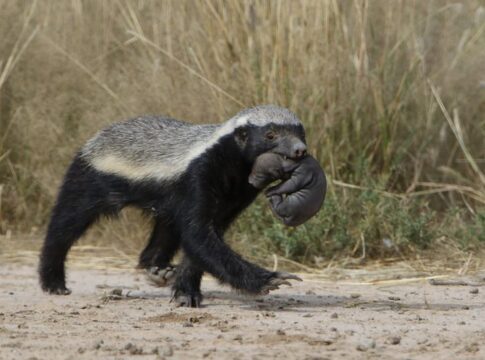
The Truth About Honey Badgers Being Fearless Predators
By Trivia Daily, Animals Desk — Published October 5, 2026
Table of Contents
- Key Takeaways
- The Truth About Honey Badgers and Their Legendary Toughness
- Hunting Behavior and Diet Diversity
- Defensive Strategies: Aggression vs. Fearlessness
- Comparing Honey Badgers to Other Tough Animals
- Intelligence and Problem-Solving Abilities
- Frequently Asked Questions
The honey badger has earned a reputation as nature’s most fearless animal, immortalized in viral videos and internet memes. But how much of this reputation reflects reality? The truth about honey badgers reveals a complex picture of an incredibly tough, resourceful creature whose behavior is driven more by practicality than reckless bravery. These stocky members of the weasel family have evolved remarkable adaptations that allow them to tackle prey and threats that would send most animals running.
Native to Africa, Southwest Asia, and the Indian subcontinent, honey badgers occupy diverse habitats ranging from rainforests to deserts. Understanding what makes this species truly exceptional requires looking beyond the hype to examine the actual wildlife behaviors that have made them legendary.
Key Takeaways
- Honey badgers possess exceptionally thick, loose skin that protects them from bee stings, porcupine quills, and even predator bites.
- These animals have a remarkably varied diet, consuming everything from venomous snakes to honey, showcasing impressive adaptability.
- Their fearsome reputation stems from defensive aggression rather than true fearlessness—they prefer to avoid conflict when possible.
- Honey badgers can survive venomous snake bites that would kill most creatures, sometimes recovering after temporary paralysis.
- They’re highly intelligent animals capable of using tools and solving complex problems to access food.
- Despite their tough image, honey badgers face real threats from larger predators like lions and leopards.
The Truth About Honey Badgers and Their Legendary Toughness
The honey badger’s most famous adaptation is its skin—a remarkable piece of natural engineering. Their hide measures about six millimeters thick in places and fits loosely over their muscular frame. This allows them to twist and turn even when gripped by a predator’s jaws, often enabling them to bite back at their attacker. The skin is tough enough to resist porcupine quills, dog bites, and even machete strikes, according to field observations documented by wildlife researchers.
This physical armor isn’t just for defense. Honey badgers regularly raid beehives, and their thick skin, combined with reduced sensitivity to pain, allows them to endure hundreds of stings while extracting honeycomb and bee larvae. They’ve also developed a partial resistance to various snake venoms, though contrary to popular belief, they’re not completely immune. When bitten by highly venomous species like cobras or puff adders, honey badgers may become temporarily paralyzed but can recover within hours—a survival feat that would be fatal for most mammals of similar size.
The species gets its name from its association with honey, but calling them honey specialists misses the bigger picture. These creatures are omnivorous opportunists with one of the most varied diets in the animal kingdom.
Hunting Behavior and Diet Diversity
Honey badgers hunt both day and night, though they’re primarily nocturnal in areas where they face persecution from humans. Their prey list reads like a who’s who of dangerous animals: venomous snakes, scorpions, crocodile eggs, and young antelope all feature on their menu. They’ll dig extensive burrows to reach rodents, tear apart termite mounds, and even scavenge from larger predators’ kills.
What sets honey badgers apart is their persistence and problem-solving ability. They’ve been observed working for hours to access food, whether that means digging through hard-packed earth or dismantling complex structures. Some populations have learned to roll large logs to expose insects underneath, and captive individuals have demonstrated the ability to use tools like rakes and even escape from enclosures by moving objects to create makeshift ladders.
Their hunting style combines tenacity with surprising speed. Honey badgers can run at speeds of up to 30 kilometers per hour in short bursts. They possess powerful jaws with a bite force impressive for their size, along with long, sharp claws designed for digging that double as formidable weapons.
Defensive Strategies: Aggression vs. Fearlessness
The “fearless” label deserves scrutiny. Honey badgers don’t seek out danger—they respond to threats with explosive aggression that often convinces larger animals to back down. This defensive behavior includes hissing, growling, standing their ground, and releasing a foul-smelling secretion from anal glands similar to skunks. They’ll also perform a distinctive rattling growl and fluff up their fur to appear larger.
When cornered or defending food, honey badgers will fight animals many times their size. There are documented cases of them standing up to lions, hyenas, and leopards. However, this doesn’t mean they always win these encounters. Large predators do kill honey badgers, particularly young or weakened individuals. The difference is that honey badgers make the cost of attack so high that predators often decide the meal isn’t worth the effort.
In reality, honey badgers exhibit what biologists call “risk-taking behavior” rather than true fearlessness. They’ve evolved to accurately assess which threats they can handle and which confrontations they can win through sheer determination and defensive capabilities. When escape is the better option, they’ll take it.
Comparing Honey Badgers to Other Tough Animals
| Animal | Primary Defense | Notable Trait |
|---|---|---|
| Honey Badger | Thick, loose skin and aggressive behavior | Partial venom resistance |
| Wolverine | Powerful bite and solitary aggression | Takes on prey much larger than itself |
| Tasmanian Devil | Extremely strong bite for body size | Bone-crushing jaw strength |
| American Badger | Digging ability and sharp claws | Can dig faster than humans with shovels |
Intelligence and Problem-Solving Abilities
Beyond physical toughness, honey badgers demonstrate cognitive abilities that rank them among the more intelligent carnivores. Studies of captive individuals reveal they can figure out how to open latches, unscrew caps, and navigate complex obstacle courses. They’ve shown evidence of planning behavior, such as gathering materials before attempting an escape or food retrieval task.
In the wild, this intelligence manifests in their hunting strategies. Some honey badgers have learned to follow honeyguide birds—a remarkable example of interspecies cooperation. The bird leads the badger to beehives, the badger breaks open the hive with its claws, and both animals benefit from the contents. While this relationship is less common than once thought, it demonstrates the species’ capacity for learned, adaptive behavior.
Their memory is also noteworthy. Honey badgers can remember the locations of productive feeding sites and return to them seasonally. They maintain large home ranges—males may cover territories of 500 square kilometers or more—and navigate these areas with apparent ease.
Frequently Asked Questions
Are honey badgers actually immune to snake venom?
No, honey badgers are not completely immune to venom, but they do have a remarkable resistance to it. When bitten by venomous snakes, they may become temporarily incapacitated but often recover within a few hours, whereas the same dose would kill most animals their size.
Can a honey badger kill a lion?
While honey badgers can defend themselves against lions and have been known to injure them, they cannot kill a healthy adult lion. Their defensive tactics usually convince lions that attacking isn’t worth the effort, but lions do occasionally kill honey badgers.
How big do honey badgers get?
Adult honey badgers typically weigh between 7 and 16 kilograms, with males being larger than females. They measure about 60 to 70 centimeters in body length, with relatively short legs and a stocky build that belies their strength.
Why are honey badgers so aggressive?
Honey badgers evolved aggressive defensive behavior as a survival strategy in environments with numerous large predators. Their willingness to fight rather than flee, combined with their physical defenses, has proven evolutionarily successful in protecting them and their food sources.
The honey badger’s reputation as an unstoppable force of nature contains kernels of truth wrapped in layers of exaggeration. These creatures are undeniably tough, resourceful, and willing to defend themselves with startling ferocity. But they’re also intelligent enough to avoid unnecessary fights, practical enough to flee when outmatched, and vulnerable enough to face real conservation challenges from habitat loss and human conflict. Perhaps what makes them truly remarkable isn’t fearlessness at all, but rather the perfect combination of physical adaptations and behavioral flexibility that allows a relatively small carnivore to thrive alongside Africa’s apex predators.