
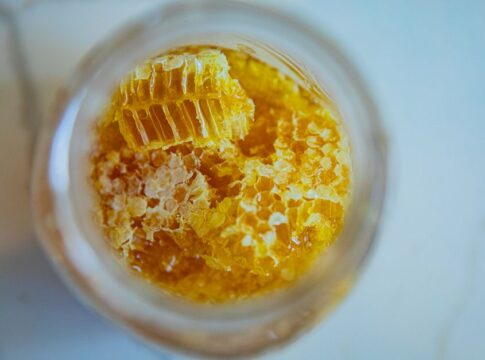
Why Honey Never Spoils: The Ancient Preservation Secret
By TriviaOwl, Staff Writer — Published August 15, 2026
Table of Contents
- Key Takeaways
- The Science Behind Honey’s Eternal Shelf Life
- The Chemical Arsenal Honeybees Provide
- Ancient Honey: Historical Evidence of Preservation
- Comparing Honey to Other Natural Preservatives
- Why Honey Sometimes Crystallizes (And Why That’s Fine)
- Frequently Asked Questions
Archaeologists excavating ancient Egyptian tombs have discovered jars of honey thousands of years old—still perfectly edible. This astonishing fact reveals one of nature’s most remarkable preservation secrets: honey never spoils. Unlike nearly every other food on Earth, properly stored honey remains safe to eat indefinitely, thanks to a fascinating combination of chemistry, biology, and physics working in perfect harmony.
The story of honey’s immortality is one of nature’s most intriguing curiosities. While milk sours in days and bread molds within weeks, honey sits untouched by time, defying the decay that claims all other foods. Understanding why honey never spoils takes us on a journey through the remarkable world of honeybees, sugar chemistry, and the invisible battle against bacteria that honey wins every single time.
Key Takeaways
- Honey’s extremely low water content—typically around 17-18%—creates an environment where bacteria and microorganisms cannot survive or reproduce.
- The acidic pH of honey, usually between 3.2 and 4.5, makes it hostile to most forms of microbial life that cause food spoilage.
- Honeybees add an enzyme called glucose oxidase that produces hydrogen peroxide, giving honey natural antibacterial properties.
- Archaeologists have found 3,000-year-old honey in Egyptian tombs that remains perfectly preserved and technically edible.
- Honey’s hygroscopic nature means it draws moisture out of bacteria cells through osmosis, effectively desiccating any microorganisms.
- Crystallized honey is not spoiled—it’s simply undergone a natural process and can be restored to liquid form with gentle heating.
The Science Behind Honey’s Eternal Shelf Life
The secret to why honey never spoils begins with water—or rather, the lack of it. Honey contains remarkably little water, typically between 17 and 18 percent. This might not sound impressive until you consider what it means for microorganisms. Bacteria, mold, and yeast all need water to survive and multiply. They’re essentially tiny water-dependent life forms.
When these microorganisms encounter honey, they face an impossible situation. Honey is supersaturated with sugar, meaning it contains more dissolved sugar than water would normally hold. This creates a hostile environment through a process called osmosis. Water molecules naturally move from areas of high concentration to low concentration. When bacteria land in honey, the water inside their cells is drawn out into the surrounding honey, which has far less available water. The bacteria essentially shrivel up and die.
Think of it this way: honey is so thirsty for water that it steals moisture from anything that touches it, including the very microorganisms that would otherwise cause spoilage. This hygroscopic property makes honey an incredibly effective preservative—not just for itself, but for other substances as well.
The Chemical Arsenal Honeybees Provide
Nature didn’t stop at dehydration. Honeybees contribute their own preservation magic through an enzyme called glucose oxidase. When bees produce honey, they secrete this enzyme into the nectar. Once the honey is diluted—say, by a small amount of moisture or when bees are processing it—the glucose oxidase breaks down glucose sugars and produces gluconic acid and hydrogen peroxide as byproducts.
You might recognize hydrogen peroxide from your medicine cabinet. It’s the same antiseptic used to clean wounds. In honey, it serves as a natural antibacterial agent, killing off any resilient microorganisms that might have survived the low-water onslaught. The concentration is mild enough to be harmless to humans but potent enough to keep bacteria at bay.
The acidity of honey provides yet another layer of defense. With a pH typically ranging from 3.2 to 4.5, honey creates an acidic environment that most bacteria find inhospitable. This acidity comes from gluconic acid and other organic acids present in honey. Most harmful bacteria prefer neutral environments, making honey’s acidic nature another reason it never spoils.
Ancient Honey: Historical Evidence of Preservation
The claim that honey never spoils isn’t merely theoretical. Archaeological evidence provides stunning confirmation. Excavations of ancient Egyptian tombs have yielded honey jars estimated to be over 3,000 years old. Remarkably, the honey inside these ancient vessels remained unspoiled and technically safe to eat, though archaeologists understandably haven’t conducted extensive taste tests.
The Egyptians understood honey’s preservation properties long before modern science could explain them. They used honey not only as a sweetener but also as an embalming agent and a medicine for treating wounds. Ancient texts describe honey’s use in preserving fruits and even in medicinal preparations that required long-term storage.
This historical track record extends beyond Egypt. Ancient civilizations across the Mediterranean, Middle East, and Asia all recognized honey’s unique properties. The fact that honey discovered in archaeological sites remains viable after millennia demonstrates that when we say honey never spoils, we’re talking about preservation on a truly geological timescale.
Comparing Honey to Other Natural Preservatives
| Substance | Shelf Life | Preservation Method |
|---|---|---|
| Honey | Indefinite | Low water content, acidity, hydrogen peroxide |
| Salt | Indefinite | Mineral compound, no water, no nutrients for microbes |
| Sugar (refined) | Indefinite | Extremely low moisture, no microbial growth |
| Maple Syrup | Indefinite (unopened) | High sugar content, low water activity |
| Vinegar | Indefinite | High acidity inhibits microbial growth |
Why Honey Sometimes Crystallizes (And Why That’s Fine)
Many people mistakenly believe crystallized honey has spoiled. This couldn’t be further from the truth. Crystallization is a natural process that occurs when glucose in the honey separates from water and forms crystals. Some varieties of honey crystallize quickly, while others remain liquid for years. The speed depends on the ratio of glucose to fructose and the temperature at which the honey is stored.
Crystallized honey is absolutely safe to eat and retains all its nutritional properties. Some people actually prefer it for spreading on toast. If you want to return crystallized honey to liquid form, simply place the jar in warm water—never boiling, as excessive heat can damage honey’s beneficial enzymes and alter its flavor. Gentle warming restores honey to its liquid state without compromising quality.
Frequently Asked Questions
Can honey ever go bad or become unsafe to eat?
Pure honey stored in a sealed container will never spoil. However, if honey is contaminated with water or other substances, or if the container is damaged, it can ferment or develop mold. Properly stored honey remains safe indefinitely.
Why does store-bought honey have an expiration date?
Expiration dates on honey are required by food labeling regulations, not because honey spoils. These dates typically indicate when the manufacturer guarantees optimal flavor and texture, but honey remains safe to consume long after these dates pass.
Is honey safe for everyone to eat?
While honey never spoils, it should not be given to infants under one year old due to the risk of infant botulism. The spores can be present in honey and, while harmless to older children and adults, can be dangerous for babies whose digestive systems are still developing.
Does heating honey destroy its preservation properties?
Excessive heat can reduce some of honey’s beneficial enzymes and alter its flavor, but it doesn’t make honey spoil. However, heating honey above 140°F (60°C) can diminish the glucose oxidase enzyme that produces hydrogen peroxide, reducing some of honey’s natural antibacterial properties.
The next time you drizzle honey into your tea or spread it on toast, consider that you’re enjoying one of nature’s most remarkable achievements. This golden liquid has outlasted empires, survived millennia in sealed tombs, and continues to defy the decay that claims every other food. Honey’s eternal shelf life isn’t magic—it’s the result of chemistry, biology, and the incredible engineering of honeybees working together in perfect, timeless harmony.