
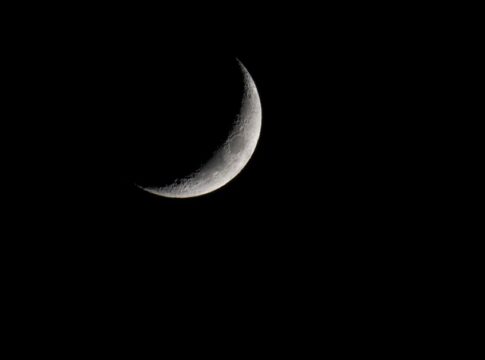
9 Strange Facts About the Moon Drifting Away From Earth
By Trivia Daily, Staff Writer — Published November 4, 2026
Table of Contents
- Key Takeaways
- Strange Moon Drifting Facts That Reveal Our Cosmic History
- Measuring Cosmic Separation: The Numbers Behind the Drift
- Why the Moon’s Recession Matters to Science
- Frequently Asked Questions
Every year, the Moon slips a little farther from our planet—about 1.5 inches, to be precise. This strange moon drifting phenomenon isn’t science fiction; it’s a slow-motion farewell that’s been happening for billions of years. The force behind this cosmic separation is something you witness twice daily: the tides. What makes this drift truly fascinating isn’t just that it’s happening, but what it reveals about Earth’s past, present, and distant future. These surprising facts explore the mechanics, consequences, and mind-bending trivia surrounding our receding celestial companion.
The Moon’s gradual retreat affects everything from the length of our days to the stability of Earth’s seasons. Scientists have measured this drift with laser reflectors left on the lunar surface by Apollo astronauts, turning what was once speculation into cold, hard data. The implications stretch across geology, biology, and astronomy in ways that might surprise you.
Key Takeaways
- The Moon drifts approximately 1.5 inches (3.8 centimeters) farther from Earth each year due to tidal forces.
- Earth’s days are getting longer—about 1.7 milliseconds per century—as the Moon steals our planet’s rotational energy.
- Billions of years ago, the Moon was so close that Earth’s day lasted only five hours and tides were dramatically higher.
- Ancient corals and fossilized tidal sediments preserve evidence of the Moon’s changing distance over geological time.
- In about 600 million years, total solar eclipses will become impossible as the Moon grows too small in our sky.
- The Moon will eventually stop drifting when Earth’s rotation synchronizes with the lunar orbit—in roughly 50 billion years.
Strange Moon Drifting Facts That Reveal Our Cosmic History
The discovery that the Moon is slowly abandoning Earth raises immediate questions: Why is this happening? How do we know? And what does it mean for life on our planet? The answers take us from the ocean floor to ancient rock formations, from Apollo landing sites to computer models projecting billions of years into the future.
1. Tidal Friction Is Literally Stealing Earth’s Spin
The Moon doesn’t drift away on its own—it’s being pushed. As the Moon’s gravity pulls on Earth’s oceans, it creates tidal bulges that travel around the planet. Because Earth rotates faster than the Moon orbits, these bulges run slightly ahead of the Moon. The gravitational tug between the Moon and these displaced bulges acts like a cosmic brake on Earth’s rotation while simultaneously accelerating the Moon in its orbit. When an orbiting object speeds up, it moves to a higher orbit. This elegant exchange of angular momentum means Earth loses rotational energy while the Moon gains orbital energy, causing it to spiral slowly outward. The process is so gradual that you’d need extraordinarily precise instruments to detect it—which is exactly what scientists have.
2. Apollo Astronauts Left Mirrors to Measure the Drift
How do scientists know the Moon is drifting with such precision? During the Apollo missions, astronauts placed special reflector arrays on the lunar surface. These retroreflectors bounce laser beams fired from Earth directly back to their source. By timing how long the light takes to make the round trip—about 2.5 seconds—researchers can calculate the Moon’s distance to within millimeters. Decades of measurements from observatories around the world have confirmed that the Moon recedes approximately 3.8 centimeters annually. This technique, called lunar laser ranging, has provided some of the most accurate measurements in astronomy and definitively proved what scientists had long suspected from theoretical calculations.
3. Ancient Corals Record the Moon’s Historical Position
Paleontologists have discovered an unexpected archive of the Moon’s history: fossilized corals. Many coral species add daily growth bands similar to tree rings, and these bands cluster into monthly and yearly patterns influenced by lunar cycles and seasons. By examining coral fossils from different geological periods, scientists can count how many days existed in a year millions of years ago. Devonian corals from roughly 400 million years ago show approximately 400 days per year, meaning each day was shorter—about 22 hours. Since the length of a year (Earth’s orbit around the Sun) hasn’t changed significantly, shorter days mean Earth was spinning faster. This faster rotation correlates with a closer Moon, providing beautiful biological confirmation of the drift calculated through physics.
4. The Moon Formed Much Closer—Possibly Just 15,000 Miles Away
When the Moon first formed—likely from debris after a Mars-sized object collided with early Earth about 4.5 billion years ago—it may have orbited at a distance of only 15,000 to 20,000 miles. Today, the Moon sits roughly 239,000 miles away. That early Moon would have appeared absolutely enormous in Earth’s sky, perhaps fifteen times larger than what we see now. The tidal forces would have been catastrophic by modern standards, creating massive ocean surges and possibly even raising tides in Earth’s still-molten rock surface. The rapid drift during this early period gradually slowed as the Moon moved farther away and Earth’s rotation decelerated.
5. Earth’s Day Was Once Only Five Hours Long
Rewind to the Moon’s formation, and Earth was spinning wildly fast. Computer models suggest that immediately after the giant impact that created the Moon, a day on Earth lasted just five hours. The Moon’s gravitational braking has been slowing our planet ever since. Currently, Earth’s day lengthens by approximately 1.7 milliseconds per century—imperceptible in a human lifetime but significant over geological timescales. In 200 million years, a day will be about 25 hours long. This gradual change has profound implications: organisms evolved under constantly changing day lengths, and ecosystems have continuously adapted to this slow but relentless shift in the planet’s rotation.
6. Total Solar Eclipses Are a Temporary Cosmic Coincidence
One of the most spectacular consequences of the Moon’s drift is the eventual end of total solar eclipses. Right now, we live in a rare cosmic moment when the Moon appears almost exactly the same size as the Sun in our sky—the Moon is about 400 times smaller than the Sun but also about 400 times closer. This coincidence allows the Moon to perfectly cover the Sun’s disk during total eclipses. As the Moon continues receding, it will appear smaller and smaller. In roughly 600 million years, the Moon will be too distant to completely block the Sun, and only annular eclipses—where a ring of sunlight remains visible—will occur. Future civilizations, if any exist, will miss one of nature’s most breathtaking spectacles.
7. The Drift Will Eventually Stop—In 50 Billion Years
The Moon won’t drift away forever. The process will halt when Earth’s rotation becomes tidally locked with the Moon’s orbit, meaning one side of Earth will permanently face the Moon—just as one side of the Moon currently faces Earth. At this point, both the Earth’s day and the Moon’s orbital period will be about 47 current days long. The Moon will hover at a fixed point in the sky for half the planet while remaining forever invisible from the other hemisphere. This state is called mutual tidal locking. However, this scenario is purely theoretical—the Sun will likely expand into a red giant and engulf both Earth and Moon in about 5 billion years, long before mutual tidal locking occurs.
8. Ancient Rock Layers Show Daily Tidal Patterns From 620 Million Years Ago
Sedimentary rocks called tidal rhythmites preserve exquisitely detailed records of ancient tides. These rocks form in tidal zones where layers of sediment are deposited by daily tidal cycles. Geologists studying 620-million-year-old rhythmites in Australia found patterns indicating that Earth’s day was approximately 21.9 hours long at that time. The rocks show neap and spring tide cycles, providing information about the lunar month’s length as well. This geological evidence independently confirms what coral fossils and physics equations predict, creating a consistent picture of the Moon’s gradual retreat across deep time.
9. The Moon’s Drift Stabilizes Earth’s Climate Over Millions of Years
While the Moon is leaving, it’s still close enough to provide a crucial service: stabilizing Earth’s axial tilt. Earth’s axis is tilted about 23.5 degrees, giving us seasons. Without the Moon’s gravitational influence, computer simulations show that Earth’s tilt could vary wildly—from nearly 0 to 85 degrees—over millions of years due to gravitational perturbations from other planets. Mars, which lacks a large stabilizing moon, experiences exactly this kind of dramatic tilt variation. These chaotic changes would create extreme climate swings, potentially making complex life difficult to sustain. As the Moon drifts farther away, its stabilizing influence will very gradually weaken, though this effect won’t become significant for hundreds of millions of years.
Measuring Cosmic Separation: The Numbers Behind the Drift
| Time Period | Approximate Moon Distance | Earth Day Length | Days Per Year |
|---|---|---|---|
| 4.5 billion years ago (formation) | ~15,000–20,000 miles | ~5 hours | ~1,400+ |
| 620 million years ago | ~224,000 miles | ~21.9 hours | ~400 |
| 400 million years ago | ~228,000 miles | ~22 hours | ~398 |
| Present day | ~239,000 miles | 24 hours | 365.25 |
| 200 million years future | ~240,000 miles | ~25 hours | ~350 |
Why the Moon’s Recession Matters to Science
The Moon’s drift provides scientists with a natural laboratory for testing theories about planetary formation, orbital mechanics, and even the evolution of life. NASA and other space agencies continue to use lunar laser ranging to refine our understanding of gravitational physics, test Einstein’s theory of general relativity, and monitor the Moon’s internal structure through tiny variations in its orbit.
The phenomenon also highlights the dynamic nature of our solar system. Nothing remains static: planets migrate, orbits evolve, and even the fundamental rhythms of day and night shift over time. The Moon’s recession reminds us that the Earth-Moon system is still settling from the violent collision that formed it billions of years ago.
Understanding tidal evolution helps astronomers studying exoplanets as well. Many planets orbit their stars at distances where tidal forces are extreme, and knowing how these forces shape planetary systems over time is crucial for assessing habitability. Earth’s relationship with its unusually large moon may be part of what makes our planet such a stable home for complex life.
Frequently Asked Questions
Will the Moon ever completely leave Earth’s orbit?
No, the Moon will never escape Earth’s gravity. The drift will stop when Earth becomes tidally locked to the Moon, with both rotating in sync. This equilibrium will occur long after the Sun becomes a red giant and likely destroys both bodies.
Can we feel the effects of the Moon drifting away?
Not directly. The change is far too gradual—about 1.5 inches per year—to affect human experience. However, over millions of years, the lengthening day and changing tides have influenced the evolution of life on Earth in subtle but significant ways.
How accurate are the measurements of the Moon’s drift?
Lunar laser ranging provides incredibly precise measurements, accurate to within a few millimeters. By bouncing laser beams off reflectors placed by Apollo astronauts and Soviet lunar rovers, scientists can track the Moon’s distance with extraordinary accuracy, making this one of the most precisely measured phenomena in astronomy.
Did the Moon’s closer position affect early life on Earth?
Quite possibly. Stronger tides from a closer Moon would have created larger intertidal zones—the areas between high and low tide—which many scientists believe were crucial environments for the transition of life from sea to land. The Moon’s gravitational effects may have been an important factor in Earth’s biological history.
The Moon’s slow departure is a reminder that even the most permanent-seeming features of our world are temporary. The same tides that have shaped coastlines, influenced evolution, and inspired countless myths are quietly, inexorably, pushing our companion farther into space—a process that will continue until our Sun’s dying days rewrite the rules entirely.