
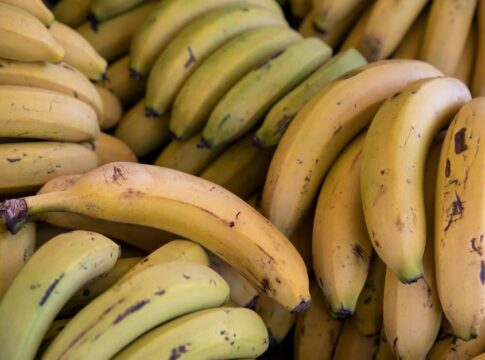
7 Strange Facts About Bananas Being Radioactive Fruit
By Trivia Daily, Staff Writer — Published September 17, 2026
Table of Contents
- Key Takeaways
- Why Strange Bananas Radioactive Facts Matter to Science
- How Radiation in Food Compares
- The Role of Natural Background Radiation
- Common Misconceptions About Radioactive Fruit
- Frequently Asked Questions
Bananas are radioactive. That’s not a joke or a myth—it’s a real, measurable scientific fact. Every banana you’ve ever eaten contains potassium-40, a naturally occurring radioactive isotope that makes this everyday fruit slightly radioactive. This surprising truth has led to fascinating discoveries about radiation, human biology, and even a unit of measurement used by nuclear scientists. The strange facts about bananas being radioactive reveal how radiation isn’t always dangerous and how our bodies handle it every single day.
The story gets stranger. Scientists actually use bananas as a reference point when discussing radiation exposure, and the phenomenon has sparked countless myths about whether eating too many bananas could harm you. The reality is far more interesting than fiction.
Key Takeaways
- Every banana contains potassium-40, a radioactive isotope that occurs naturally and makes the fruit measurably radioactive.
- Nuclear scientists created the “Banana Equivalent Dose” to help the public understand small amounts of radiation exposure.
- You would need to eat millions of bananas in a short period for radiation to become harmful—your body excretes excess potassium naturally.
- All potassium-rich foods are radioactive, including potatoes, beans, nuts, and even human bodies.
- Airport radiation detectors have been triggered by shipments of bananas due to their radioactive properties.
- The radiation in bananas is so weak that sleeping next to someone exposes you to more radiation than eating a banana.
Why Strange Bananas Radioactive Facts Matter to Science
Potassium is essential for life. Your muscles, nerves, and heart depend on it to function properly. About 0.0117% of all naturally occurring potassium exists as potassium-40, a radioactive isotope with a half-life of over a billion years. When atoms of potassium-40 decay, they release beta particles and gamma rays—the definition of radioactivity.
Bananas happen to be particularly rich in potassium, containing roughly 450 milligrams in a medium-sized fruit. This concentration makes them one of the most radioactive foods you’ll encounter in your kitchen. But here’s the fascinating part: your body doesn’t distinguish between radioactive and non-radioactive potassium. It treats them identically, maintaining a constant potassium level through homeostasis. When you eat a banana, your body absorbs what it needs and excretes the excess, including the radioactive portion.
The radiation emitted by a single banana measures approximately 0.1 microsieverts. To put that in perspective, a chest X-ray delivers about 100 microsieverts—a thousand times more. A cross-country flight exposes you to roughly 40 microsieverts from cosmic radiation. The banana’s radioactivity is real but remarkably weak.
1. The Banana Equivalent Dose Became an Official Measurement
Nuclear engineers and health physicists created the Banana Equivalent Dose (BED) as an informal unit to communicate radiation risk to the general public. The concept emerged because people often panic when they hear the word “radioactive” without understanding scale or context. By comparing radiation exposure to eating bananas—something familiar and clearly harmless—scientists found they could demystify radiation discussions. One BED equals the radiation exposure from eating one banana, approximately 0.1 microsieverts. While not used in formal scientific literature, the BED appears in educational materials, museum exhibits, and public health communications worldwide.
2. You’re Already Radioactive Just Like Bananas
The human body contains about 140 grams of potassium at any given time, which means you’re carrying roughly 16 milligrams of potassium-40 inside you right now. Your natural radioactivity produces about 4,000 radioactive decays every second. That’s right—you’re constantly emitting radiation at a level higher than a single banana. Sleeping next to someone for eight hours exposes you to about 0.05 microsieverts of radiation from their body. This natural background radiation has been part of life on Earth for billions of years, and living organisms evolved in its presence.
3. Banana Shipments Have Triggered Radiation Alarms
Sensitive radiation detectors at ports, border crossings, and nuclear facilities have been set off by truckloads of bananas. These detectors are designed to identify illicit radioactive materials, but they’re so sensitive that large quantities of bananas—containing tons of potassium-40—can register as anomalous. Security personnel are trained to recognize this phenomenon and distinguish between harmless banana shipments and actual threats. Other potassium-rich cargo like fertilizer and cat litter (which often contains potassium-based clumping agents) can trigger the same alarms.
4. Many Common Foods Are More Radioactive Than You Think
Bananas get all the attention, but they’re far from the only radioactive food. Brazil nuts contain radium, making them one of the most radioactive foods available—a single nut can have 1,000 times the radioactivity of a banana. Carrots, potatoes, lima beans, red meat, and beer all contain measurable radioactivity from potassium-40 or other naturally occurring isotopes. Even drinking water contains trace amounts of radioactive elements. The average person receives about 0.3 millisieverts (300 microsieverts) of radiation annually from food and water—about 3,000 banana equivalent doses spread throughout the year.
5. You Can’t Become Dangerously Radioactive by Eating Bananas
A common internet myth suggests eating too many bananas could make you radioactive enough to harm yourself or others. The math doesn’t support this fear. Your body maintains potassium homeostasis, meaning it keeps potassium levels constant regardless of intake. Eating more bananas doesn’t increase your body’s radioactivity because you simply excrete the excess. Theoretically, eating 10 million bananas at once would deliver a fatal radiation dose—but you’d die from potassium overdose, ruptured stomach, or countless other causes long before radiation became the problem. The lethal dose from radiation requires acute, concentrated exposure that food simply cannot provide.
6. Potassium-40 Has Been Around Since Earth’s Formation
The potassium-40 in today’s bananas dates back 4.5 billion years to the formation of our solar system. When Earth coalesced from cosmic dust and debris, it incorporated radioactive elements including potassium-40, uranium, and thorium. Because potassium-40 has such a long half-life, a substantial amount remains in Earth’s crust, soil, and oceans. Plants absorb it from soil, animals eat the plants, and the isotope moves through food chains. This ancient radioactivity has been part of every living thing that ever existed on Earth, including the earliest single-celled organisms.
7. Bananas Help Scientists Calibrate Radiation Detectors
The consistent, measurable radioactivity of bananas makes them useful calibration tools for radiation detection equipment. Students learning to use Geiger counters often practice on bananas because they provide a reliable, safe, and easily obtainable radioactive source. The fruit demonstrates that radiation detectors work properly without requiring licensing, special storage, or safety protocols needed for stronger radioactive materials. Physics educators worldwide keep bananas in their classrooms specifically for this purpose, making the humble fruit an unexpected but valuable teaching tool.
How Radiation in Food Compares
| Food | Approximate Radioactivity (microsieverts) | Primary Radioactive Element |
|---|---|---|
| One banana | 0.1 | Potassium-40 |
| One Brazil nut | 0.1–1.0 | Radium-226, Radium-228 |
| 100g potatoes | 0.17 | Potassium-40 |
| 100g carrots | 0.34 | Potassium-40 |
| 100g red meat | 0.12 | Potassium-40 |
The Role of Natural Background Radiation
Radiation from food represents just one component of the natural background radiation humans experience constantly. Cosmic rays from space, radioactive elements in soil and rocks, radon gas in buildings, and radioactive carbon-14 in the atmosphere all contribute to our daily exposure. The average person receives about 3 millisieverts of radiation annually from natural sources—equivalent to eating 30,000 bananas spread throughout the year.
Life evolved in this radioactive environment. Some scientists hypothesize that background radiation may have even accelerated evolution by increasing mutation rates, providing raw material for natural selection. Our cells contain sophisticated DNA repair mechanisms specifically designed to fix radiation damage, suggesting that dealing with radioactivity has always been part of being alive.
Common Misconceptions About Radioactive Fruit
The discovery that bananas are radioactive has spawned numerous myths. Some people worry that organic bananas might be more radioactive (they’re not—potassium-40 occurs naturally regardless of farming methods). Others fear that irradiated food, which undergoes intentional radiation treatment to kill bacteria, becomes radioactive (it doesn’t—the process leaves no residual radioactivity). Still others believe radioactive food could cause cancer if eaten regularly. The scientific consensus is clear: the tiny amounts of radiation from food pose no measurable health risk.
Context matters enormously when discussing radiation. A single CT scan delivers 10,000 banana equivalent doses of radiation, yet doctors prescribe them when medically necessary because the benefits outweigh the minimal risk. Living at high altitude, flying frequently, or living in areas with granite bedrock all increase radiation exposure far more than dietary choices ever could.
Frequently Asked Questions
Can eating too many bananas be harmful due to radiation?
No. Your body maintains constant potassium levels through homeostasis, excreting excess amounts. You’d need to eat millions of bananas rapidly for radiation to become dangerous, but potassium poisoning would kill you first.
Are bananas the most radioactive food?
No. Brazil nuts contain radium and can be 10 to 1,000 times more radioactive than bananas. Carrots, lima beans, and potatoes also have higher radioactivity per weight than bananas.
Do bananas lose radioactivity as they ripen?
No. The potassium-40 content remains constant regardless of ripeness. The isotope’s billion-year half-life means essentially no decay occurs during a banana’s lifetime.
Could you use a banana as a radiation source for experiments?
Yes, for basic demonstrations. Physics students use bananas to test Geiger counters and demonstrate natural radioactivity because they’re safe, legal, and readily available.
The radioactive banana reminds us that “radioactive” doesn’t automatically mean “dangerous.” Natural radioactivity surrounds us, flows through us, and has done so since the planet formed. Next time you peel a banana, you’re holding a tiny piece of Earth’s ancient history—one that’s been quietly humming with atomic energy for billions of years.