
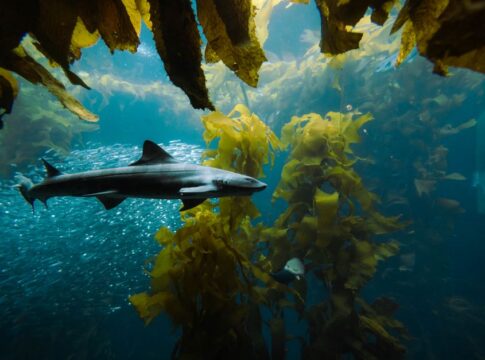
The Truth About Sharks Predating Trees by 50 Million Years
By Trivia Daily, Animals Desk — Published November 4, 2026
When you walk through a forest, it’s hard to imagine a time before trees existed. Yet the truth about sharks predating trees reveals one of nature’s most astonishing timelines: sharks have been swimming through Earth’s oceans for roughly 450 million years, while trees didn’t appear until about 400 million years ago. These ancient creatures navigated prehistoric seas long before forests covered the land, making them older than many of the planet’s most familiar features. This remarkable fact reshapes how we understand the history of wildlife and the incredible longevity of certain species in Earth’s ever-changing habitat.
Sharks represent one of evolution’s greatest success stories, surviving multiple mass extinctions that wiped out countless other animals. Their behavior, anatomy, and adaptations have proven so effective that these predators have remained largely unchanged for hundreds of millions of years, earning them the title of “living fossils” among marine creatures.
Key Takeaways
- Sharks first appeared approximately 450 million years ago during the Ordovician Period, predating trees by roughly 50 million years
- These ancient predators survived at least four major mass extinction events that eliminated most other species
- Modern shark anatomy closely resembles that of their prehistoric ancestors, demonstrating exceptional evolutionary stability
- Sharks predate many familiar animals including dinosaurs, mammals, and most modern fish species
- Over 400 species of sharks exist today, inhabiting diverse marine habitats from shallow reefs to the deep ocean
- The earliest trees, belonging to the genus Archaeopteris, appeared around 385 to 400 million years ago
Understanding the Truth About Sharks Predating Trees and Ancient Timelines
1. Sharks Emerged During the Ordovician Period
The earliest shark-like creatures appeared roughly 450 million years ago, during a time when life was still predominantly aquatic. These primitive animals began developing the cartilaginous skeleton that would become a defining characteristic of sharks, rays, and their relatives. The ocean teemed with invertebrates and early fish, but land remained largely barren.
2. Trees Arrived Much Later in Earth’s History
The first true trees evolved approximately 385 to 400 million years ago during the Devonian Period. Before this, land plants were small and simple, lacking the woody tissue and height that define trees. The development of vascular systems capable of transporting water and nutrients to great heights represented a botanical revolution that transformed terrestrial habitats forever.
3. Sharks Witnessed the Greening of Earth
As sharks continued their reign in the oceans, they existed during the dramatic transformation when plants finally colonized land. The first forests fundamentally altered Earth’s atmosphere, increasing oxygen levels and creating entirely new ecosystems. Yet sharks remained largely unaffected in their aquatic domain, continuing their ancient lineage.
4. Cartilage Provides Evolutionary Advantages
Unlike most fish, sharks possess skeletons made entirely of cartilage rather than bone. This lighter, more flexible material allows for greater agility and requires less energy to maintain. The cartilaginous skeleton proved so successful that it has remained essentially unchanged for hundreds of millions of years across countless shark species.
5. Fossil Evidence Reveals Ancient Shark Diversity
Paleontologists have discovered shark scales and teeth dating back to the Ordovician Period. Because cartilage rarely fossilizes, these hard parts provide the primary evidence of ancient sharks. The diversity of tooth shapes found in the fossil record indicates that early sharks had already begun specializing in different prey and feeding strategies.
6. Sharks Predate Dinosaurs by 200 Million Years
When dinosaurs first appeared roughly 230 million years ago, sharks had already been perfecting their predatory nature for over 200 million years. This means sharks are more ancient than many creatures we associate with prehistoric Earth. They swam in oceans before and after the age of dinosaurs, outlasting these famous reptiles by tens of millions of years.
7. Multiple Extinction Events Failed to Eliminate Sharks
Sharks survived the Permian-Triassic extinction event approximately 252 million years ago, which killed an estimated 96% of marine species. They also endured the asteroid impact that eliminated non-avian dinosaurs 66 million years ago. This resilience speaks to the adaptability and robust nature of shark biology and behavior.
8. Ancient Sharks Looked Different from Modern Species
Early sharks displayed some bizarre features compared to their modern descendants. Some possessed elaborate spines, unusual jaw structures, or strange fin arrangements. Despite these differences, the fundamental body plan—streamlined, cartilaginous, and equipped with multiple gill slits—remained consistent throughout their evolution.
9. Megalodon Represents Relatively Recent Shark Evolution
The famous Megalodon, despite being extinct for roughly 3.6 million years, represents a relatively recent chapter in shark history. This massive predator appeared about 23 million years ago, meaning sharks had already existed for more than 425 million years before this giant species evolved.
10. Shark Teeth Continuously Replace Themselves
Modern sharks inherit an ancient trait: teeth that grow in conveyor-belt rows, constantly replacing lost or worn specimens. A single shark may go through thousands of teeth in its lifetime. This adaptation has served sharks well throughout their entire evolutionary history, ensuring they always possess sharp, functional weapons for hunting.
11. The Devonian Period Marked Major Changes for Both Groups
The Devonian Period, spanning from 419 to 359 million years ago, witnessed both the diversification of sharks and the emergence of forests. This era is sometimes called the “Age of Fishes” due to the explosive evolution of aquatic species, including numerous shark lineages that would establish patterns still seen in modern ocean ecosystems.
12. Sharks Possess Ampullae of Lorenzini
These specialized sensory organs allow sharks to detect electrical fields produced by other animals. This ancient adaptation helps sharks locate prey even in murky water or buried in sand. The system has remained essentially unchanged for hundreds of millions of years, proving its effectiveness across countless generations.
13. Not All Ancient Sharks Were Large Predators
The fossil record reveals that ancient sharks varied tremendously in size and diet, just as modern species do. Some were small bottom-dwellers, others filter-feeders, and many occupied ecological niches that still exist today. This diversity contributed to their survival through changing environmental conditions.
14. Shark Skin Functions as Armor and Speed Enhancement
Dermal denticles—tiny tooth-like scales covering shark skin—reduce drag and prevent parasites from attaching. This feature evolved early in shark history and remains present in modern species. The rough texture has inspired human technology, including swimsuit designs and anti-fouling coatings for ships.
15. Ancient Oceans Looked Vastly Different
When sharks first appeared, Earth’s continents were arranged differently, ocean chemistry varied significantly, and temperatures fluctuated dramatically. Yet sharks adapted to each change, modifying their species diversity while maintaining their basic anatomical blueprint. This flexibility within consistency defines their success.
16. Cladoselache Represents One of the Earliest Known Sharks
This primitive shark lived approximately 370 million years ago and already displayed many features recognizable in modern sharks. Fossils show it possessed a streamlined body, multiple fins, and teeth designed for grasping prey. Its existence demonstrates how early the successful shark body plan was established.
17. Trees Transformed Earth’s Atmosphere
As trees spread across continents, they dramatically increased atmospheric oxygen through photosynthesis. This change affected marine life indirectly by altering ocean chemistry and climate patterns. Sharks adapted to these shifting conditions, demonstrating the resilience that has characterized their lineage.
18. Sharks Occupy Every Ocean Habitat
From shallow coral reefs to the deepest ocean trenches, sharks have colonized virtually every marine environment. This habitat diversity mirrors their ancient origins, when early sharks spread throughout primordial seas. Different species evolved specialized adaptations for specific environments while maintaining core shark characteristics.
19. Greenland Sharks May Live Over 400 Years
These slow-moving predators represent some of the longest-lived vertebrates on Earth. Their extreme longevity connects modern oceans to the distant past, with individuals alive today potentially born before the Industrial Revolution. This lifespan offers a living link to centuries of ocean history.
20. Shark Ancestors Had Fewer Specialized Features
Early sharks possessed more generalized anatomies compared to the highly specialized species alive today. Over hundreds of millions of years, different lineages evolved specific adaptations for particular prey, habitats, and hunting strategies. This specialization created the remarkable diversity of modern shark species.
21. The First Forests Created New Carbon Cycles
When trees evolved, they established new patterns of carbon storage and release that continue to shape Earth’s climate. Meanwhile, sharks maintained their role in marine ecosystems, regulating prey populations and recycling nutrients. Both groups became fundamental to their respective environments.
22. Sharks Possess Multiple Rows of Teeth
Behind the functional front teeth, sharks maintain several backup rows ready to rotate forward when needed. This system, refined over hundreds of millions of years, ensures these predators never lose their ability to hunt effectively. Different species possess tooth shapes optimized for their preferred prey.
23. Ancient Shark Relatives Include Modern Rays
Rays and skates share a common ancestor with sharks, having diverged sometime during their long evolutionary history. These flattened relatives demonstrate alternative body plans that cartilaginous fish can adopt while maintaining the fundamental characteristics that define this ancient group of animals.
24. Shark Reproduction Varies Widely Among Species
Some sharks lay eggs, others give live birth, and some employ a combination of strategies. This reproductive diversity evolved over millions of years and helps different species succeed in various habitats. The variety demonstrates the adaptability that has allowed sharks to persist through changing environments.
25. Prehistoric Sharks Included Filter-Feeders
Not all ancient sharks were fierce predators. Some species evolved to filter plankton from the water, much like modern whale sharks and basking sharks. This feeding strategy proved successful enough to persist for hundreds of millions of years, showing that shark success wasn’t limited to predatory behavior.
26. Sharks Help Regulate Marine Ecosystems
As apex predators, sharks maintain balance in ocean food webs by controlling prey populations. This ecological role has existed for hundreds of millions of years, making sharks essential components of healthy marine habitats. Their removal can trigger cascading effects throughout entire ecosystems.
27. The Carboniferous Period Saw Massive Tree Growth
Following their initial appearance, trees reached enormous sizes during the Carboniferous Period, roughly 359 to 299 million years ago. These forests eventually formed many of Earth’s coal deposits. During this same era, sharks continued diversifying in the oceans, developing new species and adaptations.
28. Shark Brains Include Specialized Hunting Centers
Despite their ancient origins, sharks possess sophisticated brains with regions dedicated to processing sensory information and coordinating hunting behavior. This neural architecture has proven effective enough to survive essentially unchanged for hundreds of millions of years, supporting complex predatory strategies.
29. Some Sharks Can Detect One Part Per Million of Blood
The legendary shark sense of smell isn’t exaggerated—these animals can detect incredibly dilute concentrations of substances in water. This acute chemoreception evolved early in shark history and remains one of their most effective hunting tools, allowing them to locate prey across vast ocean distances.
30. Ancient Sharks Faced Different Competitors
In prehistoric oceans, sharks competed with now-extinct predators including giant armored fish and marine reptiles. The fact that sharks outlived these competitors while maintaining their basic body plan demonstrates the effectiveness of their evolutionary strategy. Flexibility within a proven design ensured their survival.
31. Shark Liver Oil Provides Buoyancy
Unlike bony fish with swim bladders, sharks maintain buoyancy through large, oil-filled livers. This adaptation allows precise depth control without the rigid gas-filled organ that can rupture during rapid depth changes. The system has served sharks well throughout their hundreds of millions of years in the ocean.
32. Trees Required Innovations in Plant Biology
The evolution of lignin—a complex polymer that provides structural support—enabled plants to grow tall and become trees. This biochemical innovation came roughly 50 million years after sharks had already established themselves as ocean predators. The timing underscores just how ancient sharks truly are.
33. Sharks Show Varied Social Behaviors
Some shark species are solitary hunters, while others form schools or exhibit complex social hierarchies. This behavioral diversity evolved over millions of years and helps different species exploit various ecological niches. The range of behaviors demonstrates that sharks aren’t simple, instinct-driven animals.
34. The Permian Extinction Nearly Eliminated Sharks
The most severe extinction event in Earth’s history, occurring roughly 252 million years ago, reduced shark diversity dramatically. However, surviving lineages recovered and diversified, eventually producing the variety of species we see today. This recovery demonstrates the resilience built into shark biology.
35. Modern Sharks Include Over 500 Species
Today’s oceans contain more than 500 shark species ranging from the tiny dwarf lanternshark to the massive whale shark. This diversity represents only a fraction of the total number of shark species that have existed throughout their 450-million-year history, with countless extinct forms known only from fossils.
36. Sharks’ Immune Systems Are Remarkably Effective
These ancient predators rarely suffer from diseases that afflict other fish. Their robust immune systems, refined over hundreds of millions of years, efficiently combat pathogens and heal wounds. Scientists study shark immunity hoping to develop new medical treatments for humans.
37. Ancient Sharks Witnessed Continental Drift
Throughout their existence, sharks have inhabited oceans as continents slowly moved across Earth’s surface. They adapted as seaways opened and closed, temperatures shifted, and ocean chemistry changed. This ability to persist through geological-scale changes distinguishes them from less adaptable species.
38. Shark Teeth Reveal Diet and Behavior
The shape, size, and arrangement of teeth tell scientists what ancient sharks ate and how they hunted. Pointed teeth indicate fish-eaters, while flat teeth suggest shellfish crushers. This fossil evidence helps paleontologists reconstruct prehistoric ocean ecosystems and understand how sharks fit within them.
39. Some Sharks Venture into Freshwater
Bull sharks and a few other species can tolerate freshwater, swimming far up rivers and even inhabiting lakes. This ability to cross salinity boundaries may echo ancient capabilities, when early sharks explored diverse aquatic environments. The adaptation demonstrates continued evolutionary flexibility.
40. Trees Created Habitats for Terrestrial Animals
As forests spread, they provided shelter and food for evolving land animals. This terrestrial revolution occurred while sharks continued their aquatic dominance. The parallel development of complex ecosystems on land and in the sea shaped the modern natural world, with sharks remaining largely unchanged in their domain.
41. Shark Populations Face Modern Threats
Despite surviving for 450 million years, many shark species now face population declines due to overfishing, habitat destruction, and climate change. These threats occur on timescales far too rapid for evolutionary adaptation, challenging creatures that have otherwise proven remarkably resilient throughout Earth’s history.
42. Hammerhead Sharks Show Unique Head Evolution
The distinctive hammer-shaped head evolved relatively recently in shark history, appearing roughly 20 million years ago