
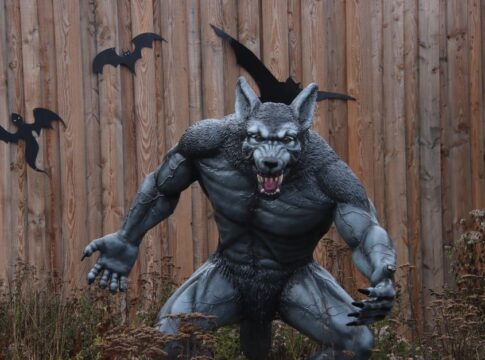
Werewolf Legends: Why Full Moons Became Transformation Triggers
By TriviaOwl, Staff Writer — Published August 7, 2026
Table of Contents
- Key Takeaways
- The Ancient Roots of Werewolf Legends Full Moon Myths
- How the Moon Got Its Monstrous Reputation
- Hollywood’s Howling Invention
- Medical Mysteries Behind the Myth
- Comparing Werewolf Traditions Across Cultures
- Why the Full Moon Myth Endures
- Frequently Asked Questions
The werewolf legends full moon connection is one of cinema’s most iconic images—yet it’s a surprisingly recent invention. For centuries, European folklore described people transforming into wolves, but most of these tales never mentioned the moon at all. The full moon trigger we take for granted today was largely popularized by 20th-century Hollywood, not ancient mythology. This fascinating disconnect between modern pop culture and historical werewolf legends reveals how stories evolve, and why certain symbols capture our imagination more powerfully than others.
The transformation from human to beast has terrified audiences for generations, but the reasons behind this association are rooted in psychology, medieval medicine, and the simple human need to explain the unexplainable.
Key Takeaways
- Most ancient and medieval werewolf legends didn’t connect transformations to full moons—that’s largely a modern Hollywood addition.
- The word “lunatic” comes from the Latin “luna” (moon), reflecting centuries-old beliefs that the moon affected mental states.
- Medieval European werewolf trials prosecuted real people accused of lycanthropy, often attributing their behavior to demonic possession rather than lunar cycles.
- The 1941 film “The Wolf Man” cemented the full moon transformation trope in popular culture, creating a “rule” that didn’t exist in traditional folklore.
- Rabies symptoms in humans and wolves may have inspired some werewolf characteristics, including aggression and hydrophobia.
- Clinical lycanthropy, a rare psychiatric condition where patients believe they’re transforming into animals, is recognized by modern medicine.
The Ancient Roots of Werewolf Legends Full Moon Myths
Werewolf stories predate written history. Ancient Greek mythology featured King Lycaon, whom Zeus transformed into a wolf as punishment for serving human flesh at a feast. The Epic of Gilgamesh, one of humanity’s oldest surviving texts, mentions a goddess turning a shepherd into a wolf. These early tales focused on divine punishment or curses—not celestial timing.
Medieval Europe saw werewolf beliefs reach fever pitch. Between the 15th and 17th centuries, thousands of people were tried for lycanthropy across France, Germany, and other regions. Court records from these trials describe accusations of night-time attacks, cannibalism, and pacts with the devil. Rarely do these documents mention the moon’s phases. Instead, accusers claimed the transformations happened through magic ointments, belts made of wolfskin, or demonic intervention.
The disconnect is striking. If the full moon was truly central to werewolf mythology, you’d expect medieval witch-hunters to track lunar calendars obsessively. They didn’t. Their focus remained on heresy and satanic influence, not astronomy.
How the Moon Got Its Monstrous Reputation
The moon has long been associated with madness and erratic behavior. The English word “lunatic” derives directly from the Latin word for moon, “luna.” Ancient Roman scholars like Pliny the Elder wrote that the full moon affected the brain, which they believed contained moisture that waxed and waned with lunar cycles. This wasn’t superstition in isolation—it was proto-science, an attempt to explain observable patterns.
Medieval physicians blamed the full moon for triggering epileptic seizures, sleepwalking, and violent outbursts. Hospitals and asylums reported increased patient agitation during full moons (though modern statistical analysis has found no such correlation). The moon became a convenient explanation for behaviors that seemed to have no other cause.
This lunar association created fertile ground for storytellers. When 20th-century writers and filmmakers wanted to add drama to werewolf tales, the full moon offered a perfect narrative device: predictable, visible, and already steeped in associations with altered mental states. It was a storytelling upgrade, not a preservation of tradition.
Hollywood’s Howling Invention
The 1941 Universal Pictures film “The Wolf Man” starring Lon Chaney Jr. crystallized the full moon transformation rule. The movie’s screenwriter, Curt Siodmak, created an original poem that became werewolf gospel: “Even a man who is pure in heart / And says his prayers by night / May become a wolf when the wolfbane blooms / And the autumn moon is bright.” This wasn’t ancient folklore—it was Hollywood invention.
The film’s success was enormous. It spawned sequels, inspired countless imitators, and established werewolf “rules” that persist today. Subsequent films reinforced the full moon trigger until it became inseparable from the werewolf concept itself. Audiences who had never read medieval folklore assumed this was how werewolf legends had always worked.
Earlier werewolf films actually contradicted this pattern. The 1935 film “Werewolf of London” featured transformations unrelated to moon phases. But “The Wolf Man” was more influential, more widely seen, and more thoroughly embedded in popular consciousness. Once Hollywood spoke, folklore was rewritten in the public mind.
Medical Mysteries Behind the Myth
Some researchers have proposed that real medical conditions inspired werewolf legends. Rabies presents particularly compelling parallels. The disease causes aggression, confusion, excessive salivation, and—notably—hydrophobia (fear of water). Infected individuals sometimes exhibit animal-like behavior, including biting. In medieval Europe, where rabies was endemic in wolf populations, encountering a rabid person or wolf would have been terrifying and memorable.
Another condition, hypertrichosis, causes excessive hair growth across the entire body. Individuals with this rare genetic disorder would have appeared strikingly wolf-like in eras before modern medicine could explain their appearance. Historical records describe “wolf-faced” people exhibited in royal courts, their condition attributed to curses or divine punishment rather than genetics.
Clinical lycanthropy, recognized in psychiatric literature, involves patients genuinely believing they’re transforming into animals—most commonly wolves. These individuals may crawl on all fours, howl, and refuse cooked food. The condition is associated with schizophrenia, bipolar disorder, and severe depression. While extremely rare, it demonstrates that the psychological experience of “becoming” a wolf is documented and real, even if the physical transformation is not.
Comparing Werewolf Traditions Across Cultures
| Culture/Region | Shape-shifter Type | Transformation Trigger |
|---|---|---|
| Medieval Europe | Werewolf (loup-garou) | Magic belts, ointments, curses |
| Norse/Viking | Berserker/Ulfhednar | Battle rage, bear/wolf pelts |
| Native American | Skin-walker | Wearing animal hides, witchcraft |
| Japanese | Kitsune/Tanuki | Age, magical ability (foxes/raccoon dogs) |
| Modern Western | Werewolf | Full moon (post-1941) |
Why the Full Moon Myth Endures
The full moon werewolf connection persists because it satisfies deep narrative needs. It creates suspense—characters can count down to the inevitable transformation. It adds visual drama—filmmakers can show the moon rising as tension builds. Most importantly, it externalizes internal struggle. The werewolf becomes a metaphor for impulses we can’t control, desires we suppress, and the beast within that emerges despite our best intentions.
The moon also provides a sense of order to chaos. If transformations are random, they’re merely tragic. If they’re predictable, they can be anticipated, prepared for, perhaps even controlled. The full moon gives werewolf stories structure, turning pure horror into something closer to a curse that might be managed or broken.
Modern audiences know the full moon trigger isn’t historically authentic, but that knowledge doesn’t diminish its power. The symbol has transcended its invented origins to become genuinely meaningful—a testament to storytelling’s ability to create new mythology that feels ancient.
Frequently Asked Questions
Did ancient werewolf legends actually mention full moons?
No, most ancient and medieval werewolf folklore didn’t connect transformations to lunar cycles. The full moon trigger was popularized primarily by 20th-century films, particularly “The Wolf Man” in 1941, and doesn’t appear in the majority of historical werewolf tales.
Why do people associate the full moon with strange behavior?
The association stems from ancient beliefs that the moon influenced bodily fluids and mental states, reflected in words like “lunatic” from the Latin “luna.” While medieval physicians believed this connection, modern research has found no statistical correlation between full moons and increased erratic behavior or hospital admissions.
Were there real werewolf trials in history?
Yes, thousands of people were tried for lycanthropy in medieval Europe, particularly during the 15th through 17th centuries. These trials typically accused individuals of making pacts with the devil or using witchcraft to transform, not of being affected by the moon.
Is clinical lycanthropy a real medical condition?
Yes, clinical lycanthropy is a rare psychiatric condition where patients believe they’re transforming into animals, most often wolves. It’s associated with schizophrenia, bipolar disorder, and severe depression, though no physical transformation occurs—only the psychological conviction that it is happening.
Next time you see a full moon hanging low and luminous in the night sky, remember that its connection to werewolves says more about human storytelling than about ancient beliefs. We didn’t inherit this myth from our ancestors—we created it ourselves, then convinced ourselves it had always been true. That might be the most werewolf thing of all: the transformation of fiction into folklore, happening right before our eyes.