
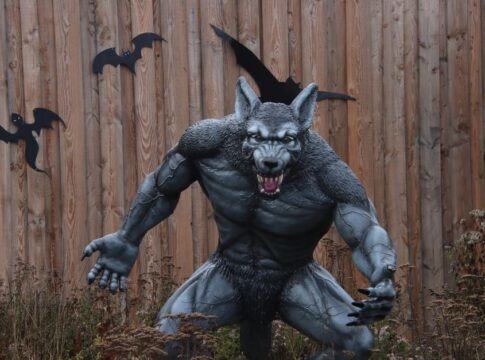
Did Werewolf Legends Start With Rare Medical Conditions
By Trivia Daily, Staff Writer — Published October 3, 2026
Table of Contents
- Key Takeaways
- How Werewolf Legends Start: The Medical Connection
- When the Mind Believes the Transformation Is Real
- The Porphyria Hypothesis: Blood Disorders and Monster Myths
- Rabies: The Behavioral Transformation
- Comparing Medical Conditions Behind Monster Myths
- Historical Werewolf Trials and Medical Ignorance
- Frequently Asked Questions
The full moon rises, and a tortured soul transforms into a slavering beast—half human, half wolf. It’s one of horror’s most enduring images, but the roots of werewolf mythology may lie not in supernatural curses, but in very real medical conditions that terrified communities for centuries. When you discover the surprising connection between rare diseases and shapeshifting folklore, the line between myth and medicine becomes fascinatingly blurred.
Several documented medical conditions produce symptoms that align eerily well with classic werewolf descriptions. From excessive hair growth to behavioral changes and light sensitivity, these afflictions offer a rational explanation for how werewolf legends started—and why they persisted across cultures and continents.
Key Takeaways
- Hypertrichosis, a rare condition causing excessive hair growth across the entire body, may have inspired werewolf legends in medieval Europe.
- Clinical lycanthropy is a psychiatric condition where patients genuinely believe they can transform into animals, most commonly wolves.
- Porphyria, a group of blood disorders, causes severe light sensitivity, reddish teeth discoloration, and skin damage—symptoms that mirror vampire and werewolf folklore.
- Rabies infection produces aggression, hydrophobia, and behavioral changes that medieval communities might have interpreted as demonic possession or transformation.
- Werewolf trials in 16th and 17th century Europe led to executions of people likely suffering from mental illness or genetic conditions.
- The medical understanding of these conditions emerged centuries after werewolf legends became entrenched in European culture.
How Werewolf Legends Start: The Medical Connection
Werewolf mythology predates modern medicine by millennia, appearing in ancient Greek texts, Norse sagas, and medieval folklore across Europe. But the physical descriptions of werewolves—covered in coarse hair, displaying animalistic behavior, avoiding daylight—match the symptoms of real medical conditions with remarkable precision.
Hypertrichosis, sometimes called “werewolf syndrome,” causes abnormal hair growth over the entire body, including the face. This extremely rare genetic condition affects perhaps one in a billion people. Historical records document individuals with hypertrichosis being displayed in royal courts and traveling shows throughout Europe. In an era before genetic science, a person covered head to toe in thick hair would have seemed supernatural rather than medical.
The condition comes in two main forms: congenital (present from birth) and acquired (developing later in life). Congenital hypertrichosis lanuginosa covers the body in fine, downy hair similar to what fetuses have in the womb. The more dramatic congenital hypertrichosis terminalis produces thick, pigmented hair across the face and body—exactly what terrified villagers might describe as a werewolf.
When the Mind Believes the Transformation Is Real
Clinical lycanthropy presents an even more unsettling connection to werewolf lore. This rare psychiatric syndrome causes patients to genuinely believe they can transform into an animal or have already transformed. The delusion is vivid and terrifying for those experiencing it.
Medical literature has documented cases where patients exhibited animal-like behaviors—crawling on all fours, howling, attempting to bite others—while firmly believing they had become wolves or other creatures. Unlike hypertrichosis, which affects physical appearance, clinical lycanthropy alters perception and behavior. Someone experiencing this delusion in medieval Europe would likely face accusations of demonic possession or witchcraft rather than receive psychiatric treatment.
The condition often occurs alongside other mental health disorders, including schizophrenia, bipolar disorder, and severe depression. Modern treatment typically involves antipsychotic medications and therapy, but such options didn’t exist when werewolf hysteria peaked in Europe.
The Porphyria Hypothesis: Blood Disorders and Monster Myths
Porphyria encompasses several inherited disorders affecting heme production, a component of hemoglobin in blood. The symptoms of certain types create an almost perfect template for both werewolf and vampire legends. Patients with cutaneous porphyria experience extreme sensitivity to sunlight, which damages their skin and can cause scarring and disfigurement.
The condition also causes reddish-brown discoloration of teeth due to porphyrin deposits. Gums may recede, making teeth appear fang-like. Severe cases produce painful blistering when skin is exposed to sunlight, giving victims compelling reasons to avoid daylight—just like the monsters of folklore.
Some researchers have proposed that porphyria outbreaks in isolated communities could have fueled werewolf and vampire legends. The hypothesis remains debated among medical historians, but the symptom overlap is undeniably striking. Patients might have sought relief by consuming blood, which contains heme, though whether this actually occurred historically remains unverified.
Rabies: The Behavioral Transformation
Rabies presents perhaps the most behaviorally accurate parallel to werewolf mythology. This viral infection, transmitted through animal bites (especially from wolves and dogs), produces dramatic personality changes, aggression, and the distinctive symptom of hydrophobia—fear of water.
Infected individuals may experience periods of extreme agitation, confusion, and violent behavior alternating with lucid moments. They might bite others, spreading the infection. The disease progresses to paralysis and death, but the behavioral phase could easily be interpreted as demonic possession or transformation in pre-scientific societies.
Rabies has affected humans throughout history, and wolf bites were a genuine danger in medieval Europe. The connection between wolf attacks and subsequent behavioral changes in victims would have reinforced the belief that wolves could pass on their savage nature—or that victims were becoming wolves themselves.
Comparing Medical Conditions Behind Monster Myths
| Condition | Primary Symptoms | Werewolf/Monster Connection |
|---|---|---|
| Hypertrichosis | Excessive hair growth over face and body | Physical appearance matching werewolf descriptions |
| Clinical Lycanthropy | Delusion of animal transformation, animal behaviors | Belief in actual shapeshifting, wolf-like actions |
| Porphyria | Light sensitivity, reddish teeth, skin damage | Nocturnal behavior, fang-like appearance |
| Rabies | Aggression, hydrophobia, behavioral changes | Violence, transmission through bites, personality transformation |
Historical Werewolf Trials and Medical Ignorance
Between the 15th and 18th centuries, European courts conducted werewolf trials similar to witch trials. Accused individuals were often executed after confessions obtained through torture. Many scholars now believe these victims suffered from mental illness, epilepsy, or conditions like hypertrichosis rather than practicing dark magic.
The trial records describe symptoms consistent with medical conditions: convulsions, hallucinations, unusual physical features, and behavioral abnormalities. Without modern diagnostic tools or psychiatric understanding, communities interpreted these afflictions through the lens of superstition and religious belief. The interesting truth is that the “werewolves” brought to trial were likely suffering patients, not supernatural threats.
Some accused werewolves may have been serial killers using lycanthropy as a legal defense, claiming they couldn’t control their actions during transformation. This defense rarely succeeded, but it demonstrates how deeply werewolf beliefs permeated legal and social structures.
Frequently Asked Questions
What medical condition makes you look like a werewolf?
Hypertrichosis, sometimes called “werewolf syndrome,” causes excessive hair growth across the face and body. This extremely rare genetic condition affects approximately one in a billion people and produces thick hair coverage that historically could have inspired werewolf legends.
Is clinical lycanthropy a real mental illness?
Yes, clinical lycanthropy is a documented psychiatric syndrome where patients believe they can transform into animals or have already transformed. It’s rare and typically occurs alongside other mental health conditions like schizophrenia or bipolar disorder, requiring psychiatric treatment.
Can rabies make humans act like werewolves?
Rabies causes aggression, confusion, hydrophobia, and violent behavioral changes that could resemble werewolf descriptions. The disease spreads through bites and was historically transmitted by wolves, creating a clear connection between wolf attacks and subsequent “transformation” of victims.
Did people with porphyria drink blood?
While porphyria causes blood disorders and symptoms matching vampire/werewolf folklore, there’s no verified historical evidence that patients regularly consumed blood for relief. The theory remains speculative, though the symptom overlap with monster mythology is scientifically documented.
The fascinating interplay between medical reality and mythological imagination reveals how humans have always sought explanations for the inexplicable. Today’s rare genetic disorder was yesterday’s shapeshifting curse. As medical science continues advancing, one wonders what other monsters might eventually be diagnosed rather than feared.