
Axolotl Regeneration: How They Regrow Entire Limbs
By Trivia Owl, Animals Desk — Published August 29, 2026
Table of Contents
- Key Takeaways
- The Science Behind Axolotl Regeneration and How They Regrow Tissue
- Why Axolotls Have This Extraordinary Ability
- What Axolotls Can and Cannot Regenerate
- Conservation Status and Natural Habitat
- Implications for Human Medicine
- Frequently Asked Questions
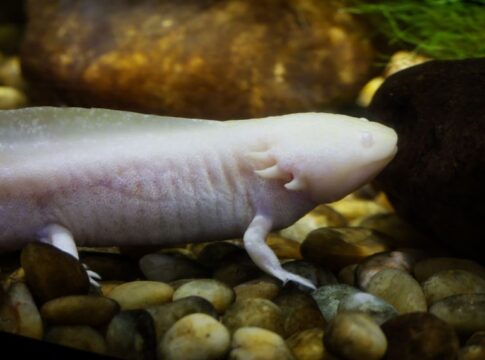
Imagine losing an arm and growing a perfect replacement, complete with bones, muscles, nerves, and skin. For humans, this sounds like science fiction. For the axolotl, it’s just another Tuesday. This extraordinary salamander native to Mexico possesses one of nature’s most remarkable abilities: axolotl regeneration allows these creatures to regrow entire limbs, portions of their heart, spinal cord, and even parts of their brain. While many animals can heal wounds or regenerate simple tissues, the axolotl stands alone in the animal kingdom for the complexity and completeness of what it can rebuild.
Scientists have studied these aquatic creatures for over a century, hoping to unlock the secrets behind their regenerative powers. What makes the axolotl’s ability so fascinating isn’t just that it can regrow lost body parts—it’s that the new limb is virtually identical to the original, with no scarring and full functionality.
Key Takeaways
- Axolotls can regenerate entire limbs, portions of their heart, spinal cord, eyes, and even parts of their brain with no scarring.
- The regeneration process begins within hours of injury, with cells at the wound site forming a structure called a blastema that contains the blueprint for rebuilding.
- Unlike most amphibians, axolotls remain in their aquatic larval form throughout their lives, a condition called neoteny that may contribute to their regenerative abilities.
- A single axolotl can regenerate the same limb multiple times throughout its life without any decrease in quality or speed.
- The species is critically endangered in its natural habitat but thrives in laboratory and captive settings worldwide.
- Research on axolotl regeneration has implications for human medicine, particularly in understanding tissue repair and organ regeneration.
The Science Behind Axolotl Regeneration and How They Regrow Tissue
When an axolotl loses a limb, its body launches an immediate and coordinated response. Within hours, skin cells migrate to cover the wound. Then something remarkable happens: cells at the injury site lose their specialized identities and revert to a more primitive, stem-cell-like state. These dedifferentiated cells gather to form a blastema, a mass of undifferentiated tissue that serves as the regeneration command center.
The blastema doesn’t just patch the wound. It rebuilds the entire missing structure from scratch, following the body’s original developmental blueprint. Bone cells become bone. Muscle cells become muscle. Nerve cells reconnect with precision. The process takes weeks to months depending on the size of the injury, but the result is a limb indistinguishable from the original.
What sets axolotls apart from other regenerating animals is the scale and complexity. While lizards can regrow tails and starfish can regrow arms, these regenerated parts often lack the original’s full functionality. Axolotl limbs return with every bone in place, every muscle properly attached, and complete nerve connections that restore sensation and movement. The regenerated limb even has the correct number of digits in the proper arrangement.
Why Axolotls Have This Extraordinary Ability
Scientists believe several factors contribute to the axolotl’s regenerative prowess. One key element is their neotenic lifestyle. Most amphibians undergo metamorphosis, transforming from aquatic larvae into terrestrial adults. Axolotls skip this step, retaining their juvenile features throughout life, including external gills and a fully aquatic habitat. This perpetual youth may keep regenerative pathways active that other species lose during maturation.
Their immune system also plays a role. Unlike mammals, whose immune responses can create scar tissue that blocks regeneration, axolotls mount a more measured inflammatory response. Their immune cells help clean up damaged tissue without overwhelming the regeneration process. Scar tissue, which in mammals prevents proper regrowth, simply doesn’t form in axolotls.
Genetic factors matter too. The axolotl genome is massive—roughly ten times larger than the human genome—and contains unique genes that regulate cell growth and differentiation during regeneration. Some of these genes exist in humans but remain inactive or function differently. Understanding how axolotls activate and control these genetic pathways could someday help humans regenerate damaged tissue.
What Axolotls Can and Cannot Regenerate
The list of body parts an axolotl can regenerate is staggering. Beyond limbs, these creatures can regrow portions of their tail, jaw, and skin. Damage to internal organs triggers regeneration too: they can rebuild sections of their heart, lungs, and even spinal cord after injury. Eye tissue, including the lens and retina, can regenerate following damage. Parts of the brain can also regrow, though the limits of this ability are still being studied.
Even more impressive, axolotls can accept transplanted organs from other axolotls with minimal rejection. Scientists have grafted limbs, eyes, and portions of brain from one individual to another, and the recipient’s body integrates the new tissue remarkably well. This tolerance for foreign tissue adds another layer to their regenerative mystique.
| Body Part | Regeneration Capability | Time to Regrow |
|---|---|---|
| Limbs | Complete regeneration with full functionality | 40-50 days |
| Tail | Full regeneration including spinal cord | 30-60 days |
| Heart tissue | Can regenerate damaged portions | Several weeks |
| Spinal cord | Complete functional recovery after severing | 2-3 months |
| Eyes | Lens, retina, and other structures | 30-40 days |
Conservation Status and Natural Habitat
Wild axolotls face a grim reality. These animals are endemic to a single location: the lake complex of Xochimilco near Mexico City. Habitat destruction, water pollution, and invasive species have decimated wild populations. The International Union for Conservation of Nature lists the species as critically endangered, with some surveys suggesting fewer than a thousand individuals remain in nature.
The irony is stark: while wild axolotls teeter on extinction, captive populations number in the hundreds of thousands. Laboratories, universities, and hobbyists around the world breed axolotls for research and as pets. These captive animals have provided the specimens that fuel regeneration studies, making the axolotl one of the most researched yet most endangered amphibian species on Earth.
Implications for Human Medicine
The ultimate goal of axolotl research extends beyond understanding these fascinating creatures. Scientists hope to identify the molecular switches that trigger regeneration and determine whether similar pathways exist in humans. If researchers can activate dormant regenerative abilities in human cells, the medical applications could be transformative: regenerating damaged heart tissue after heart attacks, repairing severed spinal cords, or even regrowing lost limbs.
Some progress has been made. Studies have identified specific genes and signaling molecules crucial to axolotl regeneration. Researchers have even induced limited regeneration in mammals by manipulating some of these pathways. The road from axolotl to human therapy is long, but these salamanders have already taught us that complex tissue regeneration is biologically possible in vertebrates.
Frequently Asked Questions
How many times can an axolotl regenerate the same limb?
An axolotl can regenerate the same limb dozens of times throughout its life without any apparent limit or decline in regenerative quality. Each regrown limb is structurally and functionally identical to the original.
Do axolotls feel pain when they lose a limb?
While axolotls have nerve endings and can sense damage, their pain response appears different from mammals. The regeneration process begins immediately, and the animals continue normal behavior shortly after limb loss, suggesting their experience of injury differs from ours.
Can axolotls regenerate their brain?
Yes, axolotls can regenerate portions of their brain after injury, including parts of the telencephalon. However, the extent and functional recovery of brain regeneration is still being studied and appears more limited than limb regeneration.
Are axolotls the only animals that can regenerate limbs?
No, several animals can regenerate limbs, including certain salamanders, starfish, and some crustaceans. However, axolotls are exceptional for the speed, completeness, and complexity of their regeneration, producing perfect replicas of lost structures with full functionality.
The axolotl’s regenerative abilities challenge our understanding of what’s possible in vertebrate biology. These unassuming salamanders, with their feathery gills and permanent smiles, carry within their cells the potential to revolutionize medicine. Whether humans will ever regrow lost limbs remains uncertain, but the axolotl has already proven that nature has solved this problem at least once—and perhaps we can learn to do the same.