
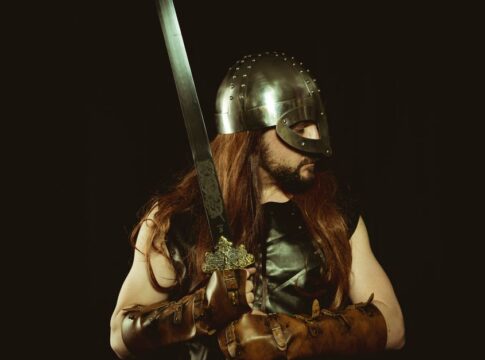
King Arthur Legend: Did a Real British Warlord Exist
By Trivia Owl, Staff Writer — Published September 20, 2026
Table of Contents
- Key Takeaways
- The King Arthur Legend and Historical Context
- Evidence for a Real Arthur: What Historians Actually Have
- Candidates for the “Real” Arthur
- How the Legend Grew: From Warrior to King
- What the Silence Tells Us
- Frequently Asked Questions
The king arthur legend has captivated imaginations for over a millennium, weaving tales of chivalry, magic swords, and a golden age of British heroism. But beneath the layers of medieval romance and Hollywood spectacle lies a fascinating historical puzzle: could there have been a real warrior behind the myth? Discover the surprising truths and interesting facts that blur the line between folklore and history, revealing what scholars actually know about the origins of Britain’s most famous king.
The quest to separate fact from fiction in Arthur’s story takes us back to a turbulent period when Roman Britain collapsed and Saxon invaders threatened the land. This historical gap—murky, violent, and poorly documented—became the perfect breeding ground for legends.
Key Takeaways
- No contemporary historical records from the 5th or 6th centuries mention King Arthur by name, making his existence as described in legends highly unlikely.
- The earliest written reference to Arthur appears in the 9th-century “Historia Brittonum,” roughly 300 years after he supposedly lived.
- Several real British and Romano-British leaders from the post-Roman period may have inspired elements of the Arthur legend.
- Geoffrey of Monmouth’s 12th-century work transformed Arthur from a possible warrior into a full-fledged medieval king, adding most of the familiar story elements.
- Archaeological evidence from the late 5th and early 6th centuries confirms a period of British resistance against Saxon invasion, matching the timeframe of Arthur’s supposed battles.
- The Round Table, Camelot, and most Arthurian romance elements are medieval additions with no historical basis.
The King Arthur Legend and Historical Context
When Rome abandoned Britain around 410 CE, the island faced a power vacuum. Saxon raiders and settlers from what is now Germany and Denmark began claiming territory, while native Britons struggled to maintain their Romano-British way of life. This chaotic period, stretching from roughly 400 to 600 CE, produced almost no written records. Historians call it the “Dark Ages” not because life was necessarily darker, but because the historical record went dark.
Into this documentary void, legends rushed. The Britons needed heroes. They needed stories of resistance and hope. Whether Arthur was one real person, a composite of several leaders, or pure invention remains one of history’s most intriguing mysteries. What makes this trivia particularly amazing is how a figure with zero contemporary documentation became one of the most famous kings in Western literature.
The earliest Welsh poems and tales mention a warrior named Arthur, but these texts were written down centuries after the events they describe. Oral traditions can preserve kernels of truth, yet they also embellish, combine stories, and transform minor figures into giants. Separating the historical wheat from the legendary chaff becomes nearly impossible after 300 years of retelling.
Evidence for a Real Arthur: What Historians Actually Have
The documentary evidence for Arthur is thin but curious. The “Historia Brittonum,” attributed to a Welsh cleric named Nennius, lists twelve battles fought by Arthur against the Saxons. The Battle of Badon Hill receives special mention—a significant British victory that temporarily halted Saxon expansion. Interestingly, an earlier source, the 6th-century monk Gildas, describes the Battle of Badon without mentioning Arthur at all, which historians find puzzling if Arthur was truly the great leader of his age.
The “Annales Cambriae” (Welsh Annals), compiled around 970 CE, mentions Arthur twice: at Badon in 516 and at the Battle of Camlann in 537, where “Arthur and Medraut fell.” These bare-bones entries tell us nothing about kingship, courts, or quests. They suggest a warrior, nothing more.
Archaeological discoveries paint a broader picture. Excavations at South Cadbury in Somerset revealed a fortified hilltop settlement reoccupied and strengthened during the late 5th century—exactly when Arthur supposedly lived. Local tradition has long identified this site with Camelot, though no evidence connects it specifically to Arthur. Similar fortifications across western Britain show that British leaders were organizing resistance. Someone led these efforts. Was one of them Arthur?
Candidates for the “Real” Arthur
Several historical figures from the right period could have contributed to the Arthur legend. Ambrosius Aurelianus, mentioned by Gildas, was a Romano-British war leader who won victories against the Saxons. His name lacks the Celtic ring of Arthur, but he operated in the correct timeframe and geographic area.
Riothamus, a British king who led troops to Gaul around 470 CE, has attracted scholarly attention. His name means “supreme king” or “high ruler” in Brythonic, and some historians argue that garbled accounts of his continental campaigns might have fed into Arthur’s legend. The evidence remains speculative.
Another candidate is a northern British chieftain. Some scholars locate Arthur not in the southwest but in the kingdoms of the north—what is now Scotland and northern England. Place names and early Welsh poetry hint at northern connections. The truth might be that “Arthur” represents not one person but the collective memory of British resistance compressed into a single heroic figure.
How the Legend Grew: From Warrior to King
The transformation of Arthur from possible warrior to legendary king happened in stages. Welsh storytellers added magical elements: a sword of power, a wizard advisor, supernatural opponents. By the time Geoffrey of Monmouth wrote his “Historia Regum Britanniae” (History of the Kings of Britain) around 1136, Arthur had become a full medieval monarch with a court, a capital, and international conquests.
Geoffrey’s work, though presented as history, was largely fiction. He invented Merlin, elaborated Camelot, and gave Arthur a birth story involving magic and deception. Medieval audiences loved it. French poets added courtly romance, inventing Lancelot and the love triangle with Guinevere. German writers contributed the Grail quest. Each generation added layers, moving further from any historical core.
The interesting fact here is how cultural needs shaped the legend. Medieval kings claimed descent from Arthur to legitimize their rule. The Plantagenet dynasty of England particularly promoted Arthurian stories. In 1191, monks at Glastonbury Abbey conveniently “discovered” Arthur’s tomb, complete with an inscribed cross—almost certainly a forgery designed to attract pilgrims and royal patronage.
| Time Period | Source Type | Arthur’s Portrayal |
|---|---|---|
| 5th-6th century | Contemporary records | No mention of Arthur |
| 9th-10th century | Welsh chronicles | War leader, battle commander |
| 12th century | Geoffrey of Monmouth | Medieval king with court and conquests |
| 12th-13th century | French romances | Chivalric monarch, Round Table, quests |
| 15th century onward | Malory and later works | Tragic hero, moral exemplar |
What the Silence Tells Us
Perhaps the most telling evidence is what’s missing. Gildas, writing within living memory of the Battle of Badon, names other British leaders but not Arthur. Why would a historian omit the greatest hero of the age? Some scholars suggest Arthur’s reputation was controversial—perhaps he was a successful warlord whose methods or politics Gildas disapproved of. Others argue more simply: Arthur didn’t exist as a single dominant figure, so there was no one person to mention.
The Saxon sources, which eventually became quite detailed, also ignore Arthur. If a British super-king had inflicted crushing defeats on the Saxons, wouldn’t their own chronicles mention this formidable enemy? The silence suggests that British resistance, while real, lacked the unified leadership the legends describe.
Frequently Asked Questions
Was King Arthur a real person?
No definitive evidence proves Arthur existed as a historical individual. He may have been based on one or more real British leaders from the 5th-6th centuries, but the Arthur of legend—with Camelot, the Round Table, and Excalibur—is a literary creation developed over centuries.
What is the Battle of Badon Hill?
The Battle of Badon Hill was a significant British victory over Saxon invaders, probably occurring around 500 CE. The 6th-century monk Gildas confirms it happened, but he doesn’t mention Arthur. Later sources credit Arthur with the victory, but this attribution came centuries after the fact.
Did Camelot really exist?
Camelot appears to be entirely fictional, first named in 12th-century French romances. Various British sites have been proposed as “the real Camelot,” including Cadbury Castle in Somerset, but no archaeological evidence supports any specific location as Arthur’s legendary court.
Why did the Arthur legend become so popular?
The legend filled a cultural need for British identity and heroic ancestry. Medieval rulers used Arthur to legitimize their power, while the stories’ themes of chivalry, justice, and tragic nobility resonated across centuries. The flexible nature of the legend allowed each era to reshape Arthur to reflect its own values.
The king arthur legend endures precisely because it straddles the boundary between history and myth, offering just enough historical plausibility to seem real while remaining vague enough to accommodate endless reimagining. Whether a British warlord named Arthur ever raised a sword against Saxon invaders, we may never know with certainty—but the absence of proof hasn’t dimmed the legend’s power one bit.